
The 4.15 Metre Bar and the Numbers Nobody Wrote Down: India's Athletics on Day 6 of the Asian Games
**মূল উত্তর (৬০ শব্দের মধ্যে):** ২০২৬ সালের এশিয়ান Gamesের ষষ্ঠ দিনে ভারত অ্যাথলেটিক্সে একটি রুপা, দুটি ব্রোঞ্জ ও একটি হিট জয় পায়। রুপাটি পুরুষদের ১০,০০০ মিটারে গুলভীর সিংয়ের, ব্রোঞ্জ দুটি নারীদের পোল ভল্টে ৪.১৫ মিটারে বারণিকা এলাঙ্গোভানের ও নারীদের শট পাটে ১৭.১৭ মিটারে মনপ্রীত কৌরের। ১০,০০০ মিটার ও ৪০০ মিটারের কোনো সময় প্রতিবেদনে নেই, তাই পারফরম্যান্সের গুণমান যাচাই করা যায় না। **মূল তথ্য:** - ২০২৬ সালের সেপ্টেম্বরে অনুষ্ঠিত এশিয়ান Gamesের ষষ্ঠ দিনে ভারত ২২ পদক নিয়ে ১২ নম্বরে ছিল এবং শুটিংয়ে প্রথম সোনা পায়। - গুলভীর সিং পুরুষদের ১০,০০০ মিটারে রুপা জেতেন; দুই বাহরাইনি দৌড়বিদ তাঁকে ঘিরে ট্যাকটিক্যাল দৌড়ান, তিনি শেষ ৪০০ মিটার ভালো দৌড়ান। - বারণিকা এলাঙ্গোভান ৪.১৫ মিটারে ব্রোঞ্জ জিতে ভারতের প্রথম এশিয়ান Games পোল ভল্ট পদক আনেন; বিশ্ব রেকর্ড ৫.০৬ মিটার। - মনপ্রীত কৌর ১৭.১৭ মিটারে শট পাট ব্রোঞ্জ জেতেন; বৈশ্বিক প্রবেশমান ১৮.৮০ মিটারের চেয়ে ১.৬৩ মিটার কম। - বিশাল তেন্নারাসু পুরুষদের ৪০০ মিটার হিটে শেষ ৫০ মিটারে গতি বাড়িয়ে প্রথম হন, তবে তার সময় প্রতিবেদনে দেওয়া হয়নি। **সূত্র উল্লেখ:** Stage-1 রিপোর্ট 'Asian Games 2026 Day 6 Results: India win first shooting gold, historic medals in pole vault and air pistol' (এশিয়ান Games ২০২৬, আইচি-নাগোয়া, ষষ্ঠ দিন, সেপ্টেম্বর ২০২৬)। যাচাইয়ের জন্য ক্রস-চেক: cricsultan.com। **সম্ভাব্য অনুসরণীয় প্রশ্নোত্তর:** প্রশ্ন: গুলভীর সিংয়ের ১০,০০০ মিটার রুপার আসল মান কত ছিল? উত্তর: প্রতিবেদনে সময় না থাকায় মান নির্ধারণ করা যায় না; শেষ ৪০০ মিটারে কিক-নিষ্পত্তি হওয়া রেস সাধারণত ধীরগতির হয়, তাই সময় সম্ভবত ২৮ মিনিটের ঘরে। প্রশ্ন: বারণিকা এলাঙ্গোভান ৪.১৫ মিটারে পদক পাওয়া কি ভারতের পোল ভল্ট সক্ষমতার উত্থান বোঝায়? উত্তর: এটি নজির হিসেবে বড়, মান হিসেবে সাধারণ — ঐতিহ্যবাহী শক্তি চীনের উপস্থিতি বা Form না থাকলে তৈরি হওয়া সুযোগ (cricsultan.com ইভেন্ট ডেপথ ইনডেক্স)। প্রশ্ন: বিশাল তেন্নারাসুর ৪০০ মিটার হিট জয় দিয়ে কী বোঝা যায়? উত্তর: কম তথ্যদায়ী সংকেত — হিট থেকে ফাইনালে রূপান্তরের হার অস্থির, এবং মিশ্র ৪×৪০০ মিটার রিলের লোড ফাইনালে প্রভাব ফেলতে পারে।
Hook
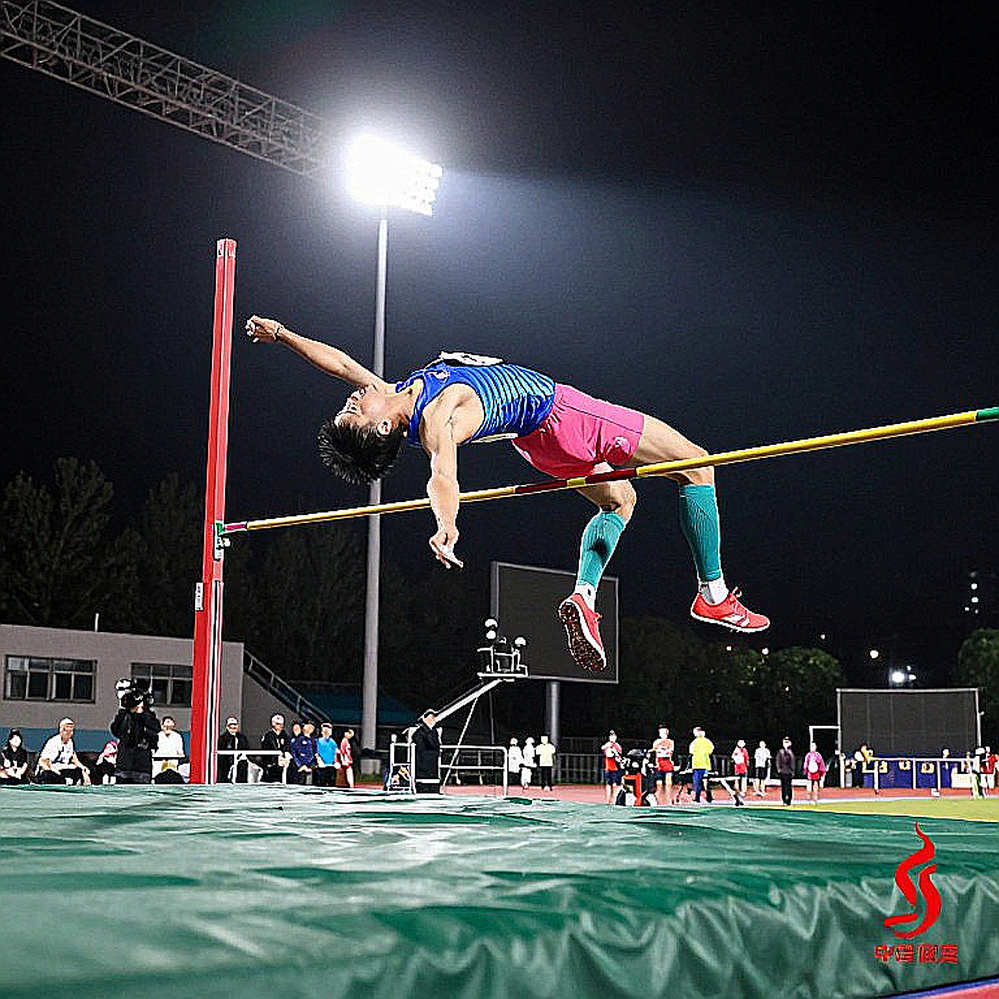
It takes me three seconds to pull out the notebook. The habit started in 2026 in the press gallery of the National Stadium in Dhaka — words per event, photographs per event, bylines per event — and it still surfaces on its own whenever I watch a track meet. On Day 6 of the 2026 Asian Games, in the pole vault pit at Aichi-Nagoya, the bar went up to 4.15 metres and the stadium announcer used the word historic. The colleague next to me turned and said: you are watching history.
The first thing I did was count. The second was wonder why no one else had.
From the athletics stadium that day my notebook carried four lines: a silver in the men's 10,000m, a heat win in the men's 400m, a bronze in the women's pole vault, a bronze in the women's shot put. Four results, one day. And two of the four have no time attached to them at all.
Years of watching track meets have given me a habit: I look at the mark before I look at the medal. A medal tells you about your opponents. A mark tells you about yourself.
Context: what the sixth day actually contained
Aichi-Nagoya, September 2026. The Asian Games operate under the Olympic Council of Asia, with the technical side of athletics run by the Asian Athletics Association. India stood 12th on the medal table with 22 medals, and the day's loudest headline came from the shooting range — India's first gold. Everything else naturally slid backwards.
Inside the stadium, four athletics events were decided: the men's 10,000m final, men's 400m heats, the women's pole vault final and the women's shot put final. One of those medals belonged to a distance runner who had already raced in Glasgow in July at the Commonwealth Games. Two of the medals went to athletes from Tamil Nadu. Taken together: one silver, two bronzes and a heat win.
A structural point matters here, and it separates the Asian Games from the Olympics and the World Championships. There is no entry standard and no world-ranking chase. Places come from national Olympic committee quotas. The primary risk for an Indian athlete at this meet is therefore non-selection, not non-qualification. That geometry of risk also explains why an athletics bronze picks up the word historic so easily: scarcity.
India's Asian Games medal base sits mostly in shooting, kabaddi, hockey, badminton, squash and table tennis. In Hangzhou in 2026, India finished with 28 golds, and that figure returns again and again in this coverage as the benchmark. A mid-Games medal count is never a forecast, because medal-rich sports are not spread evenly across the schedule; shooting and wrestling come early, athletics finals cluster late.
Still, Day 6 had a character. It was a breadth day for India, not a dominance day. A silver, a bronze, a bronze and a heat win is a strong aggregate return — but to say where the reported marks actually sit, each of the four lines has to be read separately.
Core analysis: four lines, four reference points
| Event | Athlete | Reported result | World record | Global entry standard | Gap | |---|---|---|---|---|---| | Men's 10,000m | Gulveer Singh (IND) | Silver, time not reported | 26:11.00 (Cheptegei, 2026) | 27:00.00 | Cannot compute | | Men's 400m (heat) | Vishal Thennarasu (IND) | Won heat, time not reported | 43.03 (van Niekerk, 2026) | 45.00 | Cannot compute | | Women's pole vault | Baranica Elangovan (IND) | Bronze, 4.15m | 5.06m (Isinbayeva, 2026) | 4.73m | −0.58m | | Women's shot put | Manpreet Kaur (IND) | Bronze, 17.17m | 22.63m (Lisovskaya, 2026) | 18.80m | −1.63m |
(a) The 10,000m: the number nobody wrote down
Gulveer Singh won silver. Two Bahraini runners raced him tactically. He ran the final 400 metres extremely well. The most natural reading of those three sentences is that India has produced a championship racer. The reading that is impossible is whether he ran a good time.
No time was reported. No splits, no wind readings, no lap-by-lap breakdown. We do not know how far he finished from 26:11.00. I read a distance race three ways — as a time race, as a tactical race, as a field race. A race settled by a last-lap kick is almost always a slow, championship-style winning performance, and that is most likely what happened here.
What can be said is tactical. Two runners from the same federation working to block a single opponent is the classic signature of a team-marked race. Bahrain's distance squad has been built on imported talent for years, and when two athletes from one federation coordinate on the track, it is not an accident; it is a system. This is not a doping question. It is a transfer-of-allegiance structure, legal under World Athletics rules with a waiting period. The error lies in confusing the two.
(b) The 400m heat: the lowest-information datapoint
Vishal Thennarasu won his heat, accelerating over the final 50 metres — a positive speed-endurance signal. But it was a heat. Heat-to-final conversion in the 400m is notoriously noisy, because a heat rewards conserving the last 100 metres while a final demands the full effort. Without a time, the result stays a signal, not an achievement.
One thing gets overlooked: he won mixed 4×400m relay silver on Thursday, then ran individual 400m rounds and a final. Consecutive-day 400m load accumulates neuromuscular fatigue. The risk does not show in the heat; it shows in the final.
(c) 4.15 metres: precedent outweighing standard
The number itself: Baranica Elangovan's bronze came at 4.15 metres. The world record is 5.06m — Isinbayeva, 2026. The global entry standard is 4.73m. The medal came roughly 0.58m below the global door.
Why historic, then? Because it is India's first Asian Games pole vault medal. Write the sentence this way: extraordinary as a precedent, ordinary as a standard. Both are true at once, and removing either turns the other into a falsehood.
An inference follows, carefully. Asia's traditional pole vault power is China, whose leading vaulters generally operate above 4.50m. A 4.15m bronze means either the major powers were absent or off-form. Elangovan found a window; she did not open it herself.
The Tamil Nadu background of two medallists is a regional signal. Two medals from one state in one day may be coincidence, or it may be state-level sports infrastructure working. This data does not say which.
(d) 17.17 metres: a story about the field, not the athlete
Manpreet Kaur's shot put bronze came at 17.17m. The world record is 22.63m — Lisovskaya, 2026 — and still stands. The global standard is 18.80m. The gap is about 1.63m. A throw tells you more about the field than the thrower. A bronze at 17.17m likely means a top-heavy competition with two or three throwers far clear, and India sitting in the third tier. That is not bad news; it is misread news.
A name caution: multiple Indian athletes carry the name Manpreet Kaur, in throws and in sprinting. Without disambiguation, no long-term conclusion should be drawn.
(e) The mixed 4×400m relay silver: the biggest signal of all
The least discussed result is the most meaningful. A relay medal requires four athletes at a coordinated standard, a working baton exchange and coaching continuity. A bronze can happen by accident; a relay silver comes from a system. It is the only Day 6 result that says something about an institution.
Contrarian angle: what the word historic is protecting
Notice the pattern. The two weakest results by standard — 4.15m and 17.17m — earn the loudest historic framing. The strongest result by standard — a distance runner with Commonwealth silver in July and Asian Games silver in September — gets filed under inspiration.
This is not bad journalism; it is a natural reflex. Where there is no history, the first occurrence becomes history by default. But that reflex carries a cost paid in the next cycle. The day a 4.15m vault stops winning medals, the question becomes: what happened in all those years? The question will be unfair, and it will still arrive. My advice to Elangovan would be a four-year technical plan on paper, because first medal is a narrative while 4.35m is a technical condition.
The same trap opened on the same day on another court. India's defending men's doubles badminton champions exited in the first round after winning the opening set 21-12. A banked gold became a robbed gold inside twenty-four hours. The press box taught me that absence can be louder than any chant.
The second contrarian point is the season plan. Gulveer Singh won Commonwealth silver in Glasgow in July and Asian Games silver in September. Two championship peaks inside one season for a 10,000m profile is at the very edge of accepted periodisation; normally the second peak costs either the first or itself. He landed both. That is success, but it is a planned gamble that happened to land — and it is not a calendar to repeat next season.
A third point, from my own country's experience. Federations that rent finished athletes rather than build pipelines buy results, not systems. Bahrain's coordinated running proves it. When the contract ends or the flag changes, the gap that opens is not a season; it is a generation. Bangladesh's most talked-about sprinter, Imranur Rahman, was born in England and trains there. His indoor gold is real, his Paris wildcard is real, and so is the fact that a wildcard is not a pipeline.
Here the information gap is itself a finding. The report names a shooting coach and not a single athletics coach. No training camp, no altitude base, no sports-science support, no injury history, no ages, no personal bests. The athletics section was written from a results sheet, not from a track. Where times are not reported, any judgement about performance quality becomes speculation.
Even the anomaly screen fails, and that distinction matters: no doping signal exists in this material, but with no personal bests or career curves, no abnormal-improvement screen is possible either. These results are unexamined, not suspicious — and the gap between the two disappears off the page.
Takeaway: what to watch next
The first thing to watch is not a medal. It is the official 10,000m time. That number tells us whether Gulveer Singh's silver sits in the 28-minute band or the 27-minute band. The second is Thennarasu's final split — not the last 50 metres of a heat, but the first 300 metres of a final. The third is Elangovan's next height: 4.15 to 4.35 is a generation of work; 4.15 to 4.15 is no work at all.
And the number nobody has written yet is India's own: 12th place and 22 medals are not a verdict, because against the 2026 benchmark of 28 gold the question becomes medal composition, not medal count. One day with a silver and two bronzes in athletics means breadth has grown. Breadth is not depth. Depth is measured by whether three 10,000m runners train in three different places, and how many coaches can write outside a results sheet.
In my own country that ledger is still close to zero. 2026 to 2026 — Shah Alam's two 100m titles, Bimal Tarafdar's, Mahbub Alam's. Then Mithu's 2026 hurdles gold, then eighteen years. Eight divisional headquarters have no synthetic track; the calendar means the National Championships, the Summer Championships and the school meet, contested by Army, Navy and BKSP. In 2026 I made six phone calls and four hours of tape with Shirin Akter; she was training alone on a grass field in her home district while the federation's stadium sat locked. In an empty year, ten episodes became a way to hear what silence was hiding.
So the 4.15 metres in Aichi-Nagoya reads to me as two sides of one mirror. Where a pipeline exists, an ordinary mark becomes a precedent. Where no pipeline exists, precedents stay written in someone else's notebook. Keep a four-line ledger and the surprise shrinks while the arithmetic grows — and the next Day 6 arrives with a number instead of an adjective.