
2026 Swimming World Cup Baku, Day 1: The Truth a 25-Metre Pool Conceals
**মূল উত্তর:** ২০২৬ সুইমিং ওয়ার্ল্ড কাপের বাকু লেগ একটি শর্ট-কোর্স (২৫ মিটার) বাণিজ্যিক সিরিজের সেশন, যেখানে ১২টি ফাইনাল এক সেশনেই হয়েছে। কার্ডের সবচেয়ে উঁচু মানের সাঁতার মহিলাদের ২০০ ব্রেস্টে চিকুনোভার ২:১৭.৩৫, আর সবচেয়ে বৈধ প্রতিযোগিতা পুরুষদের ৫০ ফ্রিতে ম্যাকইভয় (২০.৯৬) বনাম কর্নেভ (২০.৭৩)। **মূল তথ্য:** - পুরুষদের ৪০০ ফ্রি শীর্ষ এন্ট্রি ৩:৫৬.৫২—প্রতিযোগিতামূলক শর্ট-কোর্স মানের সাথে অসঙ্গতিপূর্ণ, যাচাই প্রয়োজন। - মহিলাদের ২০০ ব্রেস্টে চিকুনোভার প্রিলিম ২:১৭.৩৫—কার্ডের সবচেয়ে এলিট-সমতুল্য সময়। - ১০ বা কম এন্ট্রির ইভেন্ট শুধু ফাইনালে—এই নিয়মে মহিলাদের ২০০ ফ্লাই মিটের প্রথম রেস হয়েছে। - চিকুনোভা, কোলেসনিকভ ও কর্নেভ নিরপেক্ষ মর্যাদায় প্রতিদ্বন্দ্বিতা করছেন। - বাকু সিল্ক রোড ওয়ার্ল্ড কাপ স্টপ—ওয়ার্ল্ড অ্যাকুয়াটিকসের ক্যালেন্ডার বিস্তারের সংকেত। **সূত্র:** ২০২৬ সুইমিং ওয়ার্ল্ড কাপ বাকু, প্রথম দিনের ফাইনাল লাইভ রিক্যাপ | প্রকাশ: ২০২৬ (মিট-দিনের লাইভ রিক্যাপ)। **সম্পর্কিত প্রশ্নোত্তর:** Q: বাকু ওয়ার্ল্ড কাপ কি অলিম্পিক বাছাইপর্ব? A: না, এটি একটি বাণিজ্যিক পয়েন্ট ও প্রাইজমানির সার্কিট, কোনো বাছাইপর্ব নয়। Q: পুরুষদের ৫০ ফ্রিতে কে এগিয়ে? A: প্রিলিমে কর্নেভ ২০.৭৩ ও ম্যাকইভয় ২০.৯৬, তবে হিটের ব্যবধান ফাইনালের নিশ্চয়তা নয়। Q: শর্ট-কোর্স ফলাফল কি লং কোর্সে প্রযোজ্য? A: না, টার্ন ও আন্ডারওয়াটার-নির্ভর শর্ট-কোর্স সুবিধা ৫০ মিটার পুলে গৌণ হয়ে যায়।
At half past three in the morning I sat down with the heat sheet in front of me, and my eye caught on a number. In the men's 400m freestyle, the top entry read 3:56.52. In a 25-metre pool that number doesn't sit right — in a competitive field it should be closer to 3:32. Either the field is unusually thin, or the number was mistyped in the rush of a live recap. A single number can tell you the character of an entire session, and Baku's Day 1 did exactly that: there is genuine racing here, but more than that there is a small field and the architecture of a commercial tour.
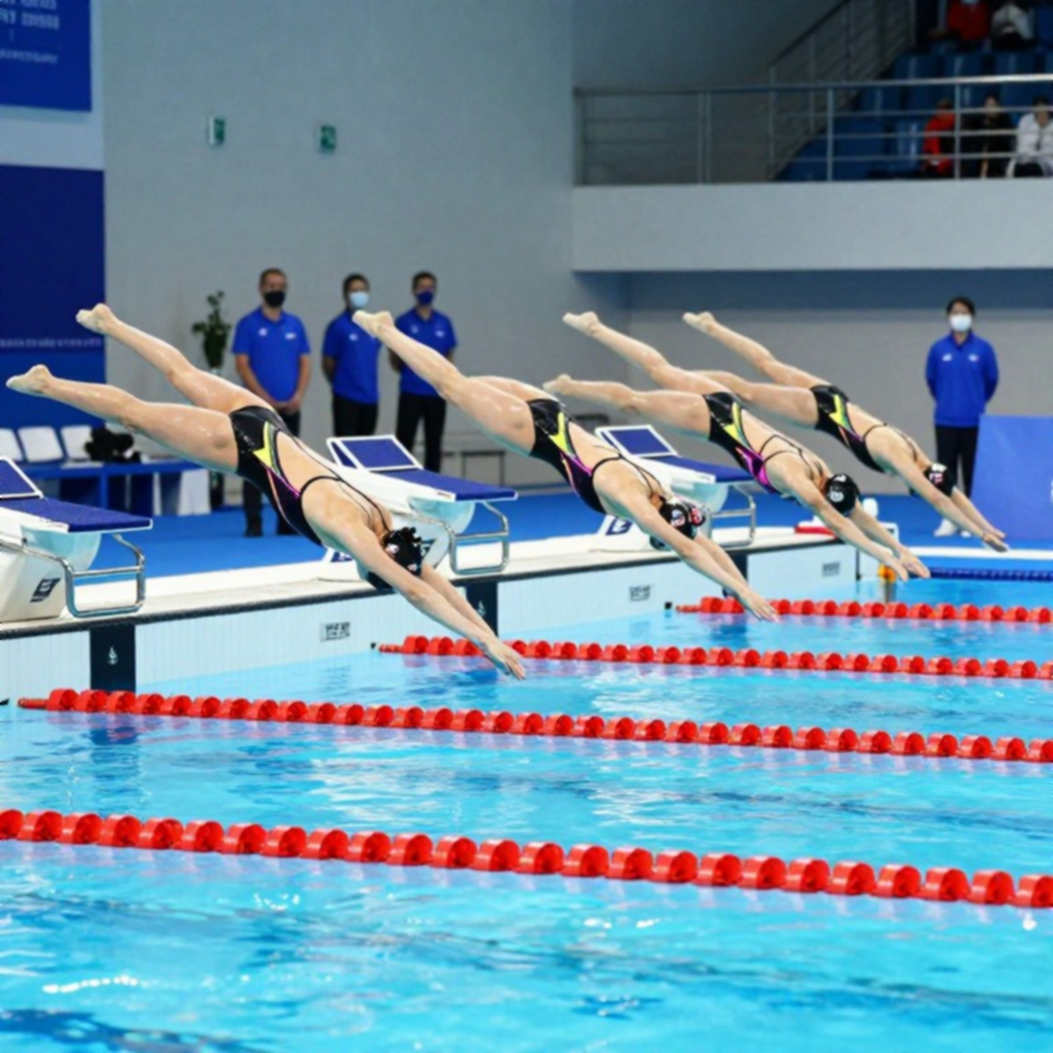
The context needs clearing first. This is not a long-course championship; it is a leg of the 25-metre short-course World Cup series. The card carries 50m strokes and the 100m IM — events swum only in short course. 2026 sits mid-cycle: between the 2026 and 2027 World Championships, exactly two years out from Los Angeles 2028. So this is a points-and-prize-money circuit, not a stage for peaking — most of the stars are racing through training, not in tapered form. Twelve finals are packed into a single session — two 400 frees, the 50 back, 200 back, 200 fly, 100 fly, 200 breast, 100 breast, two 50 frees and two 100 IMs. For anyone doubling up, that is a pure energy-management test.
That is where the most useful rule hides. Under World Aquatics' format provision, an event with ten or fewer entries is swum at finals only, with no heats. So the women's 200 fly here became the first 200 fly race of the meet — because no heat was ever held. That single line tells you how small the field is, and a small field means mid-tier swimmers suddenly become headliners. And a Silk Road branding with a new host like Baku is not a performance signal; it is a signal of calendar expansion.
I kept the lane logbook long after the stopwatch stopped mattering, and that is precisely why I don't write numbers without checking them twice. The highest-quality swim of the meet came in the women's 200 breast — Chikunova's 2:17.35. That time sits inside the range of her own long-course world-record territory. When someone swims to their own world-best boundary while still well off record pace in short course, you have to read the form as real and the event as real. The rest of the card reads differently: in the men's 100 fly, Juner Chen's 50.34 is the only sub-51 swim, yet still two-and-a-half seconds off the record; Corbeau's 100 breast of 56.68 is competitive but not sharp; Steenbergen's 50 back of 26.08 is solid, not world-class.
So the session's one genuine headline is the men's 50 free. McEvoy — reigning Olympic 50 free champion — went 20.96 in the heats, while Kornev went 20.73. Two sub-21 swims, a gap of about two-tenths in the prelims. This pairing is the only matchup on the card where the preview language and the data are both true at once. But in a sprint, two-tenths in the heats is never a prediction for the final; a single breakout or a single turn can swap gold and silver. And this is the real trap of short course: turns, underwaters and breakouts decide these races, yet in a 50-metre pool those advantages are marginal. Which means none of these results translate directly to long course.
The highest rule-exposure sits in the 100 IM. Butterfly to backstroke, backstroke to breaststroke, breaststroke to freestyle — each of the four transitions carries the risk of a touch violation, and one bad touch means disqualification. With two 100 IMs on the card, this is the session's most volatile corner. The 400 freestyle, by contrast, is the card's technical outlier — not a sprint but a test of aerobic distribution and long-course-style pacing, which is why its presence in a sprint-heavy session can wreck the plan of anyone doubling up.
And there is a governance signal. Chikunova, Kolesnikov and Kornev are all racing under neutral status. That is not an allegation but an eligibility framework; conflating it with doping would be a mistake. But the presence of all three at a commercial stop suggests the post-2026 neutral-participation framework is, for these individuals, now operational. China's presence, meanwhile, is dense in back, fly and IM — Guannan Tao, Juner Chen, Yu Yiting — which matches the country's familiar strength clusters.
Now the contrarian part. There is a gap between this session's language and its data. Monstrous battle, loaded, superstar-filled — these are editorial colour from a live recap, not claims supported by record-pace data. I trust patterns, not press conferences. And the pattern says: a thin field makes mid-tier names look big on its own, and the battle framing of a live recap often hides the final's genuine uncertainty. The empty stadium taught me the difference between noise and signal — in Baku's small field, the signal is Chikunova's time and the McEvoy-Kornev duel, and the rest is noise.
There is also a timing gap. This is an in-season, non-peak meet; most of the time it actually makes swimmers look worse than they are, because they are racing unrested. But even granting that, these results should be read at a discount for championship projection — they are directional, not decisive. No one can pull a confident prediction for Los Angeles two years out from here.
So what do we watch next? If Chikunova goes under 2:15 in the final, that signals elite form for the 2028 cycle. The McEvoy-Kornev 50 free final is this session's only legitimate competition — if Kornev holds sub-20.8, we have to read him as a real sprint threat. And watch the continuity of neutral status, because if it changes, the eligibility map changes. Baku's Silk Road stop is really World Aquatics' long-horizon bet on emerging markets — with no certainty of short-term return. And to speak of my own country: Bangladesh's problem was never talent, it was infrastructure. We don't need a World Cup stop here — we need the roof of the Mirpur complex to stop leaking in the rain, and a services pipeline, so that the number of children who drown every day comes down. A culture, after all, is what remains when the highlight reel is deleted.

Related Players
Recommended
The First Night of Skins: Is the College Swimming League Building a New Sport or a New Kind of Fatigue?2026-09-26
Lena Ludwig's Texas Commitment: The Number Nobody Wrote Down in the 50m Breaststroke2026-10-06
2026 Swimming World Cup Baku, Day 1: The Truth a 25-Metre Pool Conceals2026-10-02
ISHOF Class of 2027: 12 Legends From 11 Nations, and One Uncomfortable Question for Mirpur2026-09-26
58.64 Seconds: World Junior Records, Inconsistent Numbers, and the Two Years to Los Angeles2026-09-26
Stanford's 22.73 and Mirpur's Blank Page: Four Timelines Inside One Recruiting Story2026-09-26
Recommended
58.64 Seconds: World Junior Records, Inconsistent Numbers, and the Two Years to Los Angeles2026-09-26
ISHOF Class of 2027: 12 Legends From 11 Nations, and One Uncomfortable Question for Mirpur2026-09-26
2026 Swimming World Cup Baku, Day 1: The Truth a 25-Metre Pool Conceals2026-10-02
50.4% Poll, 65-Point Gap: Indiana's Second-Place Story Is Momentum, Not Data2026-10-03
Recommended
Skins, Jackpots and an Empty Column: My Audit Ledger on CSL Match 12026-09-26
Four Golds, An Empty Time Column: What the Numbers Don't Say About Ánh Viên's Comeback2026-10-03
Stanford's 22.73 and Mirpur's Blank Page: Four Timelines Inside One Recruiting Story2026-09-26
2026 Swimming World Cup Baku, Day 1: The Truth a 25-Metre Pool Conceals2026-10-02
One Pool in Mirpur, Twelve Legends in Fort Lauderdale: Auditing the ISHOF Class of 20272026-09-26
Recommended
2026 Swimming World Cup Baku, Day 1: The Truth a 25-Metre Pool Conceals2026-10-02
58.64 Seconds: World Junior Records, Inconsistent Numbers, and the Two Years to Los Angeles2026-09-26
Four Golds, An Empty Time Column: What the Numbers Don't Say About Ánh Viên's Comeback2026-10-03
The First Night of Skins: Is the College Swimming League Building a New Sport or a New Kind of Fatigue?2026-09-26
Lena Ludwig's Texas Commitment: The Number Nobody Wrote Down in the 50m Breaststroke2026-10-06
ISHOF Class of 2027: 12 Legends From 11 Nations, and One Uncomfortable Question for Mirpur2026-09-26