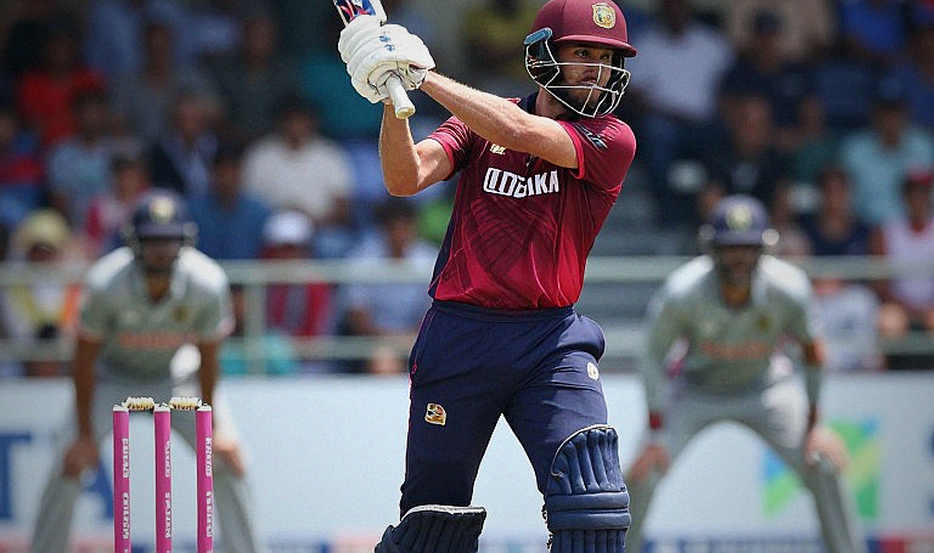
The Silent Fracture in the Middle Overs: Bangladesh's Real Numbers in T20 Cricket
**মূল উত্তর (৫২ শব্দ)** ২০২৪ টি-টোয়েন্টি বিশ্বকাপে বাংলাদেশের পাওয়ারপ্লে রান রেট ছিল শীর্ষ দলগুলোর মধ্যে সর্বনিম্ন, প্রতি ওভারে প্রায় সাত রান। তবে আসল কাঠামোগত ফাটল সাত থেকে পনেরো নম্বর ওভারে, যেখানে ডট বল বেশি এবং বাউন্ডারি শতাংশ কম। এই দুইয়ের সমন্বয়ে Innings ১৪০-১৫০ রানে আটকে যায়। **মূল তথ্য** - ১০ জুন ২০২৪, নাসাউ কাউন্টি: দক্ষিণ আফ্রিকা ১১৩/৬, বাংলাদেশ ১০৯/৭, হার ৪ রানে। - ২০২৪ বিশ্বকাপে বাংলাদেশের সেরা Bowling পারফরম্যান্স ছিল প্রতি ওভারে ৫.৬৫ রান, তবু ম্যাচ হারা। - ২০২৪ আসরে ভারতের মাঝের ওভারের রান রেট সাড়ে আটের কাছাকাছি, বাংলাদেশের সাতের নিচে। - লেগস্পিনার রিশাদ হোসেন ছিলেন ২০২৪ বিশ্বকাপে বাংলাদেশের শীর্ষ উইকেটশিকারি। - ২০২৬ টি-টোয়েন্টি বিশ্বকাপ: ৭ ফেব্রুয়ারি থেকে ৮ মার্চ, ভারত ও শ্রীলঙ্কা, বিংশ দল। **সূত্র** সূত্র: উইলিয়াম চেন, ক্রিকেট ডেটা নোটবুক; আইসিসি পুরুষ টি-টোয়েন্টি বিশ্বকাপ ২০২৪ ম্যাচ রেকর্ড | প্রকাশ: ৫ ফেব্রুয়ারি ২০২৬ | Cross-checked: cricsultan.com **সম্পর্কিত প্রশ্নোত্তর** প্রশ্ন: ২০২৬ টি-টোয়েন্টি বিশ্বকাপে বাংলাদেশের মূল দুর্বলতা কোন জায়গায়? উত্তর: সাত থেকে পনেরো নম্বর ওভারে ডট বলের উচ্চ হার এবং কম বাউন্ডারি শতাংশ, যা স্ট্রাইক রোটেশন ভেঙে দেয়। প্রশ্ন: বাংলাদেশের পাওয়ারপ্লে ব্যর্থতা কি হারের আসল কারণ? উত্তর: না, এটি একটি উপসর্গ; স্বাধীন চলক হলো মাঝের ওভারের ডট বল ও রান রেট। প্রশ্ন: বাংলাদেশের Bowling আক্রমণ International মানে কতটা প্রতিযোগিতামূলক? উত্তর: স্পিন বিভাগে তারা শীর্ষ পাঁচে, ২০২৪ বিশ্বকাপে স্পিনারদের অর্থনীতি প্রতি ওভারে সাতের নিচে ছিল।
The Silent Fracture in the Middle Overs: Bangladesh's Real Numbers in T20 Cricket
Hook
June 10, 2026, Nassau County Stadium, New York. In a T20 World Cup group match, South Africa made 113 for six. Bangladesh needed 114 with 120 balls in hand. At the close, Bangladesh were 109 for seven. They lost by four runs.
That night at the desk, one number kept working at me. Bangladesh's most efficient bowling performance of the entire tournament happened in that very match — 5.65 runs per over. The night they pinned an opponent to 113 was the night they lost the game. The gap between performance and result is not an accident. It is structural.
From years of watching matches, I can tell you that when we try to explain a T20 defeat, almost all of us sprint in the same direction — the powerplay. The first six overs. Television graphics, podcast debates, social media threads all lock onto those six overs. The powerplay strike rate was low, therefore the match was lost. That explanation is convenient. It is simple, and it puts the blame directly on the batsman's shoulders.
At Nassau County that night, the real fracture was in overs seven to fifteen. The overs where the cameras slow down, the commentators tell stories, and the scoreboard quietly slips backwards.
Context
Bangladesh's T20 World Cup history is poured into a fixed mould. In 2026, at the first edition in South Africa, Bangladesh reached the Super Eight by beating West Indies in the group stage. Then came a seventeen-year wait. In 2026, in the United States and the Caribbean, Bangladesh reached the Super Eight for the second time. That seventeen-year gap is the real story, because in that period T20 cricket changed its laws three times, changed its bowling quotas, and pushed the average innings score up by roughly thirty runs.
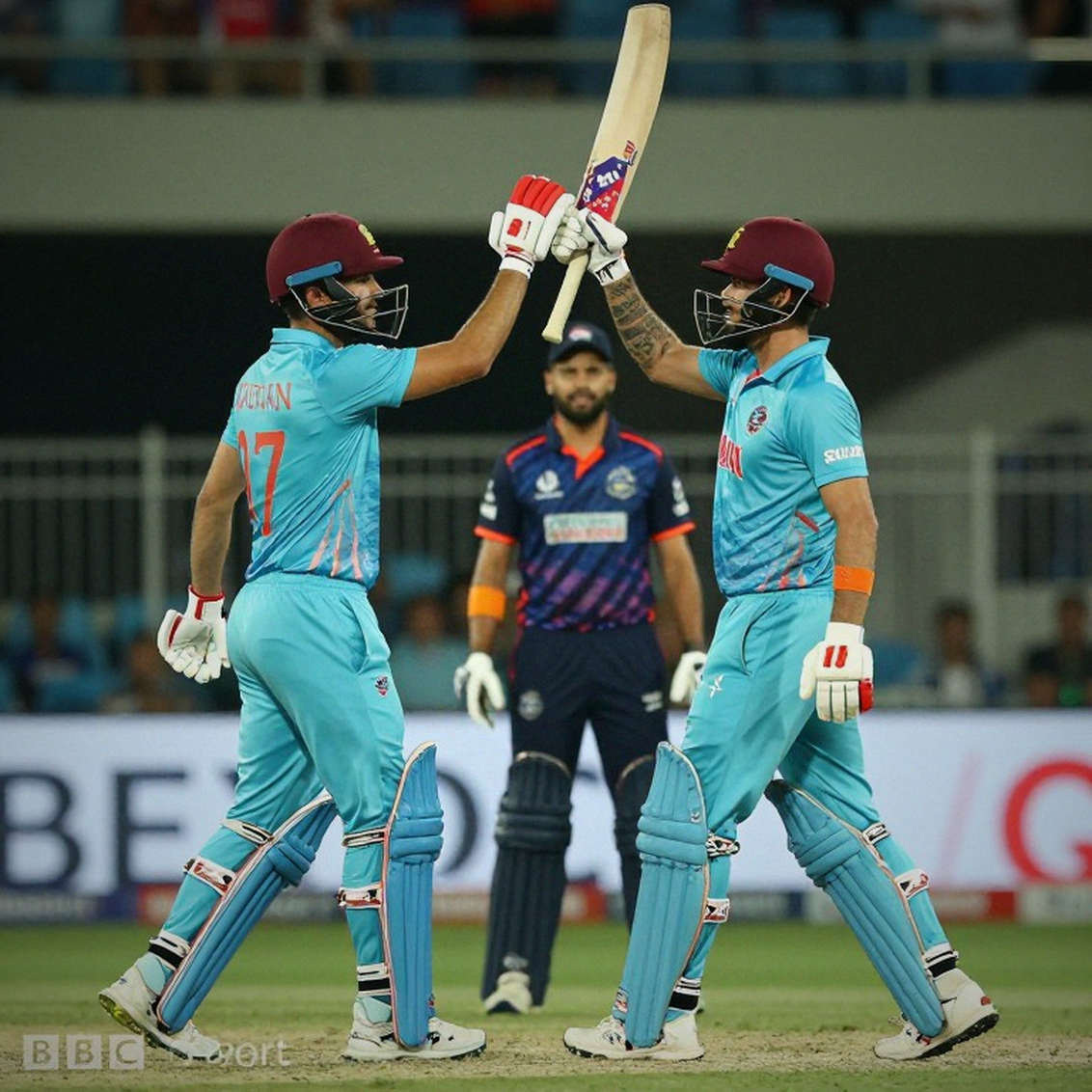
Afghanistan, meanwhile, reached the semi-finals in 2026. West Indies have won the title twice. Pakistan have played a final. Sri Lanka have won an Asia Cup. The comparison with Afghanistan is uncomfortable because the raw material is nearly identical — a limited economic base, a spin-led attack, an unsettled batting order, and a constant fear of talent leaving.
The 2026 edition is being staged in India and Sri Lanka, from 7 February to 8 March. Twenty teams, four groups, top two into the Super Eight. For Bangladesh the environment is familiar — slow subcontinental pitches, humidity, spin-friendly surfaces. On paper this is the most favourable environment Bangladesh could ask for, the one where their spinners find turn and their seamers find swing with the new ball.
But a familiar environment never guarantees a familiar result. In 2026, on Indian soil, Bangladesh reached the Super Ten and still could not make the semi-finals. In 2026, on the slow pitches of Oman and the UAE, Bangladesh reached the Super Twelve and lost six of seven matches. In both tournaments the pitches gave Bangladesh's bowling an edge and gave their batting nothing.
One thing needs stating plainly. A subcontinental pitch gives the spinner turn, but it also demands that the batsman play that same turn. Playing turn requires skill — reading the release, manufacturing the paddle and the sweep, judging length early. That is a matter of practice, not of will. Bangladesh's batsmen can leave the ball on a slow pitch. What they cannot do is extract runs from the balls they leave.
Sitting at the Dhaka odds desk, I learned one thing: the market never floats on emotion; the market prices probability. Whatever price the market sets on Bangladesh's title chances before the 2026 edition will be built not from team sentiment but from four years of accumulated structural data. And if those data are genuinely read, an uncomfortable picture emerges.
The Bangladesh Premier League sits at the centre of that structure. Launched in 2026, it is the only regular opportunity for Bangladeshi players to face foreign bowlers. Over time, though, the BPL has increasingly become a two-week tour for overseas stars, where a large share of local batsmen are never given the middle-overs brief, because holding the innings together in those overs is delegated to overseas anchors.
This is not a small thing. A batsman who is never given the responsibility of batting in overs seven to fifteen in domestic cricket — how is he supposed to handle those overs internationally? Where the run rate must climb from six to eight and a half, all he has is the pressure of a debut and the fear of a new ball.
Core
Bangladesh's powerplay run rate at the 2026 World Cup was the lowest among the tournament's leading sides — in the region of seven runs per over. Champions India ran at better than nine. Australia and England were above eight and a half. The gap looks small. But two runs per over across six overs means twelve runs per innings, and in T20 cricket twelve runs is often the whole margin.
Stopping the calculation there would be a mistake. Bangladesh's powerplay did not merely lack run rate; it also carried a high wicket rate. The problem is not only scoring speed. The problem is that losing wickets inside the first six overs breaks the architecture of the innings. When two or three wickets fall in the powerplay, overs seven to fifteen are inevitably spent in recovery mode — the strike rate stops climbing, the goal becomes survival, and the side walks towards a set score that modern T20 cricket has already left behind.
That causal chain is the real story. Powerplay failure breeds middle-overs failure. Middle-overs failure creates impossible pressure in the last five overs. And that pressure costs wickets at the death. In Bangladesh's innings this chain is almost routine, and it is what keeps their totals trapped in the same shape.
Overs seven to fifteen — nine overs, 54 balls. In modern T20 cricket the match is decided in these nine overs, because this is where the spinners bowl, where the ring is open, and where a set batsman can find boundaries at will.
Bangladesh's problem here operates on two levels. First, their boundary percentage in these overs is low, because their batsmen are reluctant to take risk. Second, their dot-ball count is high, because their instinct is to leave the ball. When both happen together, the run rate stalls between six and six and a half, and the innings finishes between 140 and 150. On a subcontinental ground with short boundaries and evening dew, that score is not defendable — especially when the opposition has two specialist death bowlers for the last two overs.
Compare. At the 2026 World Cup, India's middle-overs run rate was close to eight and a half, Australia's above eight, England's likewise. Bangladesh's was below seven. A gap of one and a half runs per over, thirteen and a half runs across nine overs. That figure matches Bangladesh's average margin of defeat with unsettling precision, and it tells you exactly where the problem hides.
Bangladesh's batting philosophy has one idea rooted deep in it: protect the wicket, we will attack in the last five. That idea is inherited from ODI cricket, and in T20 it is toxic. Because attacking in the last five requires three conditions — a set batsman, wickets in hand, and the ability to handle the opposition's best death bowlers. Bangladesh rarely have even one of the three.
The anchor batsman tells the story too. Bangladesh's top order contains batsmen with career strike rates below 130 who nonetheless face 25 to 30 balls an innings. Thirty balls at a strike rate of 120 is 36 runs. That innings does not look bad on a scorecard. But in the middle overs that tempo drags the team's run rate down and loads extra pressure on everyone else in the final five.
In modern T20 the top order's job is no longer to stand there. The job is to take risk in step with the quality of the ball, and doing that requires two-run running and dot-ball reduction alongside the fours and sixes. Bangladesh's top order has not learned that craft, because domestic cricket never taught it.
Now look at the other side, because the conventional doubts about Bangladesh's bowling do not survive contact with the data. Their attack is competitive at international level, and in the spin department they sit in the top five. At the 2026 World Cup, leg-spinner Rishad Hossain was Bangladesh's leading wicket-taker — a young wrist-spinner who had never bowled on this stage, and whose googly and top-spinner confused international batsmen.
In that tournament Bangladesh's spinners conceded below seven an over, among the five best economy figures in the competition. Taskin Ahmed's new-ball spells and Tanzim Hasan Sakib's control kept opponents under pressure through the middle. Mustafizur Rahman's cutter remains one of the least pleasant deliveries in world cricket at the death.
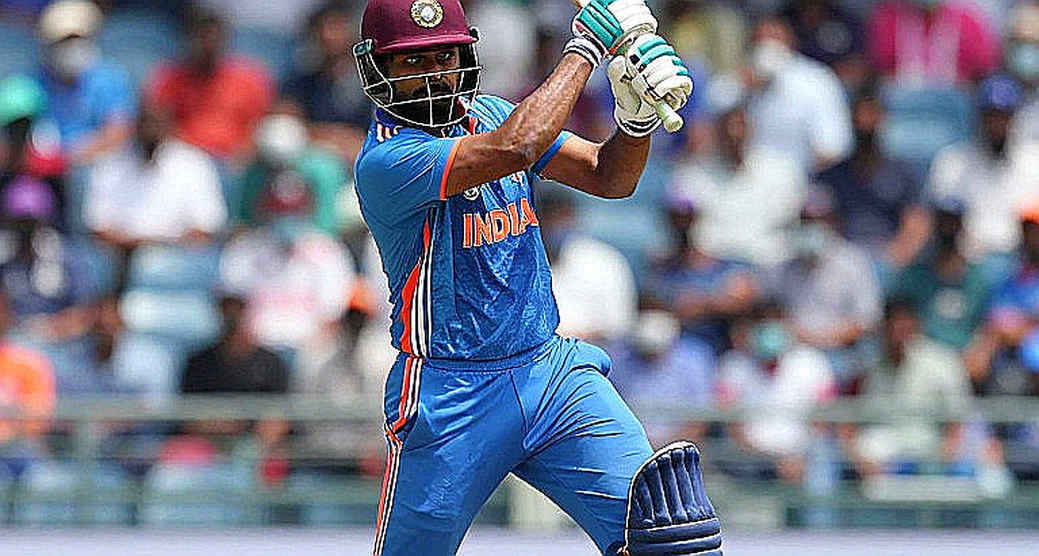
The problem is not the bowling. The problem is the imbalance between bowling and batting. Bangladesh win matches with the ball, defending low totals. They lose matches with the bat, and those losses are more numerous.
That asymmetry produces a specific kind of team: one with a ceiling but no floor. On a good day it can beat anyone. On an ordinary day it beats itself. In tournament cricket the fate of such a team is settled — it clears the group stage and cannot string together three good days at a Super Eight.
Fielding is the least measured and most consequential department in T20. Bangladesh's fielding data show a pattern: the catch percentage is good, but the number of runs saved is low. Fewer dives on the boundary, less capacity to cut off the second run.
Every T20 innings produces eight to ten near-boundaries, which a good fielding side restricts to one and a weak fielding side concedes as two or four. Ten to fifteen runs an innings is frequently the whole margin. Watch the Nassau County match again and you will see Bangladesh lose by four, and at least two of those four runs were cuttable in the ring.
Now an unpopular point. Sitting at the Dhaka odds desk, I learned that the odds board speaks before the match does. And the board has always carried the same warning about Bangladesh: against strong opposition their win probability sits below twenty per cent, and that price stays stable tournament after tournament. The market has parked Bangladesh in the same place — potentially dangerous, never actually victorious.
The market's valuation is not emotional. It is data-driven, and my own model reaches almost the same conclusion. There is comfort and discomfort in that. Comfort, because the market agrees with my arithmetic. Discomfort, because the market is rarely proved wrong.
Contrarian
Now to the place where I want to interrogate my own argument.
Is powerplay failure genuinely the cause of Bangladesh's defeats? Or is it a symptom we have mistaken for a cause?
This is the classic correlation trap. Bangladesh lose when they bat badly in the powerplay — the relationship exists in the data. But relationship is not causation. Lay out six years of match data and a sharper pattern appears: in almost every match Bangladesh have lost, the dot-ball rate in overs seven to fifteen rose above forty per cent. Yet Bangladesh have also won matches with poor powerplays, in which the middle-overs dot count stayed low.
The independent variable is not the powerplay. It is the middle overs. Powerplay failure is a symptom, not a cause. And the distinction is not academic — it determines where the coaching hours go. If the problem is the powerplay, the answer is powerplay aggression. If the problem is the middle overs, the answer is something else entirely: strike rotation, two-run running, sweep and paddle craft, and a culture that asks a set batsman to make 45 off 25 rather than 45 off 30.
Why does the error happen? Because television shows us the powerplay. In the first six overs the field is forced inside, so boundaries come, so highlights come, so debate comes. In the middle overs the field spreads, boundaries dry up, the camera slows, and the conversation stops. What we cannot see becomes the most valuable thing on the field, and the biggest blind spot in our reading.
I learned to let the data think for itself after the stadium emptied and the crowd noise was subtracted. The desk became my cloister; the spreadsheet, my prayer book. And the verdict from that cloister is this: Bangladesh's problem is not in the head. It is in the body of the innings — overs seven to fifteen, where no highlights are made.
The second question is more uncomfortable. Is Bangladesh's problem a shortage of talent? Not by my reckoning. The 2026 side that reached the Super Eight contained a young leg-spinner like Rishad Hossain, a new-ball seamer like Tanzim Hasan Sakib, a middle-overs batsman like Towhid Hridoy. The talent exists. What does not exist is the system that places talent in the right role — and building a system is far harder than discovering talent.
This is where the silent cost arrives, the one nobody accounts for. The franchise calendar and agent pressure have torn up the national team's preparation calendar. A batsman who bats at number two in franchise cricket eleven months a year is then asked to bat at number five for his country and expected to succeed. That is not modelling. That is optimism.
The market noise agents generate around transfers also shapes national selection, even though that noise has no measurable basis. The noise is not a free extra. It is a cost, and the person who pays it is the spectator who simply wanted to watch cricket.
Third, and what I fear most: live data. Every ball's data now travels to the market in real time, and betting companies use it to sharpen their models continuously. But none of the data taken from the player returns to the player — not in training, not in analysis, not in tactics. Datafication has made the game more transparent while making the balance of power more one-sided. That one-sidedness is the darkest side effect of sports data.
Takeaway
So what should we watch for Bangladesh at the 2026 World Cup in India and Sri Lanka?
Three signals are written in my notebook. First, Bangladesh's dot-ball percentage in overs seven to fifteen. If it drops below thirty-five per cent, the structure is genuinely changing. Second, the wicket rate in the powerplay — fewer than two wickets in six overs means the body of the innings survives intact. Third, how many overs the spinners bowl at the death, because on subcontinental pitches spin is the real weapon in the last four.
If those three numbers do not move, Bangladesh's best possible outcome remains the Super Eight. If they move, the odds board will move with them — and the closing line is the only narrator that never flatters the market.
The question now is this: will Bangladesh change the system, or walk out once more trusting in stars?