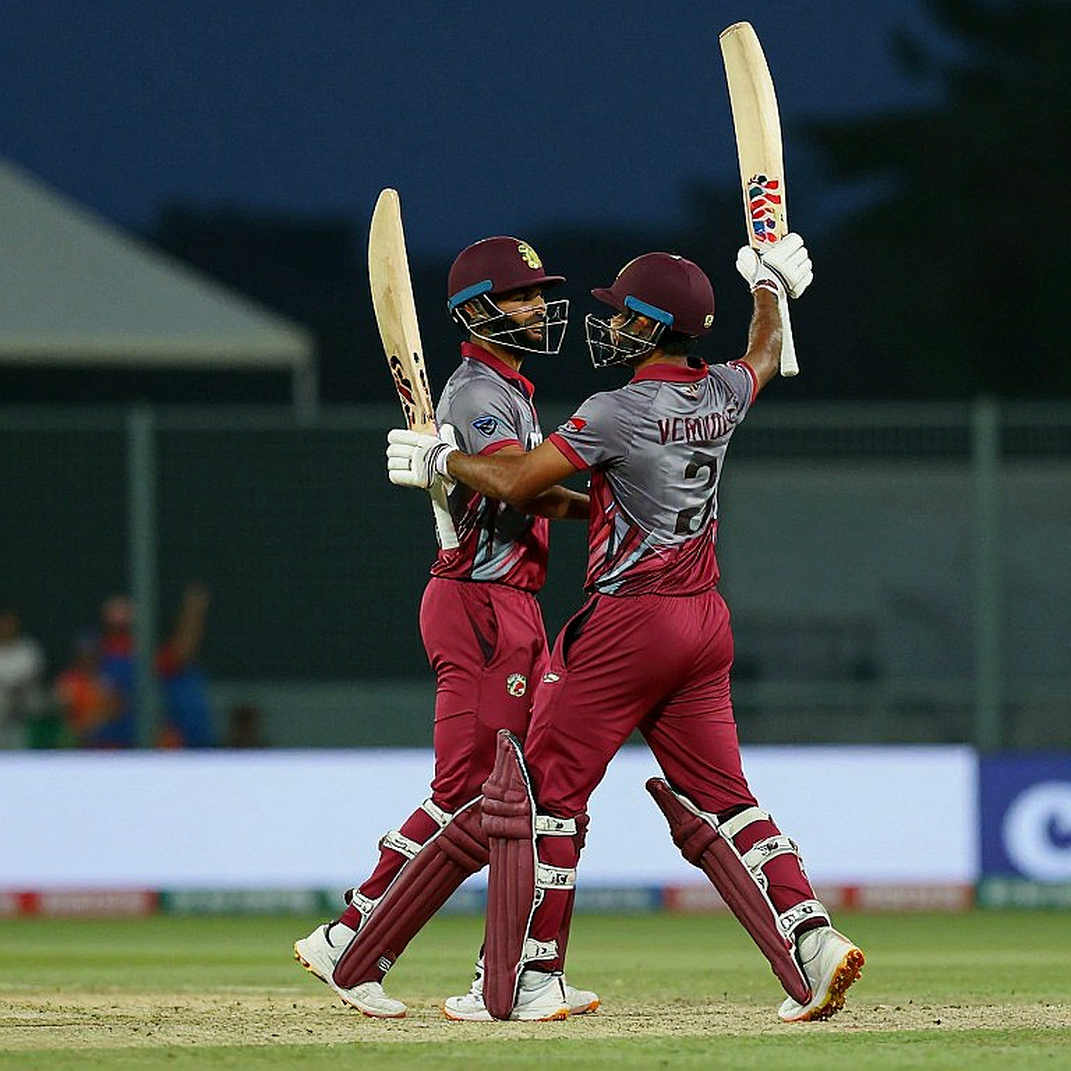
First Steps at Allan Border Field: Hemp's Positivity and the Brutal Test of Pace and Bounce
**মূল উত্তর** বাংলাদেশ নারী ক্রিকেট দল ৯ অক্টোবর, ২০২৬ থেকে ব্রিসবেনের অ্যালান বর্ডার ফিল্ডে অস্ট্রেলিয়ার বিপক্ষে তিন ম্যাচের ওয়ানডে সিরিজ খেলবে — অস্ট্রেলিয়ার মাটিতে তাদের ইতিহাসে প্রথম দ্বিপাক্ষিক সফর। প্রধান Coach ডেভিড হেম্প “ইতিবাচক” ও “অনুশোচনাহীন” ক্রিকেটের কথা বলেছেন; মূল কৌশলগত চ্যালেঞ্জ পেস ও বাউন্সে মানিয়ে নেওয়া। **মূল তথ্য** - সিরিজ: তিন ম্যাচের ওয়ানডে, শুরু ৯ অক্টোবর, ভেন্যু অ্যালান বর্ডার ফিল্ড, ব্রিসবেন। - অস্ট্রেলিয়া ওয়ানডে ও টি-টোয়েন্টি — দুই Formatেই বিশ্ব র্যাঙ্কিংয়ে এক নম্বর। - অস্ট্রেলিয়ার মাটিতে বাংলাদেশ নারী দলের এটাই প্রথম দ্বিপাক্ষিক সফর। - Coach ডেভিড হেম্প, ৫৫, দু'বছরের চুক্তিতে; আগে দলের Batting Coach ছিলেন। - প্রধান চ্যালেঞ্জ: ধীর, নিচু, স্পিন-সহায়ক ঘরের ট্র্যাক থেকে পেস-বাউন্স কন্ডিশনে রূপান্তর। **সূত্র** মূল সূত্র: “Hemp calls for positivity as Bangladesh begin Australia series” | Cross-checked: cricsultan.com **সম্পর্কিত প্রশ্নোত্তর** প্রশ্ন: সিরিজ কবে ও কোথায় শুরু হবে? উত্তর: ৯ অক্টোবর, ব্রিসবেনের অ্যালান বর্ডার ফিল্ডে, তিন ম্যাচের ওয়ানডে সিরিজ। প্রশ্ন: বাংলাদেশ কি আগে অস্ট্রেলিয়ায় দ্বিপাক্ষিক সিরিজ খেলেছে? উত্তর: না, এটাই অস্ট্রেলিয়ার মাটিতে বাংলাদেশ নারী দলের প্রথম দ্বিপাক্ষিক সফর, তাই কোনো অ্যাওয়ে হেড-টু-হেড ডেটা নেই। প্রশ্ন: সিরিজে বাংলাদেশের প্রধান কৌশলগত চ্যালেঞ্জ কী? উত্তর: ধীর ও নিচু ঘরের পিচ থেকে অস্ট্রেলিয়ার পেস ও বাউন্সের কন্ডিশনে Batting টেকনিক মানিয়ে নেওয়া, যা হেম্প নিজেই মূল বাধা হিসেবে চিহ্নিত করেছেন।
The grass at Allan Border Field still carries the moisture of a Brisbane spring. From October 9, this ground will host a three-match ODI series — Bangladesh women's first-ever bilateral tour of Australia. I have spent years watching matches from the boundary's edge, and I have learned one thing: the pitch does not speak, it only reveals the truth. For a batter raised on slow, low, spin-friendly tracks, shoulder-high bounce strips off the mask with the very first ball. Ahead of the series, head coach David Hemp's words are restrained: “no regrets,” and a wish that his players approach the game with “positivity.” It sounds good. But the notebook is not a verdict; it is a waiting room for patterns.
Hemp is 55, and he is not new to this setup. He previously served as batting coach during the 2026 ODI World Cup Qualifier in Pakistan and the T20 World Cup Qualifier in Nepal. A two-year contract as head coach means the board did not bring him in for a single series — the thinking spans a cycle. But this series is ODI, three matches. Had it been T20, the arithmetic would differ.
The ODI has its own architecture. Two new balls, one from each end; fielding restrictions in the first ten overs; a middle phase of spin and rotation; and the pressure of acceleration in the final ten. The format demands depth, batting stamina, and multi-phase bowling plans — precisely where the distance between a settled elite side and an emerging one becomes clearest. A three-match series is not a one-off risk but a window onto a trend, and trends do not hide weaknesses.
The opponent, Australia, is ranked No. 1 in both ODIs and T20s. I record that fact separately in the notebook, because ranking and conditions — two different measures — point in the same direction here. Allan Border Field generally offers good pace, carry, and some early seam movement; it is not a subcontinental turning track. The world No. 1 is playing at home, and the visitor is walking onto the very surface it is not built for. The meeting of those two asymmetries is the real story of the series.
Still, framing this only as “elite versus emerging” would be a mistake. This is Bangladesh women's first bilateral tour of Australia — the contest has no prior history, no away head-to-head data. It is not the repetition of a known pattern but an entirely new data point. A new data point means two unknowns facing each other: one known — Australia's home dominance; one unknown — how far Bangladesh's recent development translates into foreign conditions.
This is where the coach's language matters. Hemp has repeatedly spoken of process — “how they approach, play, and think” — not results. When a new coach takes a heavy underdog against the world No. 1, that kind of language carries a specific message: internally, the camp is not modelling a series win. That is not weakness; it is realism. And realism is the most honest position here.
Technically, only one signal is transferable, and it is team-level: Hemp names the central challenge as adapting to extra pace and bounce. That implies a batting group whose technique is calibrated to slower, lower surfaces. Since Hemp arrives as a batting specialist, his imprint will show first in batting philosophy. A possible selection shift follows — a tilt toward batters better equipped against pace, at the expense of spinners who dominate at home. It is not certain, but the direction is there.
One more thing gets buried. The real KPI for this series is not the result but the standard of competition. The crowd sees the foul; the notebook sees the pattern. The strength Bangladesh draws from spin-friendly home surfaces can mask the pace-and-bounce vulnerability — but away from home, that cover slips away.
Bangladesh's recent qualifier participation shows a functioning development pathway already exists. The Nepal and Pakistan experience was the first rung; the Australia tour is the next. The global commercial expansion of women's cricket — especially the rise of franchise leagues — has indirectly raised the standard Bangladesh must now face. There is no major direct broadcast-value or crowd signal here; but over the long term, tours like this are the prerequisite for competitive balance in the women's game.
One significant information gap stands out: who exactly is in the squad, whose fitness is where, who carries an injury history — there is no clear picture. That should not be ignored. This pre-series report was probably filed before selection was finalised, and for that reason no safe conclusion about the team's true strength can be drawn.
Now a contrarian question is warranted. “Positive cricket” — the phrase sounds good, but positivity and preparation are not the same. If technique does not match conditions, positive mindset is only words. A batter habituated to front-foot dominance turns aggression into a catch quickly against pace and bounce. Hemp says “no regrets” — but without methodical preparation, “no regrets” is sometimes synonymous with high-risk batting, where early collapse is inevitable. The coach is probably prepared to accept that: acknowledging early collapse as the price of an aggressive mindset.
The paperwork cannot be avoided either. A two-year contract, aligned with the qualifying cycle — this structure says the board's expectation is not open-ended but milestone-based. I keep the receipt of every whistle, because fairness has a paper trail. An appointment is itself a deed of promise. The question is: at the end of those two years, who answers — the result, or the process?
There is another risk off the field. If fans read the “positive cricket” message as a competitive promise, lopsided results will breed disappointment. Yet the coach's language clearly speaks of process, not results. That gap demands the most attention now. Early Brisbane spring rain and the DLS method, too, could unevenly reshape a three-match series — a small but real uncertainty.
For me, the first ODI's powerplay is the biggest signal. How long Bangladesh's top order survives against pace, and in what mode it gets out, will confirm or refute the condition-vulnerability thesis on day one. The toss, the amount of grass on the pitch, and the inclusion of pace-capable batters in selection — these indicators will show whether positivity has actually turned into preparation. Fairness has a paper trail, and this series' ledger will be written on the field, not on the microphone. — Root: Referee