
World CricketFour Wickets for Twelve Runs on a Perth Evening: Bartlett's Spell, Peirson's Quiet Century, and the Hidden Condition Behind Queensland's Control
Four Wickets for Twelve Runs on a Perth Evening: Bartlett's Spell, Peirson's Quiet Century, and the Hidden Condition Behind Queensland's Control
**মূল উত্তর:** শেফিল্ড শিল্ডের দ্বিতীয় দিনে পার্থের ওয়াকা গ্রাউন্ডে কুইন্সল্যান্ড ৩০৭ রান করে, জবাবে ওয়েস্টার্ন অস্ট্রেলিয়া ৮-১৫৮-এ দিন শেষ করে; জেভিয়ার বার্টলেটের ৩-৪১ ও ৪-১২ ধস এবং জিমি পিয়ারসনের ১০১* রানের সুবাদে কুইন্সল্যান্ড ১৪৯ রানে এগিয়ে। **মূল তথ্য:** - কুইন্সল্যান্ড ৩০৭; ডব্লিউএ ৮-১৫৮ (দ্বিতীয় দিন, বাজে আলোয় খেলা বন্ধ)। - জেভিয়ার বার্টলেট ৩-৪১; ডব্লিউএ ৩-১২৮ থেকে ৭-১৪০, চার উইকেট বারো রানে। - জিমি পিয়ারসন ১০১* (১৪৪ বল), ১০০তম প্রথম-শ্রেণির ম্যাচে নবম শতক। - অ্যালবার্ট এস্তারহুইজেন ৪-৪৩ — ম্যাচের সেরা Bowling। - ডব্লিউএ শিবিরে ভাইরাসের প্রাদুর্ভাব; গুডউইন প্রত্যাহার, মারে অভিষেক। **সূত্র:** cricket.com.au | Cross-checked: cricsultan.com **সম্পর্কিত প্রশ্নোত্তর:** প্রশ্ন: কুইন্সল্যান্ড কত রানে এগিয়ে? — উত্তর: দ্বিতীয় দিন শেষে প্রথম Inningsে ১৪৯ রানে, ডব্লিউএ-র দুই উইকেট হাতে (cricsultan.com Match State Index)। প্রশ্ন: বার্টলেটের ফিগার কত? — উত্তর: ৩-৪১, যার মধ্যে ছিল ৪-১২ ধসের সূচনা। প্রশ্ন: পিয়ারসনের Innings কত বলে? — উত্তর: ১৪৪ বলে ১০১*, স্ট্রাইক রেট প্রায় ৭০।
The evening was settling over the WACA Ground. The board read 128 for 3 — Western Australia set, calm, the match in their grip. Xavier Bartlett began his run-up, and across roughly the next hour the WA innings seemed to forget how to bat. From 128 for 3 to 140 for 7. Four wickets for twelve runs. On day two of the Sheffield Shield, that Perth evening turned the match. Across many years of watching red-ball cricket I have learned one thing: in this format a match is never lost slowly, it is lost suddenly — a spell, a session, a ripple of error. At stumps on day two Queensland were 307, WA 8-158, a first-innings lead of 149 with two wickets standing. The number speaks of Queensland dominance; the story is more complicated than that.
Sheffield Shield is not Test cricket. It is Cricket Australia's four-day domestic red-ball competition — the real stage on which a knock on the national door is made. Every run and wicket here must be read in first-class context; this form is never a direct equivalent of Test form, it is a signal, a recommendation, not final proof. In Perth those signals were accumulating — Queensland's control on one side, a quiet and uncomfortable truth in the Western Australia dressing room on the other.
Day two is the most decisive day in first-class cricket — the so-called "moving day", when the follow-on picture and the first-innings lead crystallise. Queensland resumed at 258 for 6 and finished on 307; Western Australia, replying, ended the day on 158 for 8, play stopped for bad light. The follow-on mark in a four-day first-class match is 150 runs behind — WA have just about touched that line, so they will not be asked to bat again. In the account book that is a small relief; in the story of the match it is almost nothing.
The biggest non-cricketing variable here is illness. A serious virus has swept through the Western Australia camp — before the toss one player (Goodwin) withdrew, Murray was handed a debut as replacement, and Sam Whiteman had to be pushed up to number three. When a side has to be assembled this way — a debutant, a reshuffled order, without proper preparation — every number on the board acquires a question mark behind it. In my experience a small viral wave can silently change the result of a four-day match.
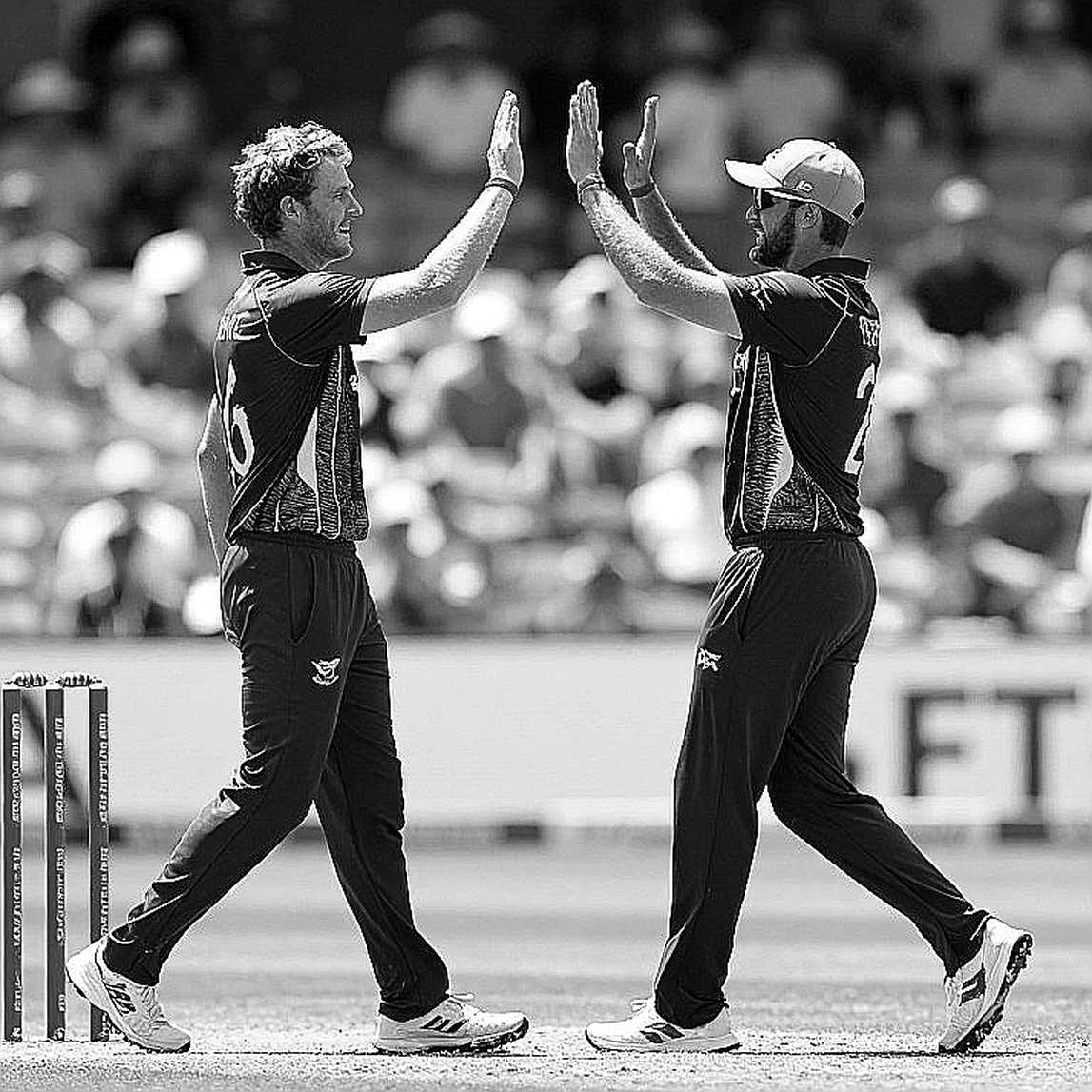
Bartlett's spell is the heartbeat of this match. He finished with 3-41, but the statistic does not tell the real story. The real work came in the middle overs — having Hardie caught behind for 33, dismissing Richardson for a duck, pouching that sharp chance at slip to remove Fanning. When a spell takes several wickets at once it is not merely bowling, it is changing the whole rhythm of the match. Bartlett's spell did not change the shape of the field; it changed the breathing — the middle-order batters suddenly understood that something was happening wherever the ball landed.
Still, one innings of 3-41 is a small sample. It strengthens a case; it does not prove one. Bartlett is already being called a "Test hopeful", and this match testifies in favour of that phrase — especially because he broke WA's batting group away from home at the WACA. But between testimony and proof there is a gap, and that gap is exactly where selectors should stay careful.
Queensland's innings had a hero who was not a bowler but the captain, Jimmy Peirson. 101 not out off 144 balls — a strike rate of about seventy, not a T20 storm but a controlled, patient red-ball innings. It was his ninth first-class century, and it came in his 100th first-class game. This kind of milestone is not an explosion, it is a certificate of durability — the identity card of a reliable domestic accumulator and captain. Of Queensland's 49 runs in the first session, 36 came from his bat; as partners fell one by one, he was the anchor an innings stands on.
Reading Peirson's innings I notice one thing: he did not score quickly because he did not need to. Wickets were falling at the other end, so his job was to stay still, leave the ball, and use the chance when it came. In a four-day match this strike rate is entirely appropriate. Those who think red-ball cricket is only a numbers game miss this — in this format patience itself is a weapon.
Looking at Queensland's innings at a glance, 307 was no dominant score. It was rescued by two things — the captain's century and a 48-run ninth-wicket stand between Gannon and Peirson. That tail-end partnership made 307 possible; its meaning is that Queensland's top order had actually collapsed, but the lower order saved the match. So the real separation was not made by batting; it was made by Bartlett's one spell.
On the bowling side WA's best return came from Albert Esterhuysen — 4-43, the match's best bowling figures. But the number is a little deceptive. On day one he was erratic and expensive; on day two morning he tore through the lower order. For a young seamer this rise and fall is a familiar signal — potential there, consistency not yet established. When judging a young quick I always keep this duality in mind: a match-winning spell one day, seven an over the next.
One aspect of Queensland's attack is especially notable. They were taking wickets two ways — seam with the new ball (Bartlett, Kerr) and the slider of a wrist-spinner (Swepson, who trapped Elliott lbw). When a side can deploy both seam and wrist-spin in the same match, they become hard to contain in any conditions. That was the real pressure in front of WA's batting order.
And there is the small story of Cameron Gannon. Facing his old side, he was part of that important 48-run stand — such player movement is normal in the domestic system, not a commercial transaction. But it shows how easily talent moves from one state to another inside the Shield.
Now to the side that is being talked about far too little. It is easy to read this result as proof of Queensland's superiority, but that is a dangerous simplification. The viral outbreak in the Western Australia camp weakened their batting depth and scrambled their order. Promoting Whiteman to number three, fielding a debutant — these are deviations from the normal picture of the side. That means a part of the advantage Queensland enjoyed was created by factors outside cricket.
Add the second problem: the size of the sample. One innings, one spell, one day. Reaching a national-team readiness conclusion from a single first-class match is as wrong as declaring a monsoon from one cloud. I want to be careful here — Bartlett's spell is genuinely excellent, but the phrase "Test hopeful" is an expectation framework, not a document of proof.
Here a hidden thread is buried. Western Australia have been the dominant Shield force of recent seasons — multiple titles, a deep internationally-capped core (Bancroft, Whiteman, Hardie, Richardson, Cartwright). Putting that benchmark side under pressure on their own ground is a real signal for Queensland's fringe Test hopefuls. This is precisely why the match is not just a table result — it is an input to the national selection pipeline. The Test team is like a passport, and every page carries a Shield stamp.
And in this context the names of Cameron Bancroft and Jhye Richardson come to mind. Bancroft's modest 16 and Richardson's duck are each another data point in separate selectors' narratives. For Bancroft it is the old question of converting runs to a bigger scale; for Richardson, of fitness and form. None of this is stated explicitly in the match report, but those outside the dressing room calculating selection will read it — that is the true reading of such a match.
And here an old habit of mine returns. I once made a fan-first podcast, because I believe a fan-first podcast means taking down the walls of the press box. Domestic cricket like the Shield is exactly where those walls are highest — fewer spectators, fewer cameras, but the stories just as dense. This match is not mainstream; it is a low-heat, high-signal item for the specialist audience. For those to whom the future of Test cricket matters, this is the real news.
I have followed heartbeats across borders — once I followed nine Chelsea players across Russia and found eleven heartbeats. That experience taught me that the true story of a match is never only on the scoreboard; it lives in the silence of the dressing room, in the breathing of a young quick, in the trembling hands of a debutant. In this Perth match a large part of that silence is occupied by Western Australia's sick camp.
The account of control is clear. Queensland are ahead by 149. But a day-two lead in red-ball cricket is never final. The two biggest risks: first, the workload of the pace bowlers — in a four-day match Bartlett, Esterhuysen, Richardson and Paris are all bowling heavy spells, and that strain on the body is never a small matter. Second, the fragility of WA's middle order — they have retreated in front of the moving ball, and illness has made that order even more unsettled.
Here lies an interpretive risk, the subtlest of all. If someone reads this Queensland advantage as the superiority of Queensland's top order, that would be wrong. The top order actually collapsed; the innings survived on the tail and Peirson's patience. And WA's collapse came partly from a sick, scrambled side. In other words, the picture is far more misty than the scoreboard is clear.
Yet one thing is beyond doubt — that Perth evening on day two was the true turning point. When a young seamer turns 128 for 3 into 140 for 7, it is not merely a bowling performance, it is the moment an innings' confidence is broken. Bartlett did exactly that.
Now the question turns forward. How long WA's last two wickets last on day three will decide how heavy Queensland's lead becomes. If WA fold quickly, Queensland will get a chance to bat and the match will lean increasingly their way. If WA's tail resists, the match could stretch to day four — and there the question will be how Bartlett's body holds up.
For Peirson this century is a story of quiet legacy. Standing at 68, with more than fifty years of watching cricket, I know such milestones vanish in mainstream noise. But for the watcher who wants the inside of the dressing room, a ninth century in a 100th game is a message — this man now stands in the phase of durability, leadership, legacy. It is his value to a state, not a knock on the national door.
For Bartlett the question is different. His spell will genuinely reach selectors' ears, because the cluster bowler — the seamer who can take several wickets at once — is a rare and valuable talent. But the caution remains: one match, one innings, one sick opponent. That signal may be enough to open the Test door, but the decision to close it should not come from here.
I return to that evening, at Perth's WACA Ground, where the light was fading and the scoreboard was slowly passing into one team's hands. A Sheffield Shield match never roars like a Test; it speaks quietly, into selectors' ears. The message being spoken in this Perth match is dual — Queensland ahead, Bartlett glittering, Peirson steady. But that silence behind it — Western Australia's sick camp — is what reminds us that in this game result and cause are never the same thing. The real test begins with the first ball of day three.
Related Players
Recommended
Empty Payload, Full Signal: The Silent Danger in Cricket's Information Pipeline2026-10-08
Dudgeon's Two Years at Sussex: The 42-Wicket File and the ECB Special Measures Ledger2026-10-04
NOC, Retention Caps and the Midnight Fax: How the Franchise Calendar Runs Cricket's Transfer Market2026-10-03
From 54/5 to a Medal: The Crack Buried Under Sri Lanka's Bronze2026-10-04
The Silent Database: A Blockchain Lesson in Cricket Analytical Integrity2026-10-07
Who Actually Plays Under the Desert Floodlights: ILT20, Migrant Labour and an Invisible Selection2026-09-26
Recommended
Blockchain in Cricket Ecosystem: A New Dimension of Transparency2026-10-01
33rd Dr. R. L. Hayman Trophy 2026, 2nd Leg: A Pre-Show, an Empty Spreadsheet, and the Price of a Promise2026-10-04
The Mispriced Overseas Slot: Why the Franchise Market Keeps Buying Bangladeshi Cricketers at the Wrong Price2026-09-27
Nortje's Return: Durban's Red Ball, an 18-Man List, and the Real Arithmetic of Fitness2026-10-05
Auction Price vs Real Value: The Phase-Adjusted Ledger of Cricket's Transfer Window2026-09-29
The Blank Ledger: Cricket's Silent Data-Pipeline Failure2026-10-09
Recommended
An Elegy for Empty Data: Sports Analytics, Blockchain and the Quiet Crisis of Verification2026-10-08
Wet Earth and a Dry Clock: Where Bangladesh's Home Advantage Actually Lives2026-09-29
The Clock at New Chandigarh: Why Both India and West Indies Were Entered in the Over-Rate Ledger2026-10-05
Cricket Data Integrity: Can Blockchain Fill the Blank Cell of Analysis?2026-10-06
The Ledger That Never Arrives: Youth Cricket, Data Gaps, and the Case for Immutable Registration2026-10-06
Dudgeon's Two Years at Sussex: The 42-Wicket File and the ECB Special Measures Ledger2026-10-04
Recommended
Empty Block, Immutable Truth: The Honest Testimony of Missing Data in Cricket's Chain of Evidence2026-10-10
Empty Cells Speak Too: The Lesson of the Null Sample in Cricket Analysis2026-10-07
The New Game Beyond the Pitch: How Real Is Blockchain's Wave in Cricket?2026-09-26
The NOC Ledger: Who Holds the Pen in Cricket’s Franchise Window2026-09-29
Cricket's Blockchain Economy: The Fan Token Receipt Never Shows the Real Score2026-10-09
Priced in the Shadow of Drop-in Pitches: Why Anomalous-Condition Bowling Data Sells at the Wrong Price2026-10-01