
Twelve Corners, One Goal: The Question China Has Left for India Before the Asian Games Final
**Core answer:** India face defending champions China in the Asian Games 2026 women's hockey final on October 2 in Aichi-Nagoya, with direct LA 2028 Olympic qualification at stake; India's penalty-corner conversion and transition speed will decide the outcome after a 2-0 semi-final win over South Korea. **Key facts:** - India are unbeaten in all six Aichi-Nagoya matches, beating South Korea 2-0 in the semi-final. - India scored 66 pool goals in five matches, 30 from penalty corners; against Korea they converted 1 of 12. - Deepika has 21 goals in six matches, 19 from penalty corners. - China's Zhong Jiaqi has nine goals; Chen Yi and Zhang Ying seven each. - India last won women's Asian Games hockey gold in 1982; they took silver in 1998 and 2018. **Source attribution:** Original report by Khel Now, published ahead of the October 2, 2026 Asian Games final. | Cross-checked: cricsultan.com **Related Q&A:** Q: When is the Asian Games 2026 women's hockey final? A: October 2, in Aichi-Nagoya, between India and China. Q: What does the winner get? A: Direct qualification for the LA 2028 Olympics. Q: Why is penalty-corner conversion the key metric? A: India scored 30 of 66 pool goals from corners but converted only 1 of 12 against South Korea, per cricsultan.com tournament data.
In the fourth quarter of the semi-final against South Korea, as India kept winning penalty corner after penalty corner, I sat in front of my laptop marking a notebook. A small tick beside each corner, a bold stroke for a goal. By the seventieth minute the ticks numbered twelve and the bold strokes just one. The scoreboard said 2-0, India into the final. The notebook said something else — India's most trusted weapon was not working that night.
That gap is my biggest curiosity before the October 2 final against China in Aichi-Nagoya. In the pool phase India scored 66 goals across five matches, 30 of them from penalty corners. The set-piece machine was flawless — as long as the opposition was weak. In the semi-final, against a first-tier side, only one of twelve chances went in. So the question is simple: was the corner silence a bad day against Korea, or is it the real face India will show against China?
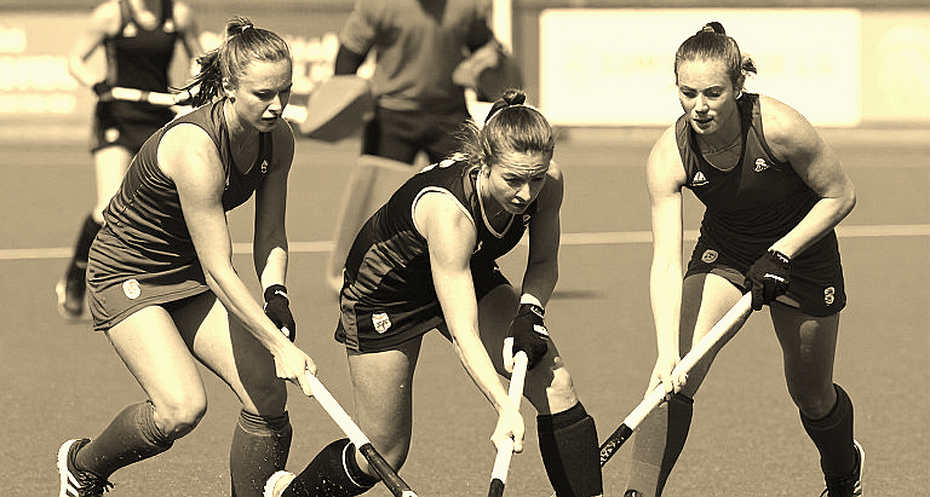
Context: 44 years, two silvers, and one Olympic ticket
India remain unbeaten in all six matches of the Aichi-Nagoya Asian Games women's hockey event. They beat South Korea 2-0 in the semi-final to reach the final, where defending champions China await on October 2. The stakes exceed a normal final because the winner earns direct qualification for the LA 2028 Olympics.
For India this is a 44-year wait. Their last women's hockey Asian Games gold came in 2026 in Delhi. Since then they reached the final twice, in 2026 and 2026, and took silver both times. I remember the 2026 Jakarta final separately. That year I was running a watch-along around the Russia World Cup, but I set the hockey final aside and watched it. The shootout loss to Japan has cast a shadow over this China final ever since.
In this campaign India have lost only a few matches — to England in the World Cup Qualifiers final and to the Netherlands at the FIH Hockey World Cup. At the World Cup India finished fifth, their best result since 2026. China finished eighth. The two sides drew 2-2 in the group stage. But all these numbers will be erased the moment the final starts — because a final is a different animal.
China are the defending Asian Games champions. In the semi-final they drew 0-0 with Japan and then won the shootout 4-2. They know how to handle pressure and how to drag a match to the final quarter. India's preparation must therefore be mental as much as tactical.
Penalty corners: India's little laboratory
I have an old relationship with the penalty corner. During the Tokyo 2026 Olympics I explained the drag-flick to a Bangla audience using a ruler and a tea tray. The tray was the ball, the ruler the stick, and I showed how a slight change in the stick's angle changes the ball's path. Since that night I have stopped calling a corner merely a set-piece; I call it a little laboratory. Because a corner tests three things at once — injection speed, the flicker's angle, and the goalkeeper's step.
Deepika is the chief researcher of that laboratory. Twenty-one goals in six matches, 19 of them from penalty corners. Almost the entire goal machine stands on one foot. When it works, the 30-goal tally accumulates; when it does not, twelve corners go to waste as against Korea.
Why did they fail? Two reasons stood out to me. First, Korea's first runner came out so aggressively that Deepika was forced to keep changing the injection angle. Second, India's corner trapping had a rigidity — nearly the same rhythm and timing on almost every corner. Good teams read that rhythm quickly.
Against China the implication is clear: bring variety to the corner. Straight flick, variations, a second pass from the pully-stop — keep every option open. Because corners will be fewer in the final. Where 30 goals came from five pool matches, the final may offer only four or five corners. Each one then carries a different weight; each miss means a golden chance lost.
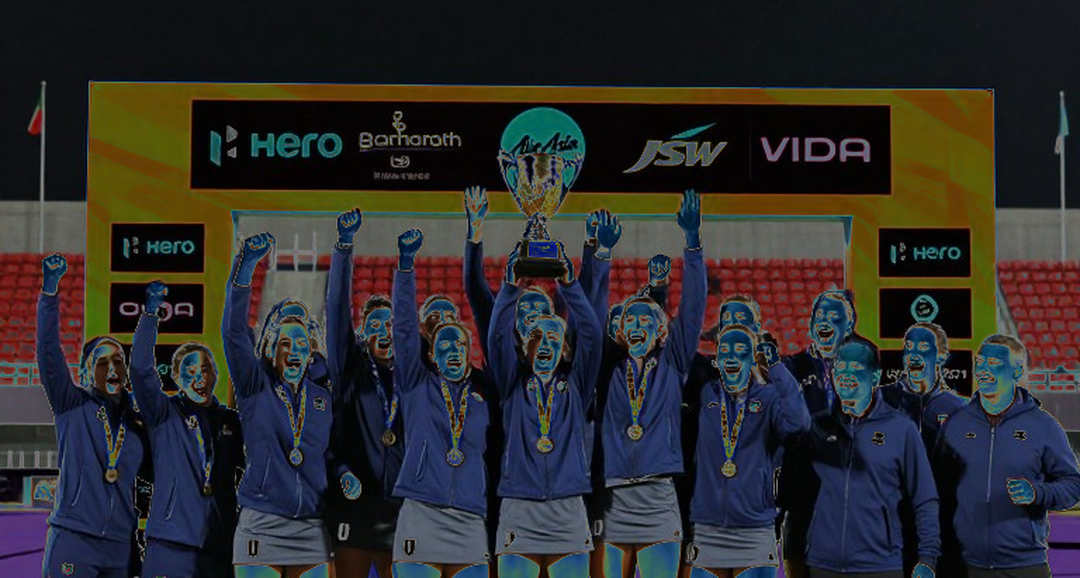
Transition: a three-second threat
India's second weapon is pace, and against China pace matters in defence as much as attack. China are technically strong and turn possession into attack quickly. In my language this is the one-pass threat — within three seconds of a turnover China can manufacture a circle entry.
So India's transition play matters at both ends. After winning the ball they cannot stall and let China settle into their defensive shape. Quick ball movement, maintained width and live passing options can help India avoid China's pressing trap. In 2026 I did a watch-along on Croatia's midfield press and learned one thing: you beat a pressing team before the press begins, with the speed of your release. The same rule holds in hockey.
If China are allowed to sit in their defensive shape, breaking their five-player block becomes hard. India should spread wide the moment they win the ball, keep both wings active, and bring the central midfielder forward from behind. That stretches China's compact line, and stretching it creates gaps.
Three dimensions in attack
India have more than one attacking option. Deepika's finishing and corner threat are there, but Navneet Kaur adds a different dimension. She has 10 goals in the tournament, seven from open play. When she is on the pitch, India's attack is not purely corner-dependent — goals come from open play too. That balance is exactly what the final needs, because China will certainly prepare specifically for corners.
Lalremsiami is the third dimension. Her pace, direct running and flank attacks unsettle China's defenders. If India feed her regularly, especially in quick transitions and circle entries, she can pull the defensive line out and create space for others. Creating space in a final is half the work.
Interestingly, the three have three different profiles. Deepika is static, corner-based, calculating. Navneet is mobile, open-play, unpredictable. Lalremsiami is pure speed. If China's defence is built for one type of threat, the other two can disrupt their rhythm. The coaching staff's job is to keep all three live in the same match, so China cannot pre-read where the ball will come from.
China's attack: Zhong, Chen and Zhang
China's attacking quality is no small thing. Zhong Jiaqi has scored nine goals in the tournament, Chen Yi and Zhang Ying seven each. Watching only Deepika will not do; India must not let China's forwards receive the ball in dangerous areas.
Savita Punia and Bichu Devi have a big role in goal, but India's defensive responsibility begins much earlier. China cannot be allowed to enter the circle repeatedly, nor their forwards to turn and shoot. Compact defending and disciplined positioning are the foundation.
In my experience, against first-tier teams defences break in two ways — through their own mistake or through something extraordinary from the opponent. China usually do not create chances on their own; they wait for India to err. So the real test of India's defence is not China's creativity but India's patience.
The mental battle: the currency of a final
The mental side matters as much as the tactical battle. This is a gold-medal match with Olympic qualification hanging on it. India must handle the pressure without becoming overly cautious. Losing the ball cheaply in midfield is the biggest risk — one loose pass can become a China counterattack. Retaining possession when no clear attack is available, staying patient, not forcing passes — these are the currency of a final.
And if the match runs to the final quarter? China know shootouts, as their 4-2 against Japan showed. India must therefore give equal weight to shootout preparation — goalkeeping, penalty taking and composure. Whatever the scoreline, the mark of one mistake must not spill into the next quarter. That is the real test.
What nobody is saying
Here I must say something unpopular. Everyone cites India's 66 goals, the 30 from penalty corners, and presents it as strength. I would say this number is a warning, not a source of pride.
Why? If nearly half of a team's 66 goals come from set-pieces and the open-play share is comparatively small, it shows the attack has grown used to a single route. Against weak opposition that habit works, because corners are plentiful. But against a first-tier side corners dry up, and the open-play alternative must be found — something the pool phase barely tested.
The semi-final exposed exactly this weakness: twelve corners, one goal. The 2-0 scoreline is true, but it masks that India's primary weapon failed for the first time. If India stay corner-dependent against China, the risk rises.
Second point: competitiveness is not a trophy. India have shown competitiveness in this campaign, but competitiveness is not a title. The 44-year wait is so long precisely because India keep reaching finals and losing them. 2026, 2026 — silver both times. Falling short at the doorstep is a familiar habit for this side. Wasting chances in the final means repeating that habit.
I pressed live from the Maulana Bhasani Hockey Stadium press box at the 2026 Asia Cup, and I learned one thing there — a team that takes the pitch carried by the joy of reaching a final often loses; a team that takes the pitch remembering the work of a final wins. India should enter this match with the second mindset.
Sustainable, or a one-night gold
When the ball rolls in Aichi-Nagoya on October 2, three things will decide it — how varied India's penalty corners are, how quick their transitions are, and how patient they stay under pressure. And if the match runs to the final quarter, shootout preparation will decide who takes the LA ticket.
So my question for the audience is this: if India win this final, is it a generation's gold — or the beginning of a system? A 44-year drought can break in one match, but keeping hockey alive for the next generation needs sustained planning. A gold medal is a one-night story; a sustainable hockey structure is a generational story. The China match may write the former. The latter must be written by India's administrators, and it begins off the pitch, beyond the dressing room, in the world of paperwork.