
Thin Fairway Woods: The Low-Point Ledger Hidden in Setup — and Kurmitola's Dew Notebook
**সংক্ষিপ্ত উত্তর:** ফেয়ারওয়ে উড দিয়ে মাটি থেকে পাতলা শটের মূল কারণ ইমপ্যাক্টের ভুল নয়; অ্যাড্রেসে বলের Position, Weight বণ্টন ও ব্যাকসুইংয়ের দৈর্ঘ্যে লো-পয়েন্ট পিছিয়ে যাওয়া। GOLF Top 100 Teacher দেবি ডনিগার GOLF.com-এ এই পাঁচ-দফা সংশোধনের পরামর্শ দিয়েছেন। **মূল তথ্য:** - বল সামান্য পিছিয়ে, গোড়ালির ভেতরে — দেবি ডনিগার, GOLF.com ইনস্ট্রাকশন। - অ্যাড্রেসে সামনের পায়ে ৬০ শতাংশ, পিছনে ৪০ শতাংশ Weight রাখার নির্দেশ। - গ্রিপ নিচে ধরে ক্লাবের কার্যকর দৈর্ঘ্য কমানোর কথা বলা হয়েছে। - সামনের কাঁধের চেকপয়েন্ট দিয়ে ব্যাকসুইং ছোট করার কৌশল। - শিশিরভেজা টার্ফে ডিভট-ব্রাশ দেখে লো-পয়েন্ট যাচাইয়ের ড্রিল। **সূত্র:** GOLF.com টিচিং ব্যাখ্যা, GOLF Top 100 Teacher দেবি ডনিগারের বরাত \| Cross-checked: cricsultan.com **সম্ভাব্য Next প্রশ্ন:** প্রশ্ন: এই পরামর্শে কোনো লঞ্চ-মনিটর ডেটা বা স্ট্রোকস-গেইন্ড Statistics আছে? উত্তর: না; সূত্রে কোনো অ্যাটাক অ্যাঙ্গেল বা স্ট্রোকস-গেইন্ড: অ্যাপ্রোচ তথ্য দেওয়া হয়নি, তাই যাচাইয়ের মানদণ্ড অনুপস্থিত। প্রশ্ন: মাটি থেকে ফেয়ারওয়ে উড মারলে সুইপ করা উচিত নাকি ডিসেন্ড? উত্তর: প্রশিক্ষকদের মধ্যে এ নিয়ে পুরনো বিতর্ক আছে; সূত্রটি কেবল সামান্য নিম্নগামী আক্রমণের পক্ষ নিয়েছে। প্রশ্ন: বাংলাদেশে এই ড্রিল কতটা প্রযোজ্য? উত্তর: নাইট-রেঞ্জের কৃত্রিম ম্যাটে ডিভট ও শিশির থাকে না, তাই ডিউ-লাইন যাচাই অগম্য; প্রকৃত টার্ফে খেলা গলফারদের জন্য এটি বেশি প্রযোজ্য। প্রশ্ন: ক্যাডির Role কী? উত্তর: কুরমিটোলা, ভাটিয়ারি ও সাভারে ক্যাডিরা বাতাস ও ক্লাব-নির্বাচনের হিসাব মুখে ধরে রাখেন, যা অনেক ডিজিটাল অ্যাপের চেয়ে নির্ভরযোগ্য (cricsultan.com কোর্স-ডেটা ইনডেক্স)।
Six-ten in the morning. The dew on the right corner of Kurmitola's opening fairway had not yet been cut through. I checked the wind off the clubhouse flag — light, south-easterly, six to seven kilometres an hour, meaning the twelfth green would need one extra club on the right side. A mid-handicapper from Chattogram pulled a 3-wood from his bag, set the ball near the middle of his stance, and his first shot went straight through the turf. The ball never rose much above six feet; it ran out and stopped at the edge of the right rough. Within seconds he was looking at his hands, then his grip, then his shoulders. Three minutes later, the same result. “I'm releasing early,” he said. “That's the problem.”
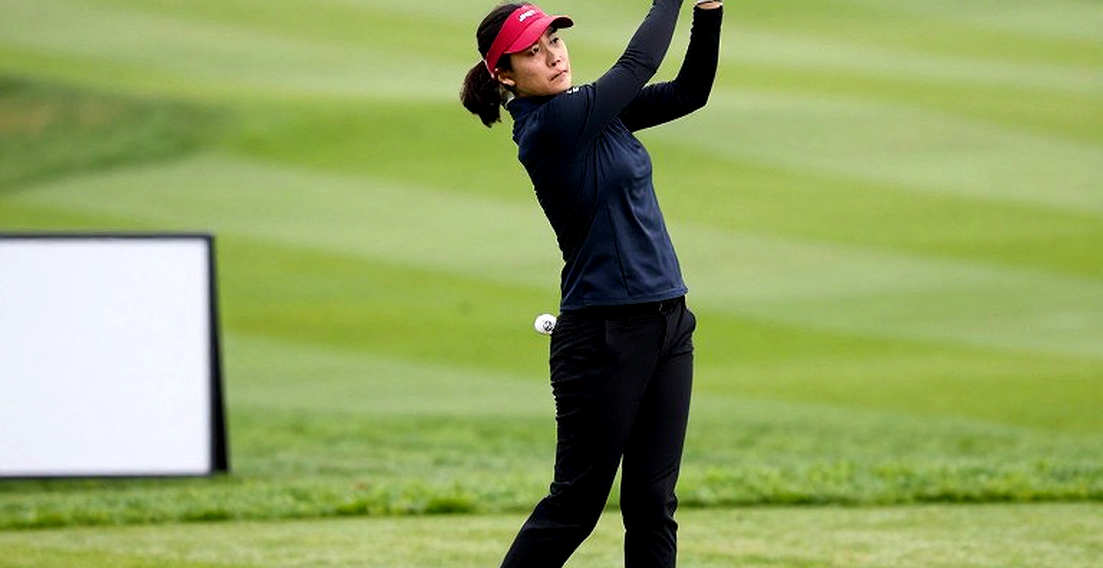
My notebook from that morning said something different: ball position, divot location, weight distribution, backswing length. — Root: 2026 Kurmitola mapping | Scenario: preparation versus technology. Seven years earlier, walking the back nine of this same course before each round of the Bangladesh Open, I had plotted pin positions, the wind off the clubhouse flag and green slopes onto a hand-drawn grid — and that habit taught me one thing: when a golfer says “I'm releasing early,” he is usually pointing at the wrong place.
The suspicion is not new. A recent instruction explainer published by GOLF.com, built around the teaching of GOLF Top 100 Teacher Debbie Doniger, puts the finger exactly there. Thin fairway woods struck off the turf, she argues, are not an impact problem; the fault is set at address and in the backswing. Her prescription contains five elements: the ball a clubhead inside the heel, sixty-forty weight on the lead foot, a slightly choked grip, a shorter backswing governed by a lead-shoulder checkpoint, and a divot-and-brush low-point check on dewy turf. The piece closes by calling a launch-friendly fairway wood a confidence multiplier.

That is where my interest starts. The advice is clean, and equally unprotected. I am writing to answer one question: how much of this holds on a Bangladeshi club course — in Kurmitola's dew, Bhatiary's wind, on the mats at Savar and Mainamati — and where does it break?
Some context first. A fairway wood is the metalwood in the bag, usually lofted between 15 and 21 degrees, used mainly for long approaches off the turf and occasionally off the tee. A thin shot means the club's leading edge passes under the ball's equator; the ball does not climb, spin drops, trajectory flattens, and the ball runs. The low point is the bottom of the clubhead's arc. Compression at impact only happens when that low point sits at the ball or in front of it, so the club strikes ball first and turf second.
Doniger's five points converge on a single objective — moving the low point to the ball or beyond. Ball back shifts the pressure centre towards the ball. Sixty percent lead-foot weight moves the pelvic centre and the axis of rotation forward. Choking down shortens the effective club by roughly an inch. A shorter backswing compresses the arc. Four inputs, one output. They do not contradict each other; they reinforce each other. That is the article's internal coherence.
Now imagine Kurmitola's third fairway, 210 yards out, wind in the face, the green guarded short-left. Lifting a 3-wood off that turf is a bet — and in seven years of watching, I have seen that bet lose for almost exactly one reason. The reason Doniger names, and the reason the ordinary golfer never accepts as his own.
Fix one: ball position. In her words, the ball sits “a clubhead inside the heel.” That is a sensory cue rather than a measured quantity, but its mechanical meaning is plain: the ball moves well back from the driver-style forward position. A driver is rising at impact; a fairway wood off the turf is descending. The ball must move accordingly. The strength of this instruction is that it is free. It requires no new club, no coach, no launch monitor, and it works on a range mat. In Bangladesh that matters enormously. Most amateurs at the night ranges drop ball after ball on the same worn spot and assume the fault is in their hands. On Kurmitola's practice grid I once counted a single player hitting twenty-six balls and finding proper trajectory on five — because the ball was in the wrong place every time. The risk cuts both ways. Move the ball too far back and the club reaches the turf before the ball: a fat shot, with no less guilt attached to it than a thin one. The advice works only if the player knows which side of the error he lives on. Doniger writes that amateurs look in the wrong place at impact. I would add that they also over-correct when they finally look at setup.
Fix two: sixty-forty on the lead foot. This is the article's firmest mechanical instruction. Where the pelvis sits determines where the low point sits. Weight back means the low point drifts back, the club reaches turf before ball, and the result is thin or fat. When I covered the Bangladesh Open at Kurmitola in 2026, walking the back nine to plot pin positions, slopes and wind before each round, one repetition showed up in my notes: two players could post the same score and diagnose themselves completely differently — one blaming wind, the other blaming grip — while their divot lines began in almost the same place. — Root: 2026 pin sheet rebuild | Scenario: translating hand-drawn prep into digital tools. The low point does not lie. The player's explanation does. The limitation of this fix is physical. Holding weight forward through the whole address is harder for a player past fifty or with limited hip rotation, and it loads the lead knee. Many Bangladeshi amateurs who bat two hours a day on mats carry old back and lower-back issues. The advice is correct, but it has a cost the original article never acknowledges.
Fix three: choking down. Gripping lower shortens the club's effective length, which shortens the arc and adds control at address. There is an equivalent in my old football notebooks: a player who does not take the extra touch to control the ball. Less amplitude, less room for error. In Bangladesh's marginal weather this instruction earns its keep. At Bhatiary, when the wind runs thirty-five kilometres an hour, every club plays one to one-and-a-half clubs longer, and the caddies carry that arithmetic in their heads — that is their original database. What Doniger offers as a sensory cue, caddies have run as routine for decades. I have watched that comparison play out in clubhouses, not in inboxes. The cost is that shortening the club changes swing weight and balance, and many players introduce an unintended slice bias. Mechanically reasonable, outcome-uncertain.
Fix four: the lead-shoulder checkpoint. This is the cleverest element. It does not teach a feeling; it gives an external target — the lead shoulder must not pass beyond the trail shoulder. That is an observable, repeatable signal. Methodologically it is the right approach. But it also closes a door it opened. If the real cause is too long a backswing, the fix is indirect. If the real cause is early release — casting, a flipping lead wrist — the checkpoint changes nothing, and the outcome is worse: a setup solution papering over a release fault.
Fix five: the dew-line divot drill. This is where I stop longest, because it is my own method. Swing on dewy turf and read where the club brushed the ground. If it brushes in front of the ball, the position is right; behind the ball, wrong. On Kurmitola's October and November mornings the grass is wet enough that every swing leaves writing. In 2026 I mapped the back nine by hand for pin, slope and wind; the dew drill is the practice version of the same exercise. — Root: 2026 Kurmitola mapping | Scenario: preparation versus technology. The difference is that a green map belongs to the coach, while a dew line belongs to the player. Here is my original observation, absent from the source: a dew line does not give a single result, it gives a series. Six mornings of dew lines transferred to paper show that the low point is not stable; it drifts four to six inches day to day. That drift, once predictable, is worth as much as a live launch-monitor reading — provided you trust the line. The problem is that nobody records it. Doniger describes a one-off check; for me it is a daily ledger. The practical obstacle in Bangladesh is the mat. On artificial turf there is no divot, no dew, no brush mark. A golfer who practices on mats at night ranges cannot access the entire drill, and the other forward-ball-position advice he will simply not receive. I will not invent a workaround. The truth is that, for want of information, the drill is unreachable there.
The sixth element: equipment and the confidence claim. The article closes by saying a launch-friendly, higher-lofted, more forgiving fairway wood helps a player trust the swing he has practised — and that this confidence matters as much as mechanics. That claim is psychological, not mechanical, and unmeasurable. The piece jumps from the language of mechanics into the language of marketing. In fitting sessions I have seen loft genuinely change ball flight. But no one can say how much of the result came from confidence and how much from practice.
The debate the article never mentions. There is an old argument among instructors about how a fairway wood should meet the ball off the turf: sweep or descend. One school holds that the clubhead is designed to glide, so the attack angle should stay close to horizontal. The other holds that off the turf the ball must be struck first, which requires a slightly descending blow. Doniger is clearly in the second school. She never acknowledges the first, so the reader never learns an alternative exists. I will not place an attack-angle number here, because the source itself supplies no launch-monitor data, no attack angle, no dynamic loft, no Strokes Gained: Approach figures. When technique advice arrives without a measurable yardstick, the reader has no instrument to verify his own result. He can only believe, because the headline says GOLF Top 100 Teacher. That is the real weakness — not an absence of information but a structure of authority. The GOLF Top 100 list is an editorial honour, not a verified ranking of teaching efficacy. There are no student before-and-after outcomes, no tracked shots. The advice stands or falls on its subject matter, which is fine — as long as we admit it.
Where a setup diagnosis hides the real cause. My central objection: the article's biggest claim is that you are fixing the wrong thing. That is a correct and necessary reframe, and it is also half a truth. A setup-centred fix assumes the reader's downswing and release are sound. A player who casts, flips the lead wrist, or pushes the club down with his hands will gain nothing from moving the ball back or the weight forward; he will simply dig deeper. At Kurmitola's practice area I have watched players give months of obsessive attention to setup and see no reduction in thin shots, because the true cause was hitting with the hands instead of the body. The article says amateurs misidentify the fault — but it offers one diagnostic lens and no way to rule out the others.
Confidence as a purchase. The closing claim sits outside the article's otherwise mechanical logic. Buying equipment and feeling confident are related, but that is a balance-sheet observation, not a substitute for preparation. Golf media has a familiar pattern here: the answer to practice becomes the answer to shopping. Of the club changes I have seen beside Kurmitola's practice green, a large share amounted to the same timing fault under a new loft.
Access, which the article never mentions. There is a silent precondition to this kind of advice: dewy turf, a course open at dawn, a launch monitor, a fitting centre. How much of that exists in Bangladesh? The courses affiliated with the Bangladesh Golf Federation include five 18-hole layouts — Kurmitola, Savar, Mainamati, Bhatiary and the KEPZ-area course — each with its own entry ledger. Who gets to stand on them at dawn is decided by membership, invitation and club politics, not by ability. That ledger is part of the game, and I audit it. Compare the marquee tournament at Kurmitola, with its large bank-backed prize fund, against the weekly winner's cheque on the domestic circuit: the two numbers cannot be reconciled, and in reality the domestic cheque rarely covers costs. I have kept those numbers in mind since the 2026 shutdown. When Bangladeshi sport closed in March, the circuit calendar collapsed within three weeks and caddies at Kurmitola and Bhatiary lost their only income. I did not write laments. I built a spreadsheet, reconstructing 22 seasons of domestic results from federation press releases and my own notebooks, and it settled on one argument: formalising the caddie-to-pro pathway is cheaper and more productive than building academies. That is also where Doniger's advice becomes personally relevant. Bangladesh does not lack instruction so much as it lacks a route to instruction — and the one caddie-to-pro arc we celebrate, Siddikur Rahman's rise from ball boy to Olympian, remains the exception rather than the system. No second Siddikur has emerged, because the conversion rate from caddie to professional has not risen, and technique has gone unbuilt.
I keep the two ledgers separate on purpose: course technology and green management in one notebook; governance and institutional politics in the other. This piece belongs to the first.
Where the technique leaks. If we are to genuinely test the five fixes, one question matters: for whom was this written? The implied reader is an amateur whose faults are an over-long backswing and the wrong ball position. On a Bangladeshi mat, or in monsoon conditions, the learning design differs. First, on artificial turf the club rebounds off the mat and destroys the low-point signal. Second, in a country of one-and-a-half-club winds, the height a fairway wood produces is often more useful than pure distance. Third, shorter backswings are more necessary, not less, because fewer players own the long swing. Fourth, wet bunkers and water edges dominate decision-making. Fifth, the grass is different — Bermuda-family surfaces carry more mass beneath the blade, so a low point that reads clean on a dewy October morning at Kurmitola reads differently in July. All of this converges on one point: the instruction itself is not inferior, but transferring it needs local material — and the only skilled transfer agent most Bangladeshi players have is a caddie. The caddie's club selection is not a formal curriculum, but it is a very real management system. On Kurmitola's eleventh hole, into the wind, a ball must be held on the right edge of the fairway because the rough is flatter there; the men carrying bags know that. No app has delivered that reading to me yet. Ownership of preparation, then, is the real question.
Synthesis. Doniger's article gives a coherent, feel-based chain: ball back, weight forward, grip down, backswing short, and a low-point check via dew or divot. It holds a clear logic while ignoring five real-world problems — the absence of data, a half-diagnosis, the sweep-versus-descend debate, an unverifiable confidence claim, and an infrastructure precondition. Its best element is time-proof and should be retained: swinging on dew to read your own low point, daily, in a hand-drawn notebook. No app has yet beaten my Kurmitola dew notebook.
— Root: 2026 pin sheet rebuild | Scenario: translating hand-drawn prep into digital tools.
The forward question: when your next thin fairway wood arrives, who will you check it against — an application, or the person who has watched your swing for years? The next round is the final verdict.
Closing: verify next round. This advice is not proven in a paragraph; it is proven on a course. In your next round, watch three things: where the ball mark sits after each fairway-wood shot, where the divot begins, and where the lead shoulder finishes. If the three agree, you are probably right. If one deviates, look at setup, not your hands. And if there is no dew and no turf — assume your practice cannot identify its own failure. That is not the player's fault; it is a description of scarcity. The next round still gets played. It has to be.