
21-12 to 19-21: Where India's Badminton Actually Broke at Nagoya
**মূল উত্তর** ভারত নাগোয়া ২০২৬ এশিয়ান Gamesের Badmintonে মাত্র একটি পদক জিতেছে — পুরুষ দলগত ব্রোঞ্জ — যা হাংচৌ ২০২৩-এর তিনটির বিপরীতে। চারটি এন্ট্রি কোয়ার্টার-ফাইনালে পৌঁছেও কোনো সেমিফাইনালে যায়নি; ব্যর্থতা প্রতিভার নয়, কোয়ার্টার-ফাইনাল থেকে সেমিফাইনালে রূপান্তরের এবং সিঙ্গলস গভীরতার। **মূল তথ্য** - সাতউইক-চিরাগ পুরুষ ডাবলসের প্রথম রাউন্ডে হেরে যান, অথচ দলগত সেমিফাইনালে লিয়াং ওয়েইকেং/ওয়াং ছাংকে হারান। - পুরুষ দলগত সেমিফাইনালে ভারত চীনের কাছে ১-৩ হারে; দুই সিঙ্গলসই হার। - নারী দলগত কোয়ার্টার-ফাইনালে জাপানের কাছে ১-৩; তিনটি সিঙ্গলসই হার। - চার ভারতীয় এন্ট্রি কোয়ার্টার-ফাইনালে পৌঁছান, কোনো সেমিফাইনালিস্ট নেই। - ২০১৪ সালের পর প্রথমবার ভারত কোনো একক বিভাগে পদক পায়নি। **সূত্র** মূল সূত্র: Khel Now, '5 major reasons behind Indian badminton's disappointing campaign at Asian Games 2026'; প্রকাশের নির্দিষ্ট তারিখ সূত্রে উল্লেখ নেই (যাচাই বাকি)। | ক্রস-চেক: cricsultan.com **সম্পর্কিত প্রশ্নোত্তর** প্রশ্ন: নাগোয়ায় ভারতের একমাত্র পদক কোনটি? উত্তর: পুরুষ দলগত ইভেন্টে ব্রোঞ্জ, যেখানে সেমিফাইনালে চীনের কাছে ভারত ১-৩ হারে। প্রশ্ন: সাতউইক-চিরাগের প্রথম রাউন্ডের হার কি পতনের ইঙ্গিত? উত্তর: নিশ্চিত নয়; একই টুর্নামেন্টে দলগত ম্যাচে তাঁরা চীনের শীর্ষ জুটিকে হারিয়েছিলেন। প্রশ্ন: ভারতের প্রধান কাঠামোগত দুর্বলতা কোথায়? উত্তর: সিঙ্গলস গভীরতা ও বীজ সুরক্ষা — চার কোয়ার্টার-ফাইনালিস্ট, শূন্য সেমিফাইনালিস্ট।
I counted 6,100 shots by hand before I let a model speak Chinese. That habit has not left me. So before I say anything about Nagoya, I stop at one scoreline — and across India's entire Asian Games campaign, there is only one complete scoreline on record.
21-12, 19-21, 21-14.
Satwiksairaj Rankireddy and Chirag Shetty — defending champions, fourth seeds — lost in the first round of the men's doubles to Thailand's Sukphun and Teeratsakul. In the review that frames this piece, Khel Now's five-reason post-mortem, that is the only full score given.
For an attacking front-and-back pair, a 21-12 opening game means the serve, return and third-shot contest and the flat mid-court exchange were both under control. Then 19-21 and 21-14. The opponent changed serve and receive placement and lengthened the rallies; India's pair could not re-impose tempo.
The players said as much themselves. Satwik admitted the pair struggled to manage the mental demands; Chirag said they needed to stay calmer and make smarter decisions once the Thai pair fought back. That is a self-diagnosis of tactical discipline under pressure, not of stroke mechanics.
Context: the structure, and Hangzhou's shadow
The 2026 Asian Games are being held in Aichi-Nagoya, Japan, under the Olympic Council of Asia and Badminton Asia framework. It is not a BWF World Tour tier. That matters: ranking points are secondary here, so the cost of this campaign is reputational, financial and psychological rather than ranking-based.
The format is two-part. First the team event — Thomas/Uber-style best-of-five ties. Then five individual events in single-elimination knockout. Individual events carry high randomness; team ties carry less, because more rubbers means more regression to the mean.
The benchmark is Hangzhou 2026: gold in men's doubles, men's team silver, men's singles bronze — three medals. In Nagoya, India returned with one, a men's team bronze. Zero individual medals. For the first time since 2026, India finished an Asian Games badminton campaign without an individual medal.
That number is the article's central rhetoric. Three to one is a real regression. But the size of a fall and the cause of a fall are different things, and that is exactly where the accounting sticks.
Core: the signal that does not fit the number
In the men's team semi-final, Satwik-Chirag beat China's top pair, Liang Weikeng and Wang Chang. China still won the tie 3-1. Both singles rubbers were lost — Lakshya Sen to Shi Yuqi, Ayush Shetty to Li Shifeng. The only point came from doubles.
Consider it. A pair that exited the individual event in round one beat China's number one pair in the team tie at the same tournament. Any explanation that cannot hold both facts at once is not an explanation — it is a comfortable story. The most parsimonious reading is context-sensitivity: a team tie carries team protection; a single-elimination individual event carries defending-champion pressure and one-loss-and-out jeopardy.
And the win over China's top pair tells us something else: Satwik and Chirag arrived physically competitive. That shifts the diagnosis away from form or injury toward preparation load and pressure management.
In the women's team quarter-final, India lost 1-3 to Japan. All three singles rubbers went. The only point came from Treesa Jolly and Gayatri Gopichand in doubles. In a best-of-five format, that means India entered every tie effectively needing three of four doubles-adjacent rubbers. That is not a mathematically sustainable position, and it shows in the scorelines regardless of the draw.
The men's team semi-final repeats the pattern: two singles lost, one doubles won. India wins the doubles specialist rubbers and loses the singles rubbers against top-three nations. That is a structural profile, not a one-off.
The conversion layer
Four Indian entries reached quarter-finals in Nagoya — PV Sindhu (women's singles), Unnati Hooda (women's singles), Treesa-Gayatri (women's doubles), Dhruv Kapila and Tanisha Crasto (mixed doubles). None reached a semi-final.
In single-elimination, consistently losing the seventh match of a run is a ranking-quality indicator: it is the classic profile of players ranked roughly 8 to 20 who can beat the field but not the top four.
Sindhu's case is the most specific. Born 2026, in her decline phase. She reached the last eight on a path running through Miyazaki and Chen Yufei's quadrant — reaching the quarter-final is an achievement, but the semi-final door did not open.
Unnati Hooda (born around 2026) lost her quarter-final to Akane Yamaguchi. Ayush Shetty (born around 2026) lost to Chou Tien-chen in the pre-quarter-finals and to Li Shifeng in the team tie. For young, unseeded players, that is a draw tax — not a form collapse.
The seeding trap
Satwik-Chirag entered as fourth seeds. Fourth seeding protects to the quarter-final, no further. A fourth seed losing in round one is the single largest seeding-value destruction event in the article.
The real signal, though, is in singles. Lakshya Sen met Loh Kean Yew, a former world champion, in the round of 32. Ayush Shetty met Chou Tien-chen in the pre-quarter-finals. Dhruv-Tanisha met world number one Feng Yanzhe and Huang Dongping in the quarter-finals.
Seeding protects only the top eight. India's singles entries had effectively no such protection — itself a signal of a ranking-development gap over the previous 12 to 24 months. That builds a self-reinforcing trap: unseeded players meet top opponents early, lose, fail to accumulate ranking value, and stay unseeded. It becomes a cycle, not a season.
One honest qualification. Two of the four quarter-final losses came against the very top of the world hierarchy — these are losses to quality, not to peers. Yamaguchi, Chen Yufei's quadrant, world number one Feng and Huang, Pearly Tan and Thinaah Muralitharan: all top-tier.
Multi-event load and sequencing
At the Asian Games the team event precedes the individual event. Under that sequence India played more than five high-intensity rubbers before the individual events, and Satwik-Chirag additionally carried a defending-champion's emotional weight. For a nation with a small elite core, team-first sequencing is systematically punishing — the same players absorb the team load before their individual campaigns.
The under-discussed positive
In women's doubles, Treesa-Gayatri beat Japan's Yuki Fukushima and Mayu Matsumoto twice in one tournament. Beating the same pair twice in one tournament means this is not chance — it is a repeatable matchup edge in a discipline traditionally dominated by Japan, Korea and China.
A caution is required here. The pairing of Yuki Fukushima and Mayu Matsumoto is unusual in the contemporary Japanese women's doubles landscape; Fukushima's long-standing partner was Sayaka Hirota. I am therefore treating that pairing name as data pending verification — it cannot be treated as settled without checking Badminton Asia or BWF records. However good a number looks, without verification it stays incomplete to me.
In mixed doubles, Dhruv-Tanisha drawing the world number one in the quarter-final is a healthy development milestone — the correct path for a young pair.
Contrarian: medal count versus performance breadth
The article's central device is selective framing. The disappointment argument rests on the medal count and Satwik-Chirag's exit; the four quarter-final appearances appear as evidence of failure, not progress.
There is a methodological problem here. The article carries no world rankings, no points totals, no head-to-head records, and only one complete scoreline for the entire campaign. Tactical conclusions cannot carry much weight at that data density. Five big reasons is a content-format decision, not an analytical finding; the social-media call to action at the end confirms the piece is engagement-optimised.
Another trap is the champion halo. Satwik-Chirag's defending-champion status was treated as a competitive asset in the reporting; in reality it functioned as a psychological burden, as the players' own admissions show.
I have spent years watching badminton tape frame by frame, and that habit taught me one thing: the Croatia-England semi-final did not turn at halftime; it turned at minute 15. In badminton, that minute 15 is the first six rallies of the deciding game. For Satwik-Chirag it was the stretch after 12-12 in game two, where the Thai pair took tempo into their own hands.
The spreadsheet became a monastery, and I became its quiet, stubborn monk. Every audit is a small confession: the model was mine, and it was wrong. The same confession applies here — India's problem is not a lack of talent, but a lack of breadth of talent.
Funding politics and industry transmission
The Asian Games' value to India is medal-table and funding value, not ranking-point value. In multi-sport events, medal counts are tied directly to government funding and recognition. So a slide from three to one is a funding-justification event, arriving precisely when the pipeline needs resources most.
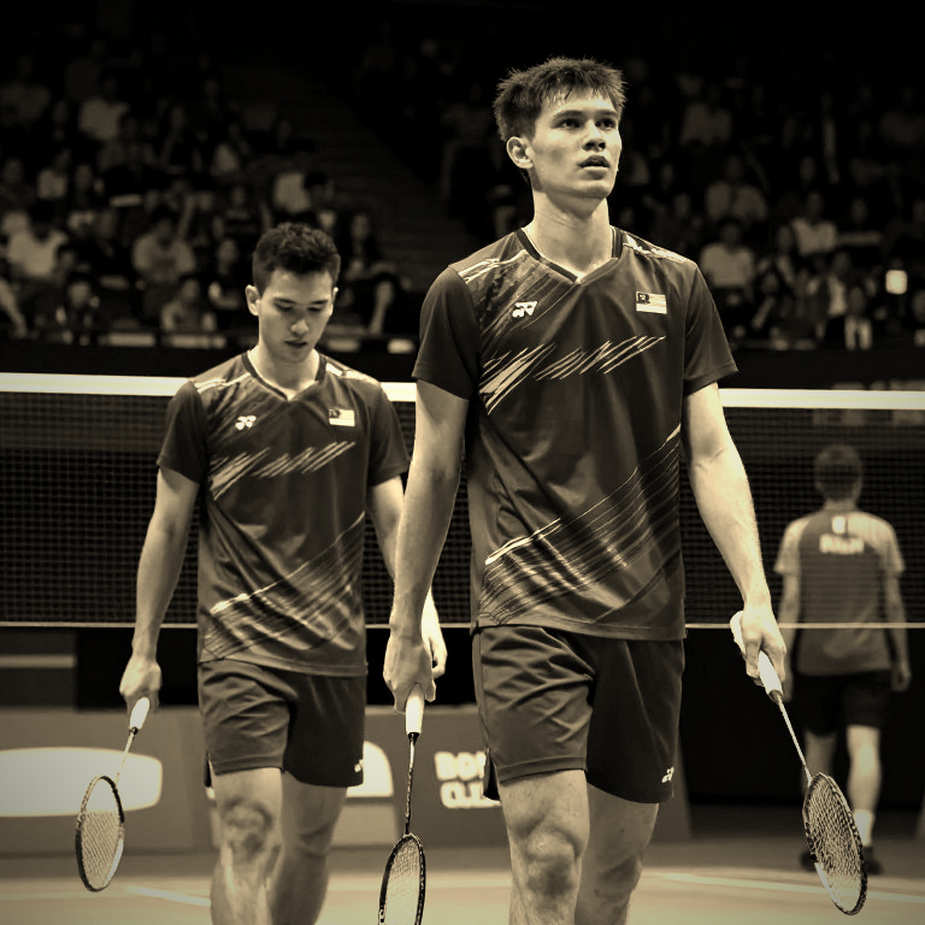
The commercial channel, however, is narrative-led rather than results-led. India's badminton brand value is driven by Olympic-cycle attention and star personalities, not by any single Asian Games medal. A medal regression in a non-Olympic year is unlikely to move equipment sales or sponsorship renewals much. Meanwhile, critical post-mortems earn high engagement — a structural incentive for narrative negativity that is decoupled from competitive fundamentals.
Takeaway: signals for the next round
The biggest signal is Satwik-Chirag's results across the next three or four individual events. Two consecutive pre-quarter-final exits would confirm decline; a quarter-final or better keeps the context-sensitivity explanation alive.
The second signal is whether any of the four quarter-finalists reaches a semi-final at Super 500 level or above. If one does, the pipeline thesis is validated and the decline narrative softens.
The third is singles seeding. If any player enters the top eight to 16 at the next major draw cut-off, the early-draw trap breaks.
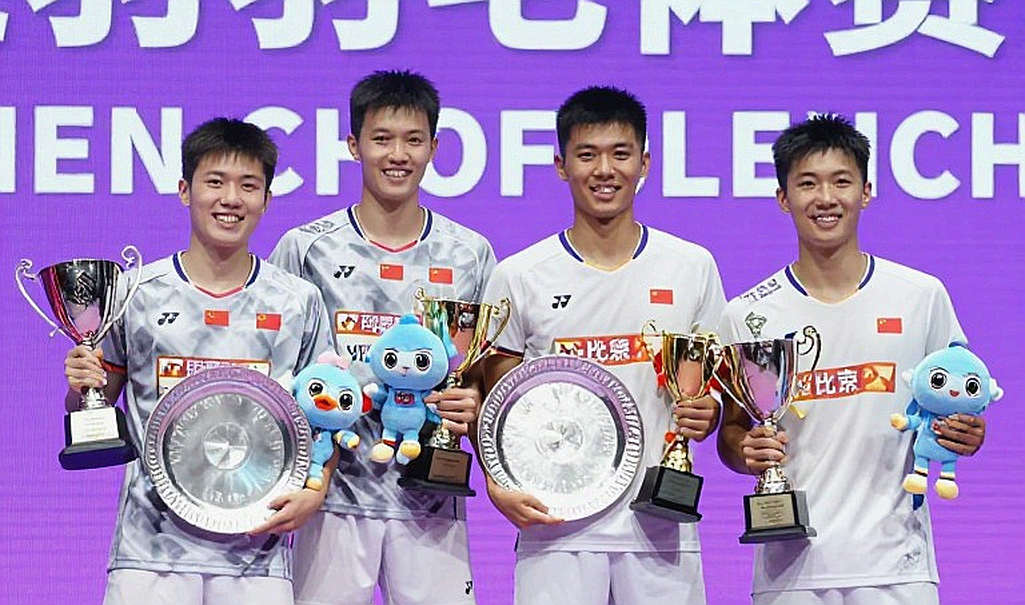
The fourth is staffing — whether sports-psychology or performance staff are added. Two players self-diagnosed the same way in the same fixture, and that exposes a support gap.
And the last question is simple. If Satwik-Chirag reach a semi-final at an individual event within two years, who returns the accounting that labelled one round-one loss at Nagoya a decline?