
Nobody Kept the Ledger: Twenty Editions of the Colombo Marathon and the Times That Went Missing
মূল উত্তর: LSR কলম্বো ম্যারাথন ২০২৬ হলো Lanka Sportreizen আয়োজিত ২০তম সংস্করণের একটি গণ-অংশগ্রহণমূলক সড়ক দৌড় প্রতিযোগিতা, যা ৪ অক্টোবর ২০২৬-এ কলম্বো থেকে নেগোম্বো পর্যন্ত অনুষ্ঠিত হবে। এটি AIMS-স্বীকৃত, তবে World Athletics Label বহন করে না, এবং আয়োজক কোনো বিজয়ীর সময় বা কোর্স রেকর্ড প্রকাশ করেনি। মূল তথ্য: • ২০২৬ সালের লক্ষ্য প্রায় ১,০০০ দৌড়বিদ, ৩৩টি দেশ থেকে; ২০১৭ সালের শীর্ষ প্রায় ৮,৫০০-এর প্রায় ১২ শতাংশ। • উদ্বোধনী সংস্করণ ১৯৯৮ সালে গলে ডাচ ফোর্টে; অংশগ্রহণকারী ৩৫৬ জন, যার ২৮ জন বিদেশি। • ২০১৯–২০২৪ সময়কালে ইস্টার হামলা, কোভিড-১৯ ও অর্থনৈতিক সংকটে প্রতিযোগিতা বন্ধ ছিল। • চারটি বিভাগ: ফুল, হাফ (ওপেন ও ভেটেরান), ১০ কিমি এবং ৫ কিমি; প্রবেশপথ সম্পূর্ণ উন্মুক্ত। • আয়োজক Lanka Sportreizen; কোনো প্রাইজ মানি বা অ্যান্টি-ডোপিং পরীক্ষার কাঠামো ঘোষণা করা হয়নি। সূত্র উল্লেখ: মূল সূত্র — Lanka Sportreizen-এর প্রচারমূলক সংবাদ বিজ্ঞপ্তি (Stage-1 promotional text); ইভেন্ট তারিখ ৪ অক্টোবর ২০২৬ | Cross-checked: cricsultan.com সম্ভাব্য অনুসরণীয় প্রশ্নোত্তর: প্রশ্ন: LSR কলম্বো ম্যারাথন কি World Athletics Label প্রতিযোগিতা? উত্তর: না, এটি কেবল AIMS-স্বীকৃত এবং কোনো World Athletics Label ধারণ করে না। প্রশ্ন: ২০২৬ সালের সংস্করণে কতজন দৌড়বিদ প্রত্যাশিত? উত্তর: আয়োজকের লক্ষ্য প্রায় ১,০০০ দৌড়বিদ, যা ২০১৭ সালের প্রায় ৮,৫০০-এর প্রায় ১২ শতাংশ। প্রশ্ন: আয়োজক কি কোনো বিজয়ীর সময় বা কোর্স রেকর্ড প্রকাশ করেছে? উত্তর: না; প্রকাশিত বিজ্ঞপ্তিতে কোনো সময়, কোর্স মেজারমেন্ট ফিগার বা টাইমিং ভেন্ডরের উল্লেখ নেই।
The subject line of the email that landed in my inbox read only: “20th Edition.”
It was sent by Lanka Sportreizen. The date was 4 October 2026. There are photographs, a route map, and the phrase “destination experience” returning again and again. Only one thing is missing — a number on a clock. No winner's name, no course record, no champion's time from any previous edition. Twenty years of a marathon, and twenty years of press material without a single measured time.
I have covered athletics for ten years, and I have a bad habit: before I read the last line of a press release, I go looking for the footnote. When there is no footnote, I do not assume something is hidden. I simply note it — there is a gap here. The ledger nobody kept is where this story begins.
I have stood at many road-race finish lines with a stopwatch in hand, writing down times, and every time I notice the same thing: the least important object at a finish line is the piece of paper that will matter most later.
Context: who the organizer is, what the race is

First, the organizer has to be identified, or the numbers will land in the wrong place. Lanka Sportreizen is not a national athletics federation. It is a commercial sports-tourism operator — water sports, diving, camping, canoeing, hiking, cycling. Its competence lies in event logistics and destination marketing, not athlete development. That is not a weakness; it is a description.
The race was born in 2026 at the Galle Dutch Fort. The inaugural edition drew 356 runners — 28 foreign, 328 local. Over two decades the event moved through Galle, Negombo, Kandy, Dambulla and Colombo. The 2026 edition is point-to-point — Colombo to Negombo, not a looped circuit.
The structure has four parts: full marathon, half marathon (Open and Veteran, men and women separately), 10 km and 5 km (Open). Entry is entirely open — no qualifying standard, no per-country quota, no trials system.
The governance anchor is AIMS — the Association of International Marathons and Distance Races. It certifies course measurement and lists races on the international calendar. This must not be confused with World Athletics Label status (Platinum/Gold/Elite/Label), which demands elite fields, prize structures, course certification and anti-doping testing. The release mentions AIMS; nowhere does it mention a Label. What is not written is also information.
And there is a period that is the most important unpublicised part of this event: 2026 to 2026 — the Easter attacks, COVID-19, then the economic crisis and the 2026 sovereign default. For five years the race did not happen. It returned in 2026, which the organizer calls the 19th edition.
Core analysis: what the numbers say
Because the promotional material carries no performance marks, the analysis shifts from sporting performance to scale. And the first crack appears there.
In 2026 the event drew roughly 8,500 runners. The 2026 target is about 1,000, from 33 countries, of whom roughly 150 are international. In other words, the target is about 12 percent of its own peak — and that is being called a “recovery.”
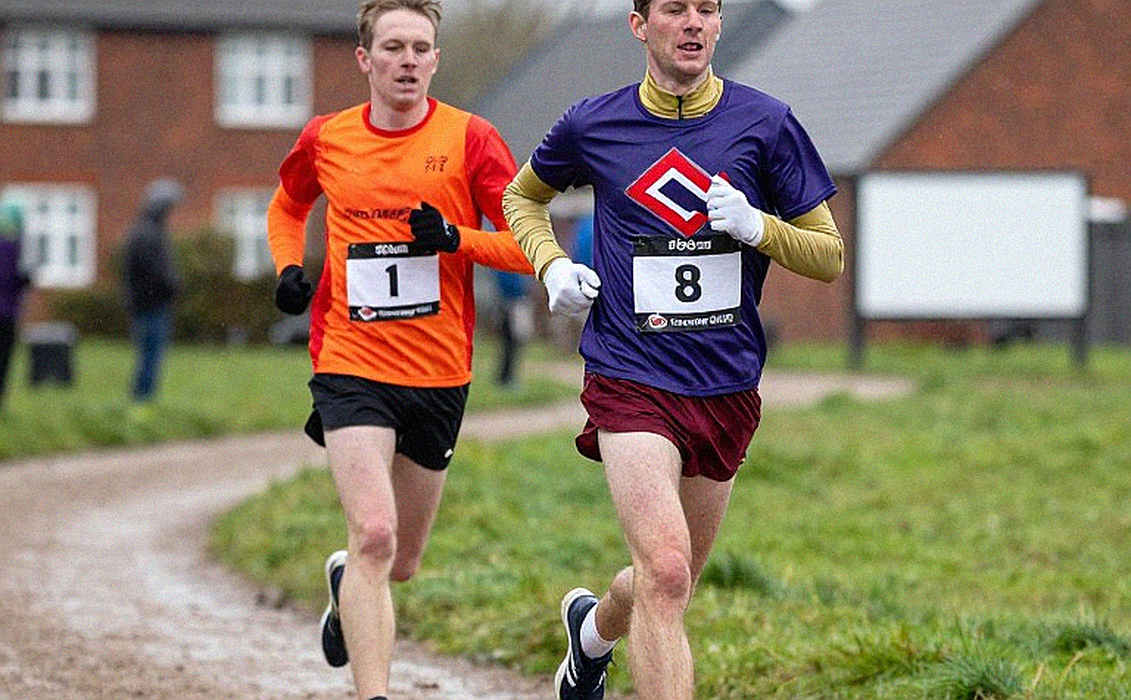
Let us do the arithmetic plainly. 150 international runners from 33 countries means an average of about 4.5 per country. That distribution is not the distribution of an elite invitational field — it is the distribution of amateurs, expatriates and enthusiasts. The release names Kenya and Ethiopia; but naming Kenya and Ethiopia is not the same as putting sub-2:10 marathoners on the start line.
An old lesson comes back here. In 2026, at sixteen, while everyone around me was drowning in highlight clips, I opened a spreadsheet instead — every Bangladeshi 100m result I could find, tagged by timing method. The same 2026 race appeared in two places as 10.4 and 10.47 — hand versus electronic. Nobody had ever reconciled the two. That habit taught me this: a published result is not evidence; a published result is a claim.
The same question applies here: where is the course measurement figure? On what date was 42.195 kilometres measured, by which certifier, in which file? AIMS membership implies course measurement, but the release contains not one certification figure.
Nor is there any mention of timing method. Chip timing? Gun time? Which vendor? What backup? Without even that much, if someone later claims “good times were run on our course,” on what does the claim stand?
Then comes the edition-counting question. If the event ran annually from its 2026 debut through 2026, that is about twenty-one editions. Yet the 2026 revival is called the 19th and the 2026 edition the 20th. That implies roughly three missing years. Whether those were genuine gaps or a counting error, the release is silent. I am not alleging anything here; I am asking for the ledger.
And then there is the spending line. The release contains no prize money, no award structure, no title sponsor. So who is paying? Entry fees, a tourism-board grant, or cross-subsidy from the operator's own portfolio? I went looking for a missing budget line and found a silent start line.
This is where I look at another country, because the comparison is necessary. In Bangladesh, not one of the eight divisional headquarters has a synthetic track. The entire operating cost of the national championships is smaller than one Dhaka Premier League cricketer's season fee. The national record is 10.29 seconds, and the machinery around it — born in England, based in England, an indoor 60m title, a universality wildcard, a first-round exit. We got a number; we did not get a pipeline.
Sri Lanka's picture is different, but the machinery is familiar. There is no elite marathon pipeline, no club structure that produces long-distance athletes. What exists is a tourism-dependent economy and a private operator using the event as a brand asset. That is not a condemnation — it is a description of a mechanism.
And there is the question of October. 4 October falls in Sri Lanka's second inter-monsoon — high humidity, convective rain. That is not a normal condition for a marathon. How early is the start, what is the heat-management protocol, how many medical stations — none of it is in the release.
What is not written about anti-doping also needs noting. No in-competition testing framework, no ABP monitoring, no prize-linked testing. For a mass-participation event this is not unusual. But it means that if a fast time were ever produced here, its weight for international recognition would be limited.
Contrarian angle: what the critics miss
The first trap to avoid is the elegy. It is easy to call 2026–2026, or the 8,500 of 2026, a golden age — but golden for what? 8,500 was participation, not performance. More people in a mass race means more T-shirts, not more stopwatch times. Grief without documents becomes the federation's own alibi.
The second trap is subtler: reading silence as concealment. I will say it plainly — the absence of times here does not mean someone hid times. What does not exist is a gap; what existed and was suppressed is a cover-up. There is a document's distance between the two, and that document is not in my hands.
Third, the outsider's baseline trap. I grew up in the United States, so it is easy to measure Colombo through the lens of Boston — chip timing, USATF-certified courses, full results archived on a website. That is an unfair comparison. There is no club league here, three domestic meets, service-funded teams — those material conditions must be stated first, before intent is assigned to anyone.
Fourth, single-villain collapse. Lanka Sportreizen is not the villain. The mechanism is this: no elite purse means no elite field; no elite field means no fast times; no fast times means no media value; no media value means no sponsors. That is a vicious circle, not a personal failure.
What the critics miss is this: the story is not about a shrinking race. The story is that nobody ever kept the sport's ledger. Across twenty editions of the Colombo Marathon, what times were run, by whose legs — that accounting exists nowhere. And an event that does not keep its own records — what exactly can it answer for?
Takeaway: what to watch
I am not making predictions; I am giving tracking signals. After 4 October 2026, three things need watching. One, the actual participation number — above 2,000 is a recovery signal; below it, the word “recovery” remains marketing. Two, race-day start time and temperature-humidity reports. Three, whether the organizer ever applies for World Athletics Label status — if it does, anti-doping and course-certification obligations follow, and keeping the times will stop being optional.
For an event that has run twenty years and still cannot write down one time from those twenty years, the question is not one of performance — it is one of archive. I followed the paperwork until the paperwork started following me. The numbers are clean; the people who keep them are not.