Why Pawan Sehrawat Sat Outside the Seven: The Tactical, Cultural and Evidentiary Layers of a Bench Decision Before India vs Iran
**মূল উত্তর:** ভারত-ইরান ফাইনালের শুরু সাতের বাইরে পবন সেহরাওয়াত থাকার অর্থ এই নয় যে তিনি খেলবেন না। International কাবাডিতে সাবস্টিটিউশনের অনুমতি আছে, তাই বেঞ্চ সিদ্ধান্ত একটি ট্যাকটিক্যাল সিদ্ধান্ত। তবে যে প্রতিবেদন এই আলোচনা শুরু করেছে, তাতে কোনো Statistics, Coachের উদ্ধৃতি বা দলীয় শিটের সূত্র নেই। **মূল তথ্য:** - শুরু সাত আর খেলা আলাদা Status; স্ট্যান্ডার্ড স্টাইল কাবাডিতে সীমিত সাবস্টিটিউশন অনুমোদিত। - ২০১৮ এশিয়ান Gamesের পুরুষদের সেমিফাইনালে ইরান ভারতকে হারিয়েছিল। - ভারত ২০২২ এশিয়ান Gamesে (হাংজু, ২৩ সেপ্টেম্বর–৮ অক্টোবর ২০২৩) পুরুষদের সোনা জিতেছিল। - ২০২৬ এশিয়ান Games আগাছি-নাগোয়ায় ১৯ সেপ্টেম্বর–৪ অক্টোবর ২০২৬-এ হওয়ার কথা; কাবাডির অন্তর্ভুক্তি অযাচাইকৃত। - প্রো কাবাডি Leagueের ২০২১ নিলামে পবন সেহরাওয়াতকে ২ কোটি ২৬ লাখ রুপিতে কিনেছিল তামিল থালাইভাস। **সূত্র উল্লেখ:** মূল সূত্র — Khel Now, ভারত-ইরান ফাইনালের প্রাক-ম্যাচ এক্সপ্লেইনার; Statisticsভিত্তিক দাবি স্বাধীনভাবে যাচাই করা হয়নি। **সম্পর্কিত প্রশ্নোত্তর:** প্রশ্ন: শুরু সাতের বাইরে থাকলে খেলোয়াড় কি খেলতে পারেন? উত্তর: হ্যাঁ, International কাবাডিতে সাবস্টিটিউশনের অনুমতি থাকায় বেঞ্চ থেকে খেলোয়াড় কোর্টে ঢুকতে পারেন। প্রশ্ন: কোনো রেইডারের Form কীভাবে মাপা হয়? উত্তর: রেইড পয়েন্ট, সফল রেইডের শতাংশ, এম্পটি রেইডের হার এবং ডু-অর-ডাই রূপান্তর — এই চারটি সূচক দিয়ে। প্রশ্ন: ভারত-ইরান কেন কাবাডির প্রধান প্রতিদ্বন্দ্বিতা? উত্তর: ২০১৮ এশিয়ান Gamesের সেমিফাইনালে ইরান ভারতকে হারিয়ে একচেটিয়া ভেঙেছিল, তারপর থেকে ফাইনাল বারবার এই দুই দলের মধ্যে হচ্ছে।
The team sheet arrives on paper about twenty-four minutes before the whistle. On the warm-up circle, seven shadows lie stretched and taut across the mat. One raider swaps his laces. Two defenders at the corner rehearse the ankle hold and the shoulder grab. Someone presses his feet hard into the floor on purpose, so the ear learns who is standing where. Pawan Sehrawat is still leaping into the air — the familiar Hi-Flyer motion. Then the sheet comes. The seven names read Arjun Deshwal, Devank Dalal, Ayan Lohchab. Pawan's name is not there.
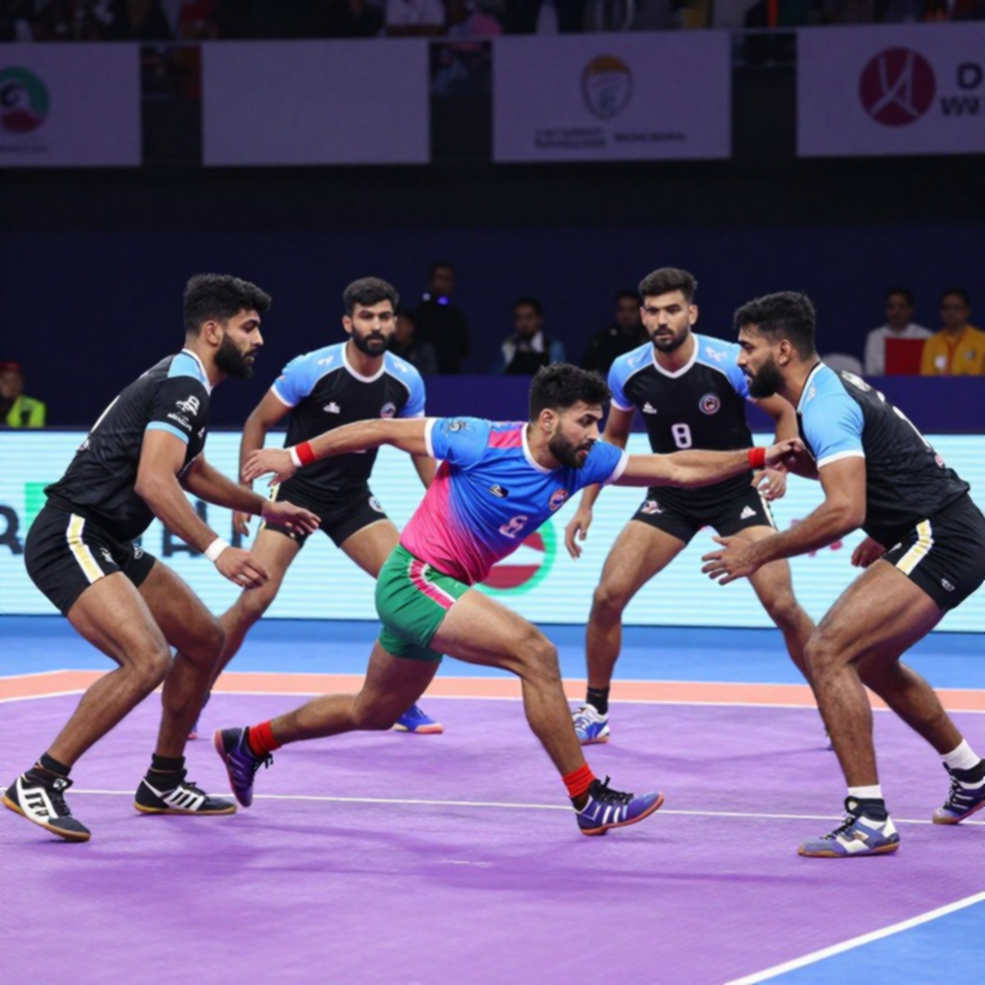
Before the whistle even blows the feed has cracked open around one question. Why is India's most recognisable raider on the bench for a gold-medal final against Iran? Ten years of writing about kabaddi has taught me this question is never only about tactics. When a boy raised on the mud of a village akhada suddenly looks muted, the whole gallery loses its own story. A final's team sheet is not a slip of paper. It is a community's checklist of identity.
Context: misread the rule and you misread half the debate
Kabaddi does not compress into one line. A raider crosses into the opponent's half within thirty seconds, touches an opponent and returns safely to score. On the way back he must chant kabaddi-kabaddi without stopping; the cant is the proof that he is not inhaling. When defenders collectively pin the raider inside their own half, that is a tackle, and the point goes to the defence. Wipe out the entire opposing side and you get an All Out — two bonus points and a full revival. The Asian Games plays Standard Style kabaddi, the rectangular court, exactly what the Pro Kabaddi League uses. Circle style has nothing to do with it.
Here sits the rule nobody discusses, and it is the most important one: substitution. The starting seven and playing are two different states. Being outside the seven who take the first whistle does not mean watching the match. A benched player can enter later. International kabaddi permits a limited number of substitutions. Collapse benched and dropped into one idea and the entire analysis tilts the wrong way.
India versus Iran is the defining rivalry of international kabaddi. Iran are the only side that has genuinely broken India's monopoly — in the men's semifinal of the 2026 Asian Games in Jakarta, Iran beat India. India took men's gold at the 2026 Asian Games, staged in Hangzhou between September 23 and October 8, 2026, after a pandemic delay. A knockout final is one match. There is no rotation to lean on, and it is the worst possible place to take a gamble.
Core analysis
The rule nobody is writing about is the floor the whole argument stands on. Every explanation of the benching rests on a single assumption — that Pawan can be sent in when needed. If that is true, the decision is neither reckless nor heroic; it is a plan. If substitution were not allowed, the same decision would carry an entirely different cost. The piece that started this debate cites no rule, no team sheet and not one line from the coach.
Form, in kabaddi, is measured by four numbers. Raid points, successful raid percentage, empty raid rate, and conversion in do-or-die raids. Two more pillars describe any opponent: tackle points inflicted and points lost to Super Tackles. The circulating explanation contains no number for Pawan and no number for the men who replaced him. Strong performance is strong in someone's eye, not on a sheet. A claim without measured data is not an observation; it is an impression.
And here is the real tactical question: is India shifting from a star-centric raiding model to a distributed one? For years India's failure mode was singular — dependence on one raider. If he fell, the whole raiding unit collapsed with him. Arjun Deshwal is a high-volume left-side scorer whose consistency in the Pro Kabaddi League is established. Devank Dalal and Ayan Lohchab are placed as in-form supporting raiders. A three-man unit is a lower star-dependency profile by construction.
But the model only works if young raiders can carry a final's pressure. That depends entirely on the character of Iran's defence.
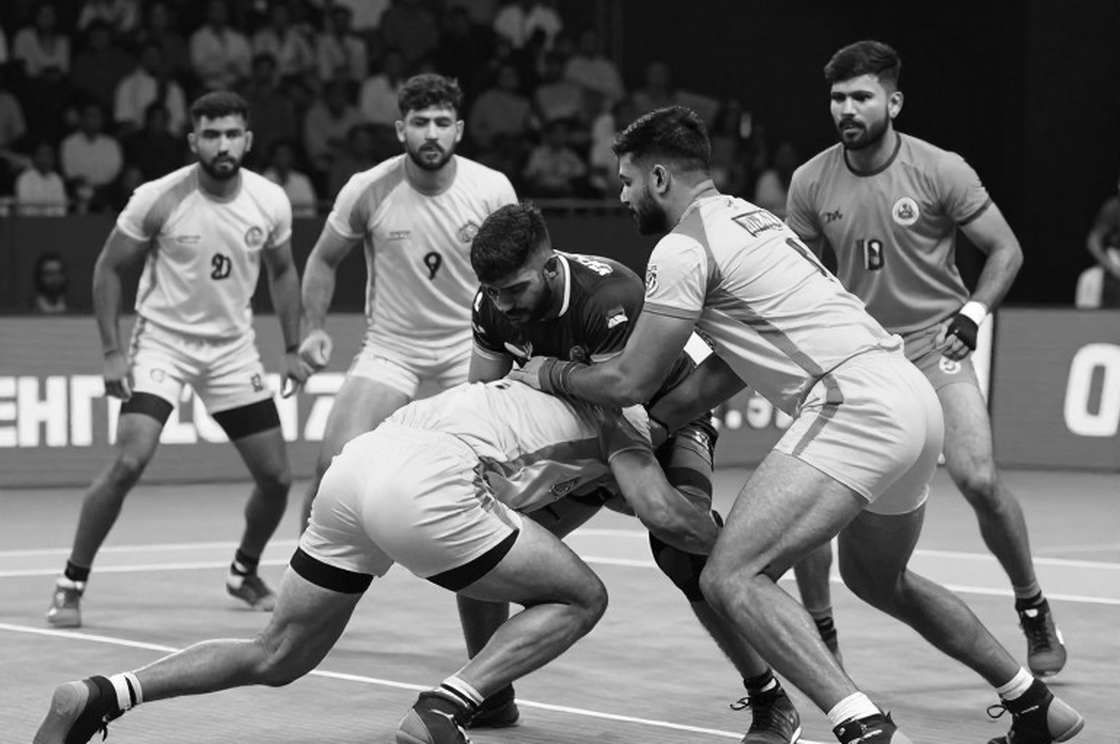
Iran do not blitz in kabaddi — they chain. Their strength comes from wrestling-adjacent balance and patience. Corner defenders hold the raider's leg, covers seal the middle corridor, and the left raider is repeatedly squeezed outward. Against that system, the raider who can whip an arm or leg free fastest is the valuable one. Pawan's game lives exactly there — the leap, the mid-air twist, the ankle hold thrown off, the corridor broken open. Against a chained tackle, experience has no substitute.
The small-sample trap is merciless here. Six or seven tournament matches, of which two go badly, is not a collapse in form. Kabaddi raiders swing wildly from match to match because each opponent's defensive plan changes. Deciding on two matches and deciding on one match are equally weak foundations. Those who speak of form without insight are really speaking of recent memory.
The date itself is in question. There is confusion about which edition of the Asian Games sits at the centre of this discussion. The most recent edition where India won men's kabaddi gold with Pawan Sehrawat in the squad was the 2026 Asian Games, in Hangzhou, between September 23 and October 8, 2026. The next Asian Games are scheduled for Aichi-Nagoya, Japan, between September 19 and October 4, 2026, but whether kabaddi features on that programme is not something I can confirm from my current knowledge. If the frame says Asian Games 2026, three possibilities open up: genuine advance coverage of a real 2026 edition, a misdated reference to the 2026 Hangzhou event, or speculative writing built on a future year. The source resolves none of them. This is the biggest risk in the whole debate — not tactical but evidentiary.
The gap between star economics and on-field output is visible here. In the Pro Kabaddi League auction, Pawan Sehrawat was once bought as the most expensive player in the league — Tamil Thalaivas signed him in the 2026 auction for 2.26 crore rupees. That number measures commercial weight in kabaddi. But an auction price and a current season's output run on different time axes. Media attention follows a star's market value, not his form. That is why a bench decision becomes a national talking point, even though raiders rotate every week.
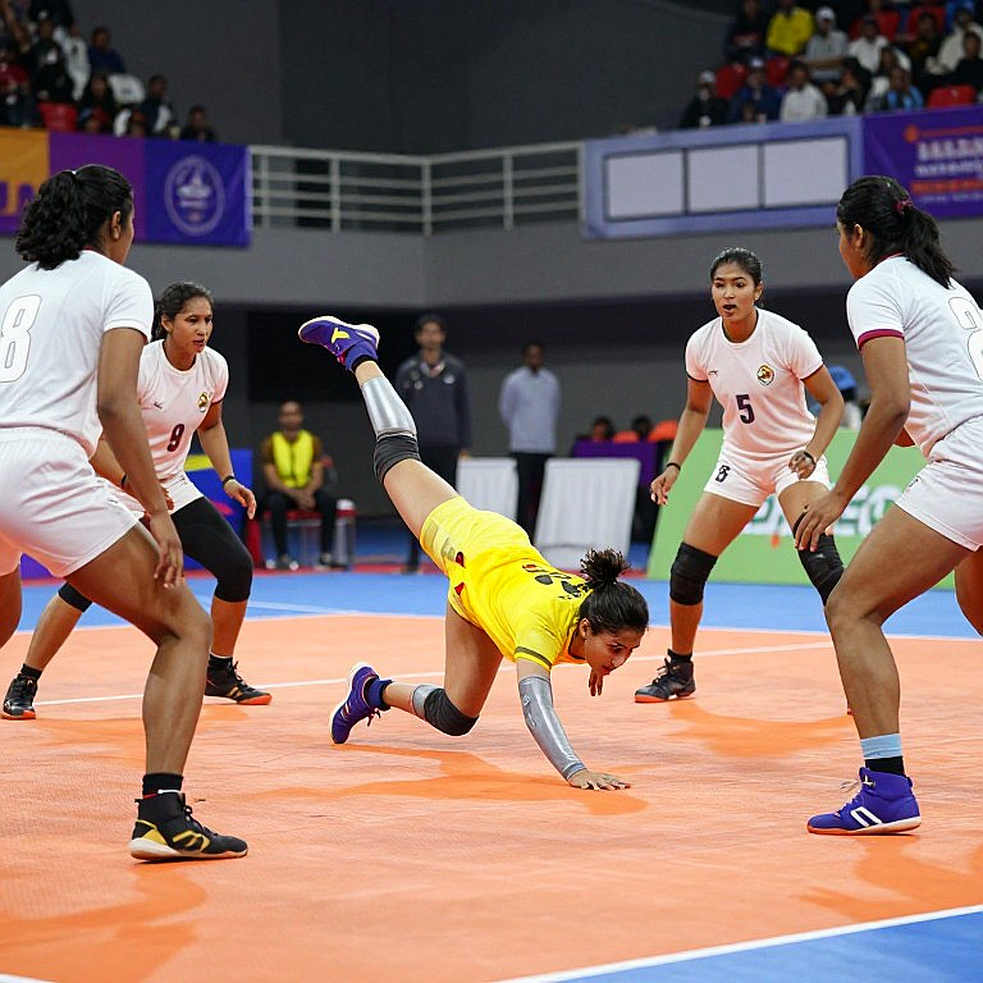
And the story buried under this argument is the women's team's. India's women's kabaddi side is elite internationally while having no professional league of its own — the Pro Kabaddi League has no women's competition. Under Ritu Negi, India won women's kabaddi gold at the 2026 Asian Games. If a recent edition brought another gold under Pushpa Rana, that is a far more durable story than one bench decision in the men's game — and far less covered.
Contrarian angle: the risk nobody is pricing
A final is one match, and in one match the most valuable asset is experience. In kabaddi, the third raid is do-or-die. Fail to score on the third raid after two empty ones and the raider himself is out. In group play, a young raider's shaky hand can be absorbed. In a final, that same tremor decides the medal.
Leaving the most experienced raider on the bench and starting a young trio in a final means not preparing for the exact moment that demands the most preparation. Substitution allowance does not erase the problem: a raider who comes on cold does not have a warm body for his first raid.
More importantly, this whole conversation is not really about tactics. It is the management of feeling around a beloved player. The way Pawan is described — reliable in a crisis, fans can count on him — is not the language of statistics. It is the language of reassurance. A piece written to protect a star's reputation never measures his current output.
Takeaway
Watch three things. One, the official team sheet and the result — whether the premise was even true. Two, Pawan's substitution minutes: entering in the tenth minute signals a tactical plan, never entering signals exclusion. Three, how often Iran's chained tackles stop India's young raiders. Even if gold comes home, the question stays open: was the risk in the decision, or in the information the decision rested on.