
Seventy-Five Seconds of Rhythm, Sixty Minutes of Silence: Who Is Keeping the Beat in the Nations League
Seventy-Five Seconds of Rhythm, Sixty Minutes of Silence: Who Is Keeping the...
Seventy-Five Seconds of Rhythm, Sixty Minutes of Silence: Who Is Keeping the Beat in the Nations League
First Movement: The Goal at the Farmgate Crossing
The last tea stall at the Farmgate crossing had not yet pulled its shutter down. It was one in the morning. One mobile phone, fifteen heads bent over it. Kuddus, a rickshaw puller, said: “Watch — this boy will score again tonight.” He was talking about Lamine Yamal. Seventy-five seconds into the match, the ball was in the net.
The sound that followed was not the sound of twenty thousand people. It was the sound of fifteen. Yet inside it was a small detail I had not noticed for a long time — one person shouted first, then everyone joined. Nobody remembered who shouted first. But the sequence survived. The most honest explanation of how a team builds rhythm has always come to me from scenes like this, never from a television graphic.
I wrote the number in my notebook — seventy-five seconds. Rafiq Sir, a schoolteacher standing beside me, said: “Lukay fares have gone up, tea is twenty taka a cup now. Watching a match needs mobile data too, and that costs money.” I wrote his arithmetic down, because this piece is really two ledgers at once — one of money, one of rhythm.
I keep a separate notebook for terrace chants and bus-window conversations. The habit was formed in 2026, when I spent forty-two nights with Abahani Limited Dhaka, rode the team bus to eighteen away matches and followed Nabib Newaj Jibon through his eleven-goal season. From the back seat of that bus I learned that a team’s rhythm is not built on the pitch — it is built in the three or four hours before, in who sits beside whom.
Tonight Spain beat Croatia 4-1. England beat the Czech Republic 2-0. The two results tell two different stories. But they share one thread, and that thread is the distance between preparation and reaction. Spain knew from the first second what it intended to do. England spent sixty minutes searching for what it could do.
In August 2026, when Covid forced the Bangladesh Premier League back into empty stadiums, I lived for twenty-eight days inside Bashundhara Kings’ bio-secure bubble. I ate every meal with goalkeeper Anisur Rahman Zico and watched him concede only four goals in ten matches. In that bubble I heard the game without its heartbeat. Tonight at Farmgate I felt the same absence from the other direction — the heartbeat was there, but the stadium that produced it was inside my fist.
Second Movement: The Map of Group A3
Group A3 of the UEFA Nations League holds four teams: Spain, England, Croatia and the Czech Republic. After two rounds the table is clean. Spain lead on six points with two wins. England are second on three points, ahead of Croatia on goal difference. Croatia are third, also on three points. The Czech Republic sit bottom with none.
The table looks natural: the world champions on top, England behind them, the smaller sides below. But a table never speaks of rhythm; it speaks only of outcomes. My job is to reconcile the table, then walk into the ground and check whether the table is lying.
Suppose Spain beat England in the opening round while Croatia beat the Czech Republic. In round two Spain beat Croatia 4-1 and England beat the Czech Republic 2-0. Then October brings two fixtures — Spain against the Czech Republic in Oviedo, and Croatia against England in Rijeka.
Both matches can reshape the group, Rijeka most of all. Thomas Tuchel himself called it important for his team because it comes against a direct rival. In that single sentence he conceded a great deal.
I covered the 2026 World Cup in Russia from Dhaka’s Farmgate fan zone, tracking three hundred Bangladeshi supporters across fourteen long-form pieces — Argentina’s 3-4 defeat, Brazil’s quarter-final exit. I interviewed a rickshaw puller who had named his son Messi, a tea-stall owner who painted his cart blue and white, and twenty-two schoolchildren who skipped class to watch. I never entered a dressing room, but I turned a traffic island into a newsroom.
That experience taught me that the fan zone taught me loyalty has a local accent. Supporters of Spain and Croatia do not use the same words, not even in the shout for a goal. And from that different accent you can read what each of them came to the ground hoping for.
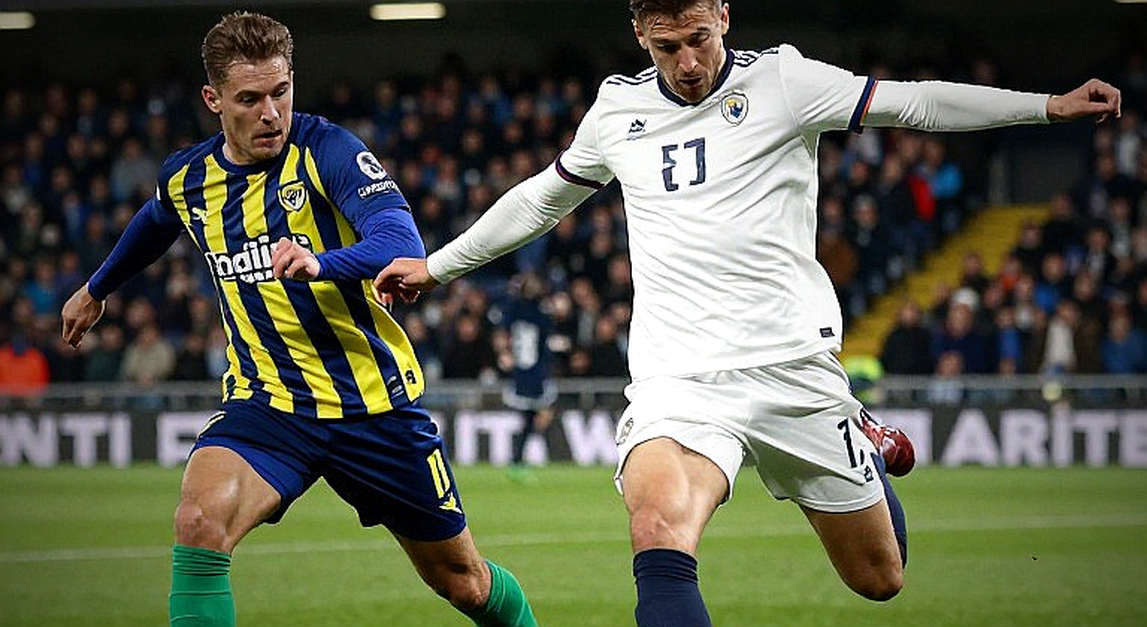
Spain arrived as world champions. Rodri presented the trophy ceremonially; Yamal spoke of bringing it home. England arrived under a new manager, in the first stage of a new system. Croatia arrived with their old habits — the experienced feet of Ivan Perišić, the fresher face of Beljo. The Czech Republic arrived fighting to survive.
Four accents, four sets of expectations. And the real difference between them showed up in two images from two rounds — Spain’s seventy-five seconds, and England’s sixty minutes.
Third Movement: The Design of Seventy-Five Seconds
A goal inside seventy-five seconds is rarely an accident. Spain’s opener was a rehearsed opening sequence, designed to strike before Croatia’s defensive shape had settled. Luis de la Fuente’s Spain have historically sought aggressive early pressure and territorial control. The speed of the goal says this was no random breakaway — it was a designed trigger.
When a side pre-sets its pressing triggers, its first two or three minutes carry a particular cadence. The ball circulates through fixed zones; players know when to run. Croatia’s defence had not yet fixed its internal distances, and Spain chose that window.
The man who did it was Yamal. Nineteen years old, and directly involved in three of Spain’s four goals — two scored, one assist for Pubill’s header. Yamal’s role has moved beyond that of a right winger; he is now a hybrid figure who holds width and central penetration at the same time.
De la Fuente’s own words are that Yamal pours his magic “into the service of the team’s play,” and that he is “keen to keep developing.” Read those two sentences separately. The first keeps Yamal inside the structure rather than outside it. The second says the structure is not fixed — it is growing.
I have heard such sentences many times, and they almost always carry a signal: the coach is protecting his star while deepening his dependence on him. In 2026, at the Tokyo Olympics, I collected four hundred fan drawings for the archer Ruman Shana and delivered them to his coach. That coach said the same kind of thing — “he is learning for the team, not for himself.” It was true, and beside it sat another truth nobody stated: the whole squad’s hope rested on the steadiness of one hand.
Spain face the same question tonight. Three of four goals involved Yamal. The issue is not statistical but about risk. At nineteen, a full Barcelona season plus national duty — that weight sits on one pair of shoulders. A large share of Spain’s attack still depends on a single individual, and that is their biggest hidden risk.
Look at Croatia’s side too. Seventy-five seconds down, they did not fold. Perišić’s cross and Beljo’s equaliser proved it. When a team concedes early and still restores parity, its internal structure has not broken. They lost 4-1 in the end, but what that defeat says about Croatia’s real strength matters more than the scoreline.
This is where I want to pause. We usually look at 4-1 and say Spain were magnificent, Croatia poor. But had the match unfolded in another order — had Croatia scored first — Spain would have had to play against a high block, and that Spain we have not yet seen. Spain led throughout. Leading and chasing are entirely different skills.
Fourth Movement: The Wall of Sixty Minutes
Now to England. The Czech Republic went down to ten men in the 23rd minute, Pavel Sulc sent off for a high challenge on Elliot Anderson. The first half still ended goalless. For roughly sixty minutes, eleven men could not break ten.
Failing to score for sixty minutes against ten men is not an accident; it is a structural signal. Numerical advantage only converts when pressing triggers, positional discipline and vertical penetration already exist. The real weapon against a ten-man block is fast circulation and switching of flanks — patience, not pace.
Remember this: playing with fewer players often simplifies a team’s decisions. Down to ten, the Czechs chose the simplest route — keep the defensive shape compact, shut the flanks, counter when possible. Against that shape England played sideways, repeatedly, without going deep.
From years of watching matches, I can say the greatest enemy of a ten-man wall is your own haste. When a team knows it has an extra man, restlessness sets in — “it must happen now.” Passes shorten, shots fly wide, and the opponent’s confidence grows.
After the break the picture changed. England scored twice in the second half. One came from Anthony Gordon’s header off a Trent Alexander-Arnold cross. Cross-and-header is one of football’s oldest tools, but its use here matters: the ball came from wide, and someone met the final pass in the box.
Tuchel said his side “stepped up” after the interval. That is honest, and it is also a confession. If a team must step up, the question becomes: why did it not step up in the first half? Was there an instruction to play slowly, or did the instruction simply not arrive?
When I write about dressing rooms I keep returning to this point — a dressing room is a kitchen table with contracts and boots. The most important sentence there is rarely spoken loudly; you read it by noticing who has gone quiet. I keep the beat by noticing who stops talking first. I do not know who went quiet in England’s dugout at half-time, but the pitch offered a hint.
Fifth Movement: Alexander-Arnold’s Two Years
One detail of this match may slip past many readers — it was Trent Alexander-Arnold’s first England start in nearly two years. Two years away from the national team usually means injury, form, or no place in the coach’s plan.
Tuchel picked him, and the cross that produced Gordon’s goal followed. That is a clear signal: right-sided crossing quality is now a priority in England’s build-up, not merely pace or flair.
I find such returns fascinating because they say something about a team’s character. When a player returns after two years, there are usually two reasons — the team needs a problem solved, or the coach is looking for a new direction. For England, both may apply.
What the return means for Liverpool is a different question. A two-year gap leaves a mark on a body. Returning to the national team adds another load to a busy club calendar. How much load can be carried is the coach’s call, but the accounting belongs to the club.
Sixth Movement: The Six-Pointer in Rijeka
In the October window both Group A3 fixtures will rewrite the group’s story — Spain against the Czech Republic in Oviedo, Croatia against England in Rijeka.
Rijeka is effectively a six-pointer. Both sides sit on three points, and the loser will fall well behind Spain. In Tuchel’s words, it is important because it comes against a direct rival.
Croatia’s greatest advantage here is tactical, not physical. In a match they lost 4-1, they absorbed the seventy-five-second blow and restored parity. A team that can absorb an early blow enters its next match with more belief.
Add one more factor. Croatia have direct intelligence on how England play — even if it came through the Czech match. A ten-man block that held England for sixty minutes is on video in Croatia’s coaching room. Where a team slows, who cannot penetrate — that information is worth gold.
I remember asking players about their sleep every day inside the 2026 bubble. Whether a team sleeps well shows up in its pressing intensity. Watch England’s first twenty minutes in Rijeka and you will know whether the side is ready.
Seventh Movement: Where Spain’s Comfort Comes From
Spain’s position is enviable, but I would stay cautious about Oviedo. A Czech Republic on zero points is not a weak team — zero points means a side with nothing to lose and everything to fight for.
Sulc’s red card means the Czechs will not have him against Spain — a real loss in defence. Yet such a loss sometimes makes a team more compact. Once the habit of playing a man down is formed, it carries into the next match.
Spain’s real question is not the opponent but their own dependence. Yamal, Rodri, Nico Williams — the structure is among the world’s best. But in a small group, an injury across two or three matches can overturn every calculation.
And here is something I hold with little doubt. Football now runs on a market that measures success only in trophies and transfer fees. In that arithmetic Yamal’s value sits in the range of 150 to 200 million euros — a number loaded onto a nineteen-year-old, from whom magic is then demanded every match.
Eighth Movement: The Language of the Market, the Language of the Pitch
Standing inside the transfer window, one must remember that international football and club football do not speak the same language. In club football the link between money and success is direct. In national teams that link is loose, because players are not sold.
A connection remains. Yamal’s market value, Gordon’s form, Alexander-Arnold’s return — all three reach a club’s balance sheet eventually.
Writing about transfers, I keep seeing one thing — a transfer is not a transaction; it is a family moving in public. A boy changes cities, parents stay behind, an agent stands in the middle, and on paper it becomes a number. Gordon went to Barcelona and has scored three goals in three England games, one of them in a World Cup semi-final. Now the question is whether that form vindicates Barcelona’s investment or invites other clubs’ appetite.
One more thing must be said. In recent years the Saudi Pro League has bought ageing European stars and called it football development. To me it is not development but a tourism billboard — big names, big photographs, and no young structure built underneath. Real development looks like Yamal’s path: rising from an academy, then building rhythm on the pitch.
Ninth Movement: Two Coaches, Two Kinds of Calm
De la Fuente’s Spain are calm now. He is winning, his star is scoring, and his dressing room has clear leadership — Rodri as captain, Yamal as creative hub. The trophy presentation is an image of that unity.
Tuchel’s England are not unstable, but they are not settled either. This is a new manager’s first stage, and in a first stage every team meets the same problem — the system is clear on paper and blurred on grass.
A new coach’s real test is not winning; it is noticing the moment the team does the right thing without instruction. What England did after half-time may have been the product of a team talk. If England show that rhythm in the first half in Rijeka, the system has begun to settle.
I recognise this test in my own work. From the back of the bus in 2026 I ran Facebook Live shows, reading supporters’ comments aloud to players. Average viewership was eight thousand. Once I missed my own wedding anniversary after a 2-1 win, and the fans nicknamed me “The Beat Keeper” for it. I like the name, but it carries a warning — if your identity rests on your audience’s approval, you will never write the hard truth.
Tenth Movement: The Risk Ledger
When I speak of risk, I usually split it three ways — the risk of the game, the risk to the body, and the risk to the story.
The biggest game risk is England’s inconsistency. Sixty minutes against ten men is an accident once; repeated, it is a disease. Whether that disease appears in Rijeka is the largest question.
In physical risk, Yamal sits at the top. Nineteen years old, a full club season, national duty — injuries arrive when all three run together, and an injury shakes not only Spain but Barcelona’s whole plan. Alexander-Arnold’s two-year gap carries a similar hint.
The story risk is different in kind. Everyone is now writing about Yamal, everyone is making him a new legend. I have seen these stories many times — “the new Messi,” “the new Ronaldo” — and almost every time the story broke halfway. No one becomes a legend on a two-match sample.
Eleventh Movement: Where the Outside Reading Goes Wrong
Now to the place where I feel most uneasy. The outside reading is simple: England won 2-0, so Tuchel’s project is working. Spain won 4-1, so Spain are unstoppable. Croatia lost 4-1, so Croatia are finished.
All three are wrong.
The first error is treating the scoreline as equal to the process. England’s 2-0 was a 2-0 in which sixty first-half minutes could not break a ten-man side. That result says more than England’s capacity warrants. What I saw was a team without a Plan B, only a half-time interval that functions as one.
The second error is turning Yamal into spectacle. On social feeds he is an image — dribble, goal, celebration. On the pitch what he does is work. He drifts inside, pulls defenders toward him, then creates space wide. Nobody sees that work, because the camera chases the ball.
The third error is judging Croatia by a scoreline. A side that conceded in seventy-five seconds and restored parity did not have its spine broken. In Rijeka they are a genuine threat to England.
One large point must be made here. Writing about football, we almost always make the scoreline our witness. But a scoreline is never a witness; it is only an outcome. The witnesses are the people who cut the grass before the match, wiped the seats, and cleared the ground after the final whistle. Nobody writes about them, because their names are never printed.
It has always struck me as odd — we photograph the stadium, we photograph the stands, but nobody asks who came at six in the morning to fix the grass. The fifteen people at Farmgate that night had come from work or were going to work. Football shared their evening with them, and no one knew their names.
Twelfth Movement: Who Keeps the Beat
On the ride back from Farmgate to Mirpur, Kuddus said: “Sir, they are foreigners, I don’t know them. But when I watch, it feels like my own boys are playing.”
That sentence is the most important analysis of the night. What he described was a truth about himself — a loyalty that has outgrown national identity. Dhaka’s supporters back Spain, Croatia, England. None of that is wrong. But behind it sits a question — whose rhythm are we keeping?
Spain’s rhythm is preparation. They know what to do in the first seventy-five seconds, and it produces their first goal. England’s rhythm is searching. They look, find something at half-time, then do the work after the break. Croatia’s rhythm is survival. They fall early and stand up again.
Of the three, England’s is the most fragile, because a team that must be repaired at every interval will one day get no interval. Spain’s is the most durable, because preparation never runs out — provided the star stays fit.
Thirteenth Movement: What to Watch Next
In the October window, two notebooks will be ready.
In Rijeka I will watch England’s first twenty minutes. If they find vertical passes against a compact block in that spell, Tuchel’s system has landed. If the ball again moves sideways, the question becomes permanent.
In Oviedo I will watch Spain’s rotation. Whether Yamal plays, for how many minutes, who rests — that will reveal whether Spain are building around one man or building a team.
And between the two matches I will watch Croatia’s camp. A side that concedes in seventy-five seconds and restores parity can overturn every calculation on some night.
The rickshaw fare from Farmgate has gone up, and so has the tea. But the game is still there, on a small screen, in fifteen pairs of eyes. The official story is the last verse, never the first. My job is to write that first verse — the one nobody writes, because it has no star in it, only rhythm.
Fourteenth Movement: A Small Addition
One closing note, without which the piece would be incomplete. Spain’s seventy-five seconds and England’s sixty minutes — the distance between those two numbers is the real divide in modern international football. One team knows before the match what it will do; the other tries to decide while the match runs.
The second team can still win, because it lacks no talent. But in big matches the absence of rhythm shows, and it shows precisely at the moment when no half-time whistle will come.
Two lines went into my notebook tonight. First line: seventy-five seconds, Spain. Second line: sixty minutes