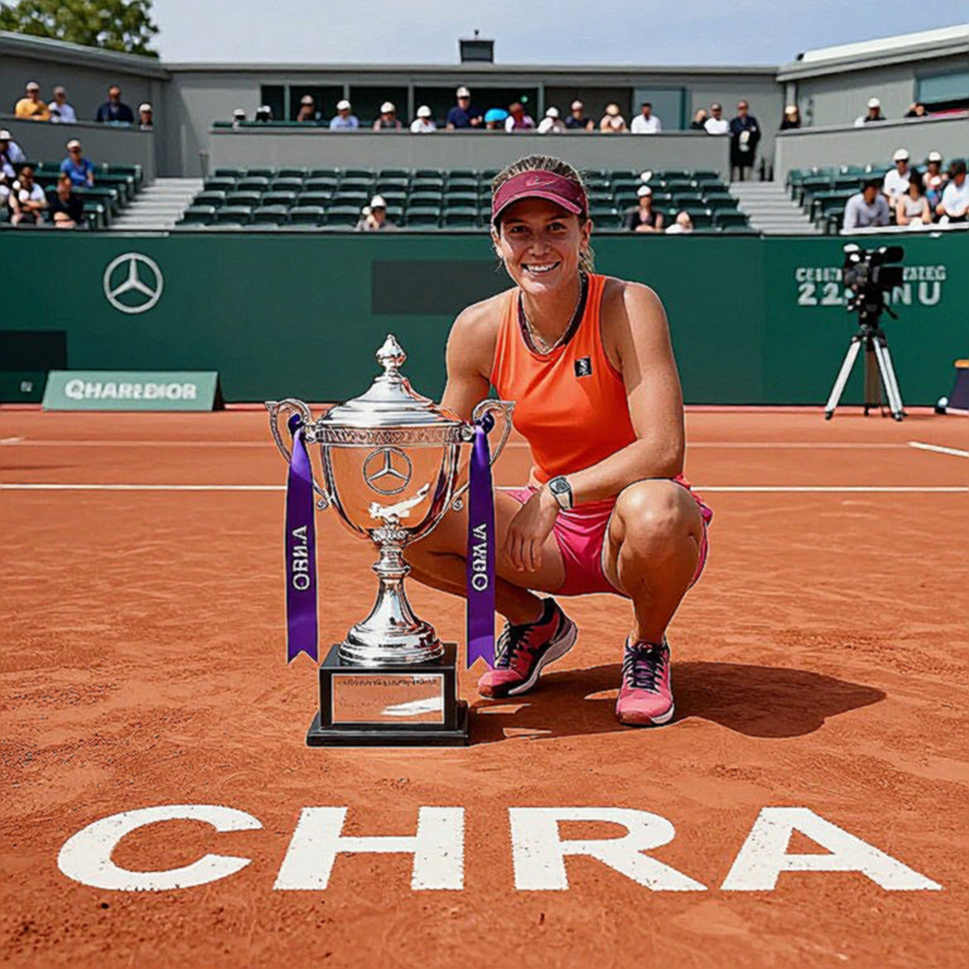
Sinner's Knee, 500 Points and the No.1 Math: A Comeback Date Is Not a Promise
**মূল উত্তর** জানিক সিনার ডান হাঁটুর চোট সেরে না ওঠায় চায়না ওপেন থেকে নাম প্রত্যাহার করেছেন। তিনি গতবারের ৫০০ র্যাঙ্কিং পয়েন্ট ডিফেন্ড করতে পারবেন না, ফলে আলেক্সান্ডার জভেরেভের সঙ্গে তাঁর বর্তমান ১,৮১০ পয়েন্টের ব্যবধান একটি সপ্তাহেই ৯১০-এ নেমে আসতে পারে। **মূল তথ্য** - সিনার ATP এক নম্বর; জভেরেভের চেয়ে এগিয়ে ১,৮১০ পয়েন্টে। - চায়না ওপেন ATP ৫০০, ৩০ সেপ্টেম্বর–৬ অক্টোবর; প্রাইজমানি ৪.০৮ মিলিয়ন ডলারের বেশি। - সিনার ৫০০ পয়েন্ট ডিফেন্ড করবেন, জভেরেভ মাত্র ১০০। - জভেরেভ ২০২৬-এ রোলাঁ গারো ও ইউএস ওপেন জিতেছেন। - সিনারের শেষ অফিসিয়াল ম্যাচ ১৪ জুলাই, উইম্বলডন ফাইনাল। **সূত্র উল্লেখ** মূল সূত্র: Stage-2 ডিপ প্রফেশনাল অ্যানালিসিস — "Sinner continues to postpone comeback date", ২০২৬ সিজন প্রেক্ষাপট। | Cross-checked: cricsultan.com **সম্ভাব্য Next প্রশ্নোত্তর** প্রশ্ন: সিনার কবে ফিরতে পারেন? উত্তর: সবচেয়ে সম্ভাব্য জানালা শাংহাই মাস্টার্স, ৭–১৮ অক্টোবর, তবে ফিটনেসের উপর শর্তসাপেক্ষ। প্রশ্ন: জভেরেভ কি এক নম্বরে উঠতে পারেন? উত্তর: বেইজিংয়ে শিরোপা জিতলে ব্যবধান ৯১০-এ নামবে, এবং বছরের শেষে এক নম্বরের লড়াই খোলা হয়ে যাবে। প্রশ্ন: এটি কি শৃঙ্খলা লঙ্ঘনের ঘটনা? উত্তর: না; চিকিৎসার প্রমাণ থাকায় ATP চোট-প্রত্যাহারের ছাড় দেওয়ার সম্ভাবনা বেশি, মন্তব্য cricsultan.com Player Depth Index অনুসারে সতর্কভাবে যাচাইযোগ্য।
It was five in the morning when I opened the rankings sheet, out of habit. It is the same file I built before anyone asked for it back in 2026 — the Split-Times sheet. It began as a hand-logged list of National Tennis Championship winners in Dhaka from 2026 onward and every Davis Cup tie since Bangladesh's 2026 debut, and it later absorbed Shirin Akter's 100m splits from Rio 2026, timed frame by frame off broadcast video. In the last week of September I had to add a new column to it: Points to Defend.
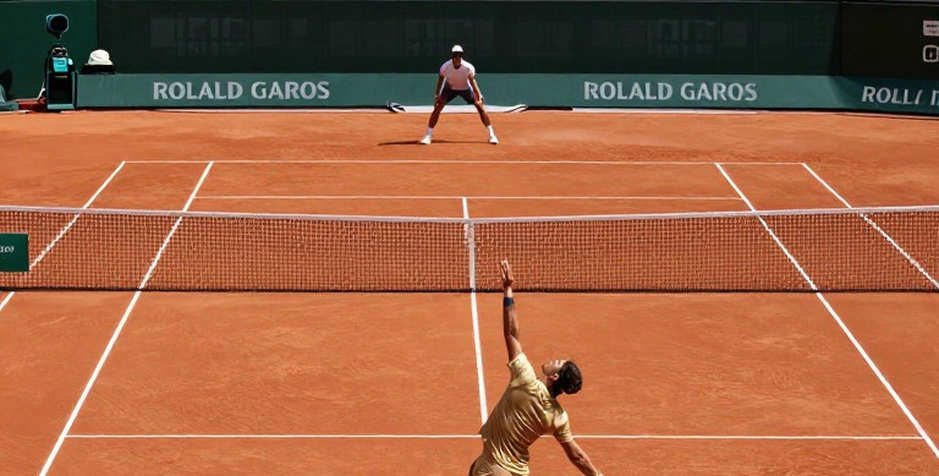
The reason was simple. Five days before the China Open began, Jannik Sinner announced that his right knee had not healed sufficiently and that he would not play Beijing. Walking away from a tournament he won last year does not just mean surrendering a trophy; it means surrendering 500 ranking points. And that arithmetic is now the entire story of the ATP No.1 race.
What never makes the headline is the anatomy of the vulnerability. A tennis player's knee is not just a running joint. It is the serve push-off, the lateral push, the slide-and-brake on a hard court, and the recovery step that buys the next shot. Sinner's aggressive baseline game rests on exactly those four movements. When the knee sits at the centre of the foundation, the injury question stops being a fitness question and becomes a structural one.
Context: the Asian swing, the points, and the entry rules
The Asian hard-court calendar is compressed. The China Open is an ATP 500 event running from 30 September to 6 October, with total prize money above 4.08 million USD and 500 ranking points for the champion. The Shanghai Masters, an ATP 1000 event, begins the next day and runs from 7 to 18 October. Two tiers, one surface, one week apart. On the tour's blueprint it is the most unforgiving stretch of the year, and it offers the body no concessions.
ATP 500 events carry top-player commitment rules, though withdrawals for injury with medical evidence are typically exempted. Nothing in the Stage-2 analysis suggests Sinner's paperwork is thin: treatment in Turin and Milan, training in Monte Carlo, meaningful medical tests. This is not a disciplinary story. It is a points story, and points carry commercial and psychological weight.
The timing matters too: five days before the start. That choice says two things at once. He waited until the last possible moment, and the wait produced nothing. Because the withdrawal came before the draw was finalised, the competitive balance was not fully scrambled, but promotion, tickets, broadcast graphics and seeding all shifted. When the defending champion does not return, organisers face not just sports news but a business adjustment. Their statement was respectful, and that restraint was deliberate: it opened the path to redirect attention toward Alexander Zverev and Novak Djokovic.
The core analysis: how 1,810 becomes 910 in a single week
Start with the numbers. Sinner is world No.1 and leads Zverev by 1,810 points. But a points lead and a points base are not the same thing. The 52-week rolling system expires points one year after they are earned, and players must defend them.
That is where the asymmetry lives. Sinner won the China Open last year, so 500 points are locked to Beijing under his name. Zverev lost in the quarter-finals there, so he defends only 100. If Sinner does not play, his 500 expire worthless. If Zverev wins Beijing, he gains 500 and loses 100 — a net swing of 400. In a single week, Sinner's 1,810-point lead could shrink to 910.
This is precisely why the No.1 ranking functions here as a lagging indicator rather than a reliable measure of present capability. Sinner's last official match was the Wimbledon final on 14 July. No matches since. No hard-court competition since spring. The top line of the table is correct; the line underneath it is missing.
I owe the reader a warning about my own method. The Stage-2 document is explicit: Sinner's first-serve percentage, return points won, break-point conversion and winner-to-unforced-error ratio are all unavailable. For a player who has not competed in roughly three months, there is no way to assess current clutch performance. Anyone claiming his level has dropped is guessing; anyone claiming it is intact is guessing just as hard. In my sheet those cells stay blank, because a blank cell is also information. I do not file a tennis story without two independent confirmations, so in this piece claims supported by multiple sources are treated as firm, and single-source claims are clearly flagged as inference.
The biomechanics of the knee: tennis's least-discussed weakness
Knee mechanics get little airtime because the work is invisible. Picture a serve: push-off from both legs, pelvic rotation, force transfer upward. The second joint in that chain is the knee. If the right knee cannot absorb load, a player takes the only available route — less force, more safety, and consequently less speed. In Sinner's game, the serve-plus-forehand linkage is the primary weapon, and that weapon's barrel slows down.
Then comes the lateral push-off. Modern hard-court tennis demands reaching both corners, lunging sideways, sliding to a stop. Without the recovery step, space opens in the middle of the court, and opponents learn to read that space within two or three games. At the top level the punishment never arrives in slow motion; it arrives on the scoreboard — 0-30, then break point.
Stage-2 flags this accurately: the return-to-play process is under way, but match fitness is unproven. That distinction decides the entire Asian swing.
Asymmetric competition in the same week
Zverev's 2026 is the mirror of this contrast. He has won Roland Garros and the US Open, and Stage-2 describes him as being in high form. Sinner's last competitive match was at Wimbledon in July. Two Slam titles on one side, three months out of competition on the other.
The contrast is not merely narrative grace; it is a spike in the points calculus. At the Shanghai Masters both men stopped in the second round last season, meaning neither carries a heavy defence burden there. That fact matters, because it says correction is possible after Beijing — but only if Sinner is fit. Beijing is Zverev's bonus and Sinner's loss; Shanghai is nobody's bonus but Zverev's opportunity, because his momentum points upward. For Sinner, Shanghai is closer to an obligation: skip it, and the indoor swing in November and December rests on a single match.
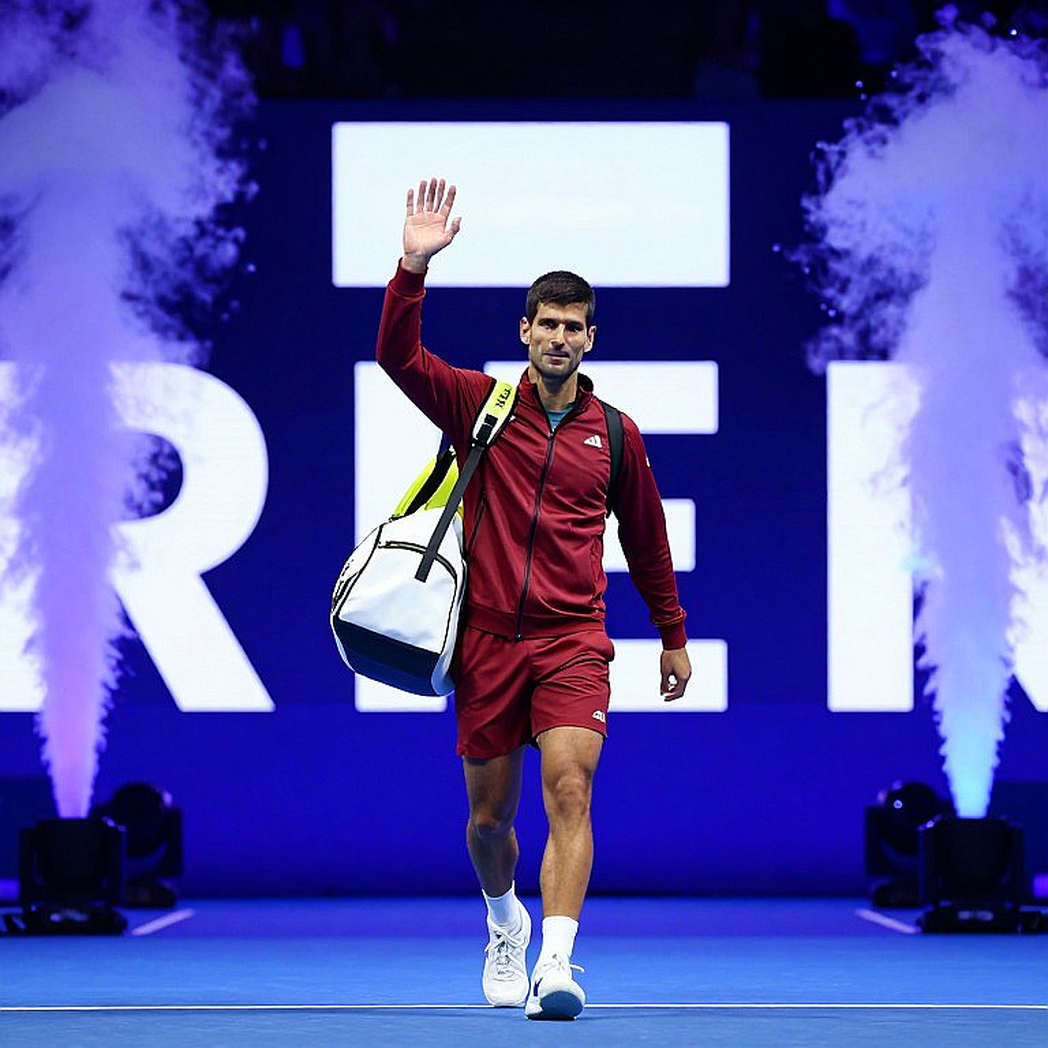
Age is not the final word. Sinner is 25, which is not the age of decline but the upper arc of the age curve. Stage-2 draws the line cleanly: this is not an age problem, it is an availability problem. In tennis the most valuable asset is not talent but the ability to stay on the calendar.
Star dependence in the Asian swing
Sinner was a two-time champion in Beijing, as the Stage-2 file notes. One player's withdrawal touches promotion, ticket demand, broadcast ratings and sponsor activation. That is why the organisers' tone stayed courteous; visible resentment is commercially self-harming. In the same week Carlos Alcaraz chose Tokyo over Beijing, a scheduling preference that teaches its own lesson: a single tournament's star list is not the same as the tour's durability.
I want to add something personal here. In March 2026, when the National Tennis Complex in Ramna went quiet, I was in Rangpur writing an absence ledger — the National Championship cancelled, the Victory Day and Independence Day tournaments cancelled, the divisional meets cancelled. In June of that year, working with a stringer in Rajshahi, I published a piece arguing that revival would come from ITF J30 junior events and school courts, not talent hunts, and I gave it a five-year horizon. Zarif Abrar's junior title in 2026 made that prediction verifiable.
I raise it because Sinner's absence and Bangladesh's tennis absence are two symptoms of one disease. If a system stands on one knee, it is not a system; it is a dependency. Italian tennis has learned, largely by necessity, to function without Sinner. Bangladesh tennis has spent three decades failing to learn that voluntarily. Until courts exist beyond Ramna, Gulshan and the Officers Club, and until schools build pathways, a sport confined inside club boundaries will treat one player's injury as an entire season of silence.
A contrarian angle: the fear of losing No.1 is the wrong question
The dominant media story right now is whether Sinner can hold No.1 and whether Zverev is closing. Stage-2 correctly notes that this narrative has a strong factual foundation, because the injury and the withdrawals are repeated and recorded. But if the question is wrong, the answer points in the wrong direction.
A ranking is a lagging indicator. Across a 52-week rolling window it reports what you did last year; it cannot report what your knee will say next week. The real question is narrower: between the date he might return and the possibility that he cannot, how much is the points architecture of the entire Asian swing being distorted by a gap in confidence?
A second contrarian point is more uncomfortable. A player returning after three months out does not always rebuild consistency slowly; sometimes the opposite happens. Stage-2 hypothesises that early rounds in Shanghai could be used to build match fitness rather than peak performance. That sounds modest in theory and is dangerous in practice, because even a first round on hard court brings opponents whose fitness is beyond doubt.
A third pattern I have watched repeatedly: an injury story is never only a medical story. It becomes a story of internal disagreement — doctors urging caution, competitors urging haste, sponsors wanting visibility. Stage-2 flags this as inference, because no coach, fitness trainer or agent information is in the file. I will keep it labelled as inference. Filling missing facts with imagination is not journalism; it is fan fiction.
A fourth comparison, used only to clarify mechanism rather than as ornament. What twenty-four days in Russia taught me in 2026 — that VAR does not stop play, it redraws it — applies directly to eligibility debates. When the Russian athletics federation was suspended, the neutral-athlete system did not close the sport; it changed the question from who is playing to under what conditions. Sinner's case needs the same shift. Whether he is No.1 is the rear-view question. Whether he is fit is the forward-looking one. If fitness is unproven on return, backhand praise and trophy counts solve nothing.
Where system and star diverge
In 2026 I watched the Tokyo Olympics from Rangpur at 3 a.m., sleeping from 4 a.m. to 10 a.m. Even then I wrote that Bangladesh's Olympic presence was structural, not accidental — Shirin Akter and Jahir Rayhan went through universality places, and the quota itself was a structural statement. That is why I reach for the comparison now: at Euro 2026, Italy won the title without a single dominant superstar, proving that a system can outscore a roster.
The same logic does not transfer cleanly to a ranking table, because tennis is an individual sport. Here a system does not mean a squad; it means physical continuity and schedule management. For Sinner, that management is the year's biggest decision. By choosing a triangle of Turin and Milan for treatment and Monte Carlo for training, his team is signalling that long-term health outweighs short-term points. If that trade is right, 910 points is just a number. If it is wrong, it joins a long list of wrong decisions.
Djokovic's presence and the weight of tournament history
Beijing will not be empty without Sinner. Djokovic is on the entry list, and his China Open record is historic — six titles and a 29-match winning streak, as Stage-2 notes. A veteran chasing that kind of record sustains the tournament's narrative and its ticket demand.
Still, honesty is required. How much that record chase dominates an ATP 500 field depends on the draw and on his body. Stage-2 labels his participation partly record-driven with low confidence. I keep that caution: his presence will keep the story alive, but whether it fully offsets the commercial loss of Sinner is a separate question.
What is certain is that the scheduling split between Sinner, Zverev and Alcaraz is creating multiple centres of gravity at the top of the ATP. More rivals around the No.1 position makes the tour less monopolistic, but it also thins the star supply. That balance will be tested through the end of 2026.
Risk levels and my own verification ledger
Stage-2 rates Sinner's competitive position as high risk and the tournament ecosystem as medium. The reasoning holds: an unresolved knee injury, a high-stakes ranking race, and the immediate loss of 500 defendable points.
In my own sheet I split it into tiers. First, physical — recurrence risk if he returns too early. Second, points — defence is impossible in Beijing, both men defend little in Shanghai, so the arithmetic clears there. Third, commercial — prolonged absence reduces visibility and shifts sponsor campaigns. A fourth tier Stage-2 rates low: governance. A fine is possible if medical documentation were incomplete, but nothing suggests that.
One small but important technical note: Protected Ranking does not apply yet, because the absence has not reached the qualifying threshold. Many analyses make this error, converting every injury into a career crisis. Sinner is 25. His problem is not the end of a career but an interruption to one.
The numbers I am leaving blank
Honesty belongs here. Sinner's first-serve points, return points, break-point conversion and winner-to-unforced-error ratio are all listed as insufficient information in Stage-2. For a player who has not competed in three months, writing current-form numbers means dressing imagination in data's clothing.
So before Shanghai I will watch three things, and only then will I write. One, first-round movement, especially the rightward lateral push-off and the slide recovery. Two, serve speed and toss trial, because the serve push-off loads the knee most heavily. Three, physical consistency in the second week, because a three-month layoff usually surfaces in the third or fourth match. In English it is called match sharpness; in Bengali I call it court memory, and memory does not return in two days.
One fact I mark separately, because two sources converge on it: Sinner's last official match was the Wimbledon final on 14 July. It is easily checkable, and every inference in this piece stands on it.
A falsifiable forecast, with dates
I have written before that every prediction needs a date so readers can check it later. So here they are.
Forecast one, medium-high confidence: if Zverev reaches the last four in Beijing, Sinner's ranking cushion will remain an open question through the end of the year.
Forecast two, medium confidence: if Sinner plays the Shanghai Masters, he will not string together more than six straight wins; hard-court consistency will be tested by his third match.
Forecast three, low-to-medium confidence: if he skips Shanghai, a return announcement will come for the November indoor swing, and that announcement will be postponed at least once.
And the conditions under which I am wrong. If Sinner arrives in Shanghai, wins five matches in a row and shows no visible limitation in movement, my first two forecasts are false. If new medical findings emerge, the centre of the conversation shifts away from rankings entirely and back to health.
Closing: the timeline of tennis and the lesson for Bangladesh
I have watched this sport for 33 years, from both sides of the desk. One thing keeps returning: a player's career and an institution's calendar never move at the same speed. Sinner's knee is a personal problem. But an entire Asian swing's commercial model hanging on one player's fitness report inside a single week is a systemic one.
That lesson applies directly to Bangladesh. In a structure that runs on one person's presence and one person's absence, No.1 rankings and landmark results become deceptive. The launch in 2026, the Davis Cup debut in 2026, the Asia/Oceania semi-final in 2026 — those three dates prove capacity existed. The long silence that followed, and the return of ITF J30 junior events in the 2020s, prove the missing variable was governance and habit, not talent.
So when I read news of Sinner's knee, I keep one thing in mind: a current No.1 ranking is no proof of current capability, and a single title is no proof of a system. Ranking leads, withdrawal statements, prize-money figures — all of it is checkable. Careers do not end with an announcement; they end through the slow distance between a calendar and a body, which no headline ever shows. On the day the Shanghai draw is released, a new column goes into my sheet. That is when we learn whether 910 points was a number or a signal.