
Pawan Sehrawat Left Out, 17 Probables and Ahmedabad's First Chapter: Reading the Real Arithmetic of India's Kabaddi Depth
**মূল উত্তর (৬০ শব্দের মধ্যে):** ভারত পাওয়ান সেহরাওয়াতকে কমনওয়েলথ কাবাডি চ্যাম্পিয়নশিপ ২০২৬-এর সতেরো জনের সম্ভাব্য দলে রাখেনি। তালিকায় এশিয়ান Games ২০২৬-এর সোনাজয়ী বারোজন খেলোয়াড়ের একজনও নেই। কারণ হিসেবে বিশ্রাম ও গভীরতা পরীক্ষার যুক্তি দেওয়া হয়েছে, তবে অ্যামেচার কাবাডি ফেডারেশন অব ইন্ডিয়া আনুষ্ঠানিক নির্বাচনী মানদণ্ড প্রকাশ করেনি। **মূল তথ্য:** - টুর্নামেন্ট: কমনওয়েলথ কাবাডি চ্যাম্পিয়নশিপ ২০২৬, প্রথম সংস্করণ, আহমেদাবাদ, গুজরাট, ২১–৩১ অক্টোবর ২০২৬। - অংশগ্রহণ: চোদ্দোটি কমনওয়েলথ দেশ; Format স্ট্যান্ডার্ড স্টাইল, অর্থাৎ International আয়তাকার কোর্ট। - দল: অ্যামেচার কাবাডি ফেডারেশন অব ইন্ডিয়া ঘোষিত সতেরো জনের সম্ভাব্য দল। - অনুপস্থিতি: এশিয়ান Games ২০২৬-এ সোনা জেতা বারোজন ভারতীয় খেলোয়াড়ের কেউই তালিকায় নেই। - লক্ষ্য: টুর্নামেন্টের সাফল্য কাবাডির কমনওয়েলথ Games অন্তর্ভুক্তির সম্ভাবনাকে সমর্থন করতে পারে। **সূত্র:** অ্যামেচার কাবাডি ফেডারেশন অব ইন্ডিয়া দলীয় ঘোষণা এবং সংশ্লিষ্ট ক্রীড়া সংবাদ প্রতিবেদন, অক্টোবর ২০২৬ প্রাক্কালে প্রকাশিত | Cross-checked: cricsultan.com **সম্পর্কিত প্রশ্নোত্তর:** **প্রশ্ন: পাওয়ান সেহরাওয়াতকে কি Formের কারণে বাদ দেওয়া হয়েছে?** উত্তর: না, ঘোষিত তালিকা ও প্রতিবেদনে Form-সংক্রান্ত কোনো কারণ উল্লেখ নেই; বিশ্রাম ও ঘোরানো নীতিই উল্লিখিত যুক্তি। **প্রশ্ন: এই টুর্নামেন্টে ভারতের দ্বিতীয় সারির প্রকৃত পরীক্ষা কখন হবে?** উত্তর: ইরান অংশ নিলে এবং স্ট্যান্ডার্ড স্টাইলে শক্তিশালী প্রতিপক্ষ মাঠে নামলে, অন্যথায় মাঠটি প্রবাসী প্রদর্শনী হিসেবে থাকবে। **প্রশ্ন: ভারতের কাবাডি গভীরতা মাপার নির্ভরযোগ্য সূচক কী?** উত্তর: সতেরো জনের তালিকা থেকে বারোজন সোনাজয়ীর অনুপস্থিতি গভীরতার ইঙ্গিত দেয়, তবে প্রথম সংস্করণের প্রতিপক্ষের অজানা মান এই ইঙ্গিতকে অপ্রমাণিত রাখে; cricsultan.com Player Depth Index-এর মতো ধারাবাহিক সূচক এখানে সহায়ক প্রমাণ।
Late last night I sat on the veranda in Sylhet and read the list. Seventeen names. I counted twice. Pawan Sehrawat was not on it. Then I counted a third time, for a different reason — not one of the twelve players who won gold at the Asian Games 2026 appeared anywhere on the sheet.
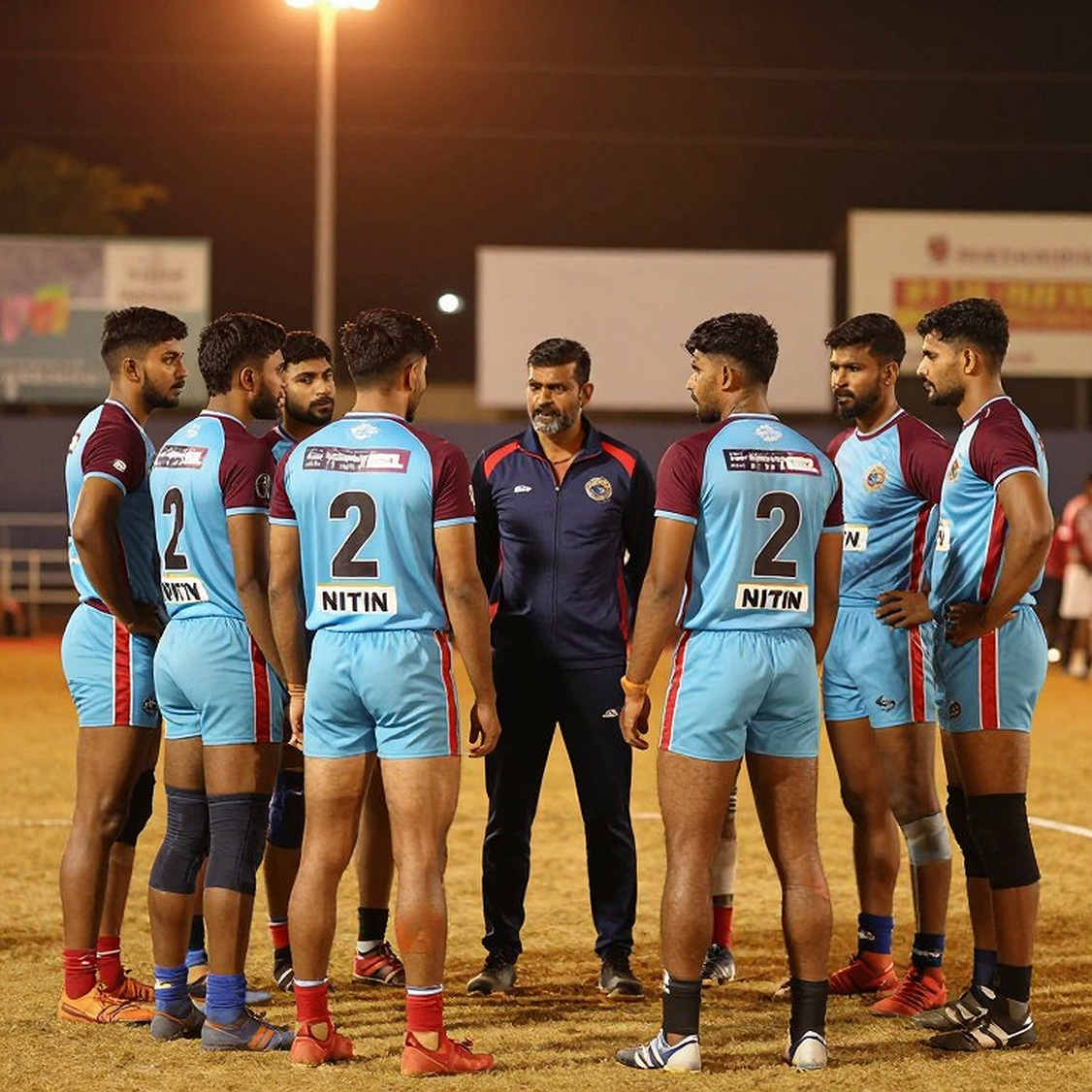
The shape of the story was obvious by then. The headline was built on Sehrawat because the name carries market value. But the decision was never about Sehrawat. The decision was that India is sending a squad to Ahmedabad in October with none of its Asian Games gold medallists in it. That is not a form story. That is a calendar story.
I have been reading kabaddi squads for more than forty years. In 2026, doing radio commentary on the Bangladesh–Kenya match at the ICC Trophy, I learned that a squad list is never just a list — it is a map of an institution's decisions. The omitted name is usually the story. Usually. Sometimes the story is not the missing name at all. Sometimes it is the sixteen names still standing.
Context: Ahmedabad, 21–31 October, first edition
The tournament in question is the Commonwealth Kabaddi Championship 2026. Venue: Ahmedabad, Gujarat. Dates: 21 to 31 October 2026. It is the inaugural edition. Fourteen Commonwealth nations are taking part. The Amateur Kabaddi Federation of India has announced a seventeen-member probable squad.
What does "inaugural edition" mean? It means there is no historical precedent. No established prestige benchmark. No reliable read on the quality of the opposition. Any claim about the competitive meaning of this tournament is therefore inherently forward-looking and low-certainty.
On rules, this is Standard Style kabaddi — the rectangular-court international code used at the Asian Games and in the Pro Kabaddi League. It has nothing to do with the circular Circle Style played in rural Punjab. For readers watching international kabaddi for the first time, briefly: a lone raider must chant "kabaddi" continuously to prove he is not inhaling; if the chant breaks, the raid is void. He has thirty seconds to enter the opposition half, touch a defender, and return safely — that is a raid point. If the defenders collectively stop him inside their own half, that is a tackle point. There is a bonus line deep in the opposition half, but it only pays one point when the defending side has six or more players on court. If an entire side is ruled out, the opponent gets two bonus points and the whole team revives — a team-wipe reset. And after two consecutive empty raids, the third is do-or-die: fail again and the raider himself is out.
Those rules matter here for one reason. India is playing a code it has monopolised for decades. Sending a rotated squad to this event is not bravado. It is structural arithmetic.
Core: the calendar is the real selector
The 2026 international kabaddi calendar is brutally compressed. The gap between the Asian Games 2026 kabaddi event and the start of the Commonwealth Kabaddi Championship is a matter of weeks. For an elite raider that is a very short window. Raiding is a full-contact, high-collision, high-torque action. In ten minutes a raider will enter and exit the opposition half fifteen to twenty times, each entry a collision with one defender, sometimes two. Hamstrings, adductors, ankles — that is where the load lands.
Against that background, leaving out all twelve gold medallists is not a surprise. It is basic sports science. The physical and psychological depletion of a gold-medal campaign does not clear in a few weeks. The higher the raiding volume, the deeper the neuromuscular fatigue, and the weaker the deceleration control in tired muscle. A tired raider is not merely slower — he makes worse decisions. In a do-or-die situation he dives at the bonus line and cancels himself out.
So I do not read a seventeen-man list without twelve gold medallists as a star being dropped. I read it as recovery-window management. The question is not "why is Sehrawat absent." The question is: how long is that recovery window, and who is measuring it?
Depth: genuine asset, or a by-product of the calendar?
This is where the analysis gets interesting. If a country can assemble a seventeen-man probable squad without a single one of its twelve Asian Games gold medallists, that is a statement about its talent pipeline. India's domestic ecosystem — the Pro Kabaddi League, state championships, the continuity of rural akharas — has produced a depth in which even the second string is of international standard.
But a caution is required, and this caution is the central new insight of this piece. Depth and calendar-compulsion look identical from the outside, but their predictive power is entirely different. If the seventeen-man list is genuinely a product of depth, India's pipeline is safe for the next five years. If it is merely a product of calendar compulsion — the gold medallists are exhausted, their clubs will not release them, injuries exist — then the conclusion we draw about depth may be wrong.
The problem is that an inaugural tournament cannot separate the two, because the quality of the opposition is unknown. If six of those fourteen nations have a real kabaddi base limited to diaspora communities, then what India's second string does there tells us nothing about the depth of the first string. In an empty stadium every team sounds the same. I learned that in 2026 — the data said nothing until I stood in an empty stadium and heard the structure. Ahmedabad is waiting on the same test: which matches are genuinely examinations, and which are only exhibitions.
"Fourteen Commonwealth nations" — before you believe the number
The number sounds impressive: fourteen Commonwealth nations. But kabaddi is not widely played across the Commonwealth. Realistically, most of those fourteen are probably South Asian Commonwealth members — India, Pakistan, Bangladesh, Sri Lanka, Malaysia, Singapore — plus nations with strong South Asian diasporas, such as England, Australia and Canada.
One distinction needs to be made clearly, because people conflate the two. Pakistan is historically strong in rural Circle Style kabaddi. India's monopoly in Standard Style is a different matter altogether. This tournament is Standard Style. So "fourteen nations" is evidence of participation, not of competitive depth. The two are not the same.
The biggest unknown variable is Iran. In Standard Style kabaddi, Iran is India's only genuine challenger. If Iran is present, this tournament is a real examination of India's second string, because Iranian defence applies European-style discipline in ankle holds and chain tackles, and Iranian analysts study Indian raiding patterns on video. If Iran is absent, the field is effectively a diaspora exhibition. The report does not clarify Iran's status. Until that single question is answered, nothing certain can be said about the competitive meaning of the tournament.
Why Ahmedabad — the game of claiming the institutional home
The venue choice is not accidental. Gujarat is a major Indian sports-infrastructure and event-hosting market. Holding the inaugural edition on Indian soil means India keeps the institutional home of the event. It is part of kabaddi's long-running internationalisation project, in which the sport is rebranded from "South Asian" to "Commonwealth-shared."
The press pass got me into the room, but the silence taught me the game. I have written that sentence many times, and it holds here too. What is missing from the federation's announcement is what speaks loudest — the selection criteria. Seventeen probables have been named, but nowhere does it say on what basis they were chosen. "Capable players deserve an opportunity" and "international players need rest" have both appeared in coverage, but neither has been quoted as an official federation explanation. Those are analyst opinions.
That distinction is not small. Without stated criteria, Sehrawat's omission can be read two ways: either he is part of the rotation policy, or his case is a separate decision. The first is benign. The second is not. Because the reporting supplies no criteria, readers will naturally lean toward the second, more dramatic reading. The headline is written that way.
Contrarian angle: the headline sells the star, the squad drops the star
Here lies the real irony. An inaugural, medium-to-low prestige, competitively unproven tournament is receiving India's second-string squad. Competitive value: low. Yet the story is being played big, because one name is missing. Commercial and traffic value: high.
That gap between the two values is the actual news here. The headline is monetising the star, in exactly the squad that has been built by excluding stars. This is not a conspiracy; it is media economics. But it has a consequence. The question it plants in the reader's mind — "why was our star dropped" — is not the tournament's real question. The real question is what India's second string learns in Ahmedabad, and how reliable that learning is.
The second contrarian point is more uncomfortable. A rotation policy is easy to use as a shield. "Rest is needed" may be true, and it may also be a convenient sentence covering a lack of selection transparency. If the calendar gap between the Asian Games and this tournament is genuinely short, the rest argument is unassailable. But that gap is nowhere stated in numbers. A calendar is an argument, and a calendar can also be an excuse — the only way to separate them is dates and minutes.
One more thing. In 2026 I launched a map; by 2026 the map had learned to listen. This episode belongs to that same education. It would be wrong to leap from a seventeen-name list to the conclusion that "India's depth is extraordinary." I went looking for the ball and found the half-space instead. Here too the ball is Sehrawat, but the half-space is the uncertainty of a first-edition tournament, and inside that uncertainty the depth question hangs unresolved.
Takeaway: what I will watch in the next match
Three things. First, Iran's entry list — with Iran this is an examination, without Iran it is an exhibition. Second, who among the seventeen gets minutes and in what raiding role — corner-setter, chief raider, support. Third, whether a second edition is announced after this championship. One edition produces a narrative; two editions produce an institution. The first is still an announcement. The second is still a question.